Navya Singh
7 Nov 2026 4 min read
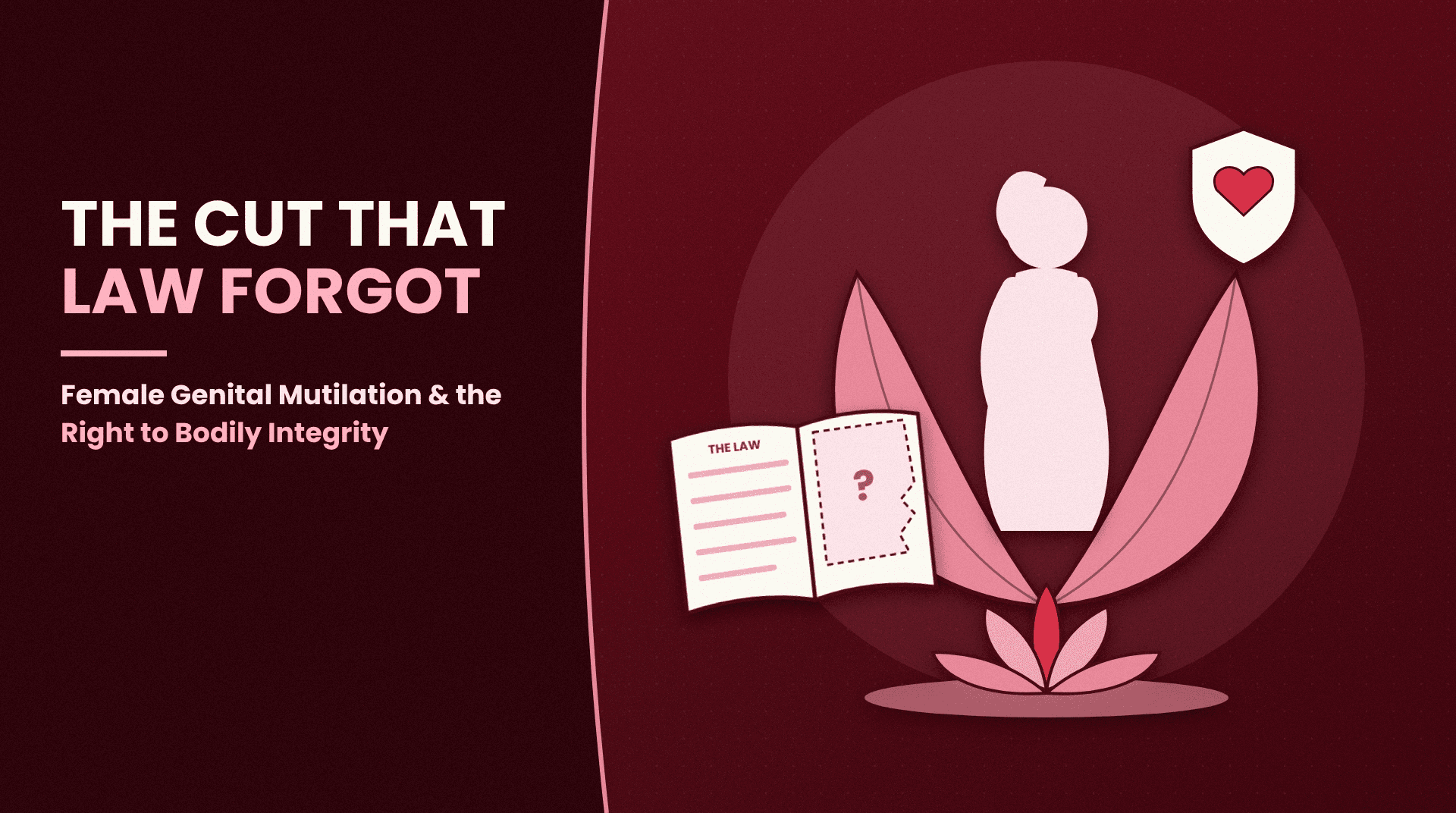
“I never wanted anyone to go through the pain I went through.” Mumina’s testimony to UNFPA holds the argument of this piece in a single sentence: female genital mutilation (FGM) is not a tradition to be debated in the abstract, but a wound carried for a lifetime.
FGM means any non-medical procedure that cuts, removes or otherwise injures the external female genitalia. The World Health Organization estimates that more than 230 million girls and women alive today have undergone it, with over 4 million girls at risk each year. It occurs in 30 countries across Africa, the Middle East and Asia. The harms are settled science: a WHO analysis of over 75 studies in 30 countries finds severe physical and psychological damage.
In India the practice survives as khatna or khafz, performed mostly on six- and seven-year-old girls in the Dawoodi Bohra community. There is no official data on it: the government told the Supreme Court that no official data supported the practice’s existence. Weeks later, the first field study, The Clitoral Hood: A Contested Site, documented that 75 per cent of sampled respondents’ daughters had been cut, with 97 per cent recalling it as painful. Defenders call it taharat, purification. But the reasons practitioners actually give, surveyed by Sahiyo, are religious obligation (56 per cent), curbing sexual arousal (45 per cent), custom (42 per cent) and hygiene (27 per cent): rationales of control rather than doctrine, in a scripture that nowhere prescribes the cut.
A Law Built and a Law Under Siege
The human rights case is not contested in principle: FGM engages equality, freedom from torture and cruel, inhuman or degrading treatment, the rights of the child and the right to health, as the Health and Human Rights Journal has catalogued. Article 5 of the Maputo Protocol obliges African states to prohibit all forms of FGM, and SDG target 5.3 aims at global elimination by 2030. The law’s weak link is enforcement, and increasingly reversal: in 2024 Gambian parliamentarians advanced a bill to repeal the Women’s (Amendment) Act 2015. The repeal attempt ultimately failed after international pressure, but it proved a statutory ban can be politically unmade.
What Enforcement Actually Looks Like
The Gambian statute produced two prosecutions and a single conviction in a decade. The United Kingdom’s Female Genital Mutilation Act 2003 took a preventive route: extraterritorial jurisdiction over those who take girls abroad, an offence of failing to protect a girl from risk, civil FGM Protection Orders restricting travel, and mandatory reporting by health workers and teachers. Enforcement also fails because the practice mutates: an estimated 52 million girls and women were cut by health workers, a medicalisation that makes the cut look safe while keeping it harmful.
The Law’s Missing Word
India has no statute that names and bans FGM. In 2017, advocate Sunita Tiwari filed a public interest petition in the Supreme Court seeking a complete ban; during the 2018 hearings the Court observed that the practice is violative of Articles 21 and 15 and punishable under the Indian Penal Code and the POCSO Act. Yet the petition remains pending, tagged to the nine-judge Sabarimala reference on Articles 25 and 26, where the community claims protection. At the May 2026 hearing, the bench said orally that public health might be reason enough to test the practice, and it reserved judgment on 14 May.
The gap the law must close does not require waiting for the final judgment. Whether or not khafz qualifies as an “essential religious practice”, the State’s protective duty over a non-consenting child cannot yield to Articles 25 and 26: religious freedom has never protected an act performed on a child’s body without her consent, and the Court’s own observations already treat the cut as an offence under the general criminal law. Comparative practice from Kenya to the United Kingdom shows dedicated statutes leave no doctrinal escape route. India needs a specific prohibition, systematic NCRB data collection, and a settled principle that parental consent cannot substitute for a child’s bodily integrity.
The Numbers Are Turning
Prevalence among girls aged 15 to 19 fell from 47 per cent in 1993 to 33 per cent in 2023, and 200 million men and boys want FGM to end. Yet the pace of decline must still accelerate twenty-seven-fold to meet the 2030 target. Mumina’s sentence is the standard against which every statute, affidavit and pending petition should be measured. The measure of success is not the number of laws passed, but the first generation of girls for whom the question never arises.
Author: Navya Singh
She is a third-year B.A. LL.B. (Hons.) student at NMIMS School of Law, Indore and a member of the Student Editorial Board of the NMIMS Indore Pragyan Research & Publication Cell’s conference volume on criminal justice.
Sign in to join the discussion.

Consent should be judged by whether a person understood what they agreed to, not by whether a click was logged. Until the law asks that question, “I Agree” will stay closer to ritual than choice.
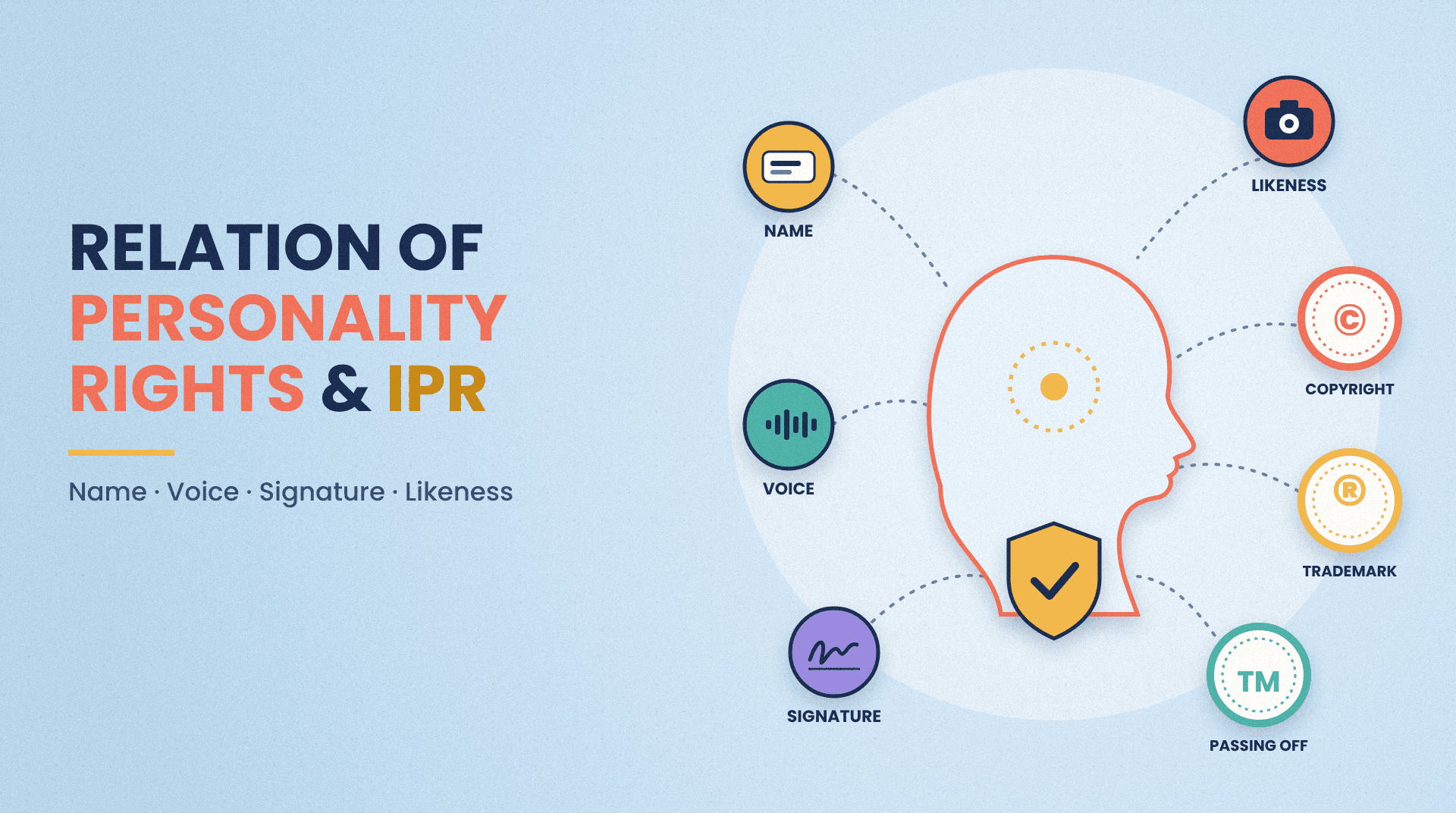
Recently, Kangana Ranaut, a famous Indian actress and a Member of Parliament from Himachal Pradesh, filed a suit seeking protection of her personality rights, where the court ordered META to take down AI images impersonating her and all other Fake images, fake audios, etc related to her.