Bhumi Khurana
8 Nov 2026 4 min read
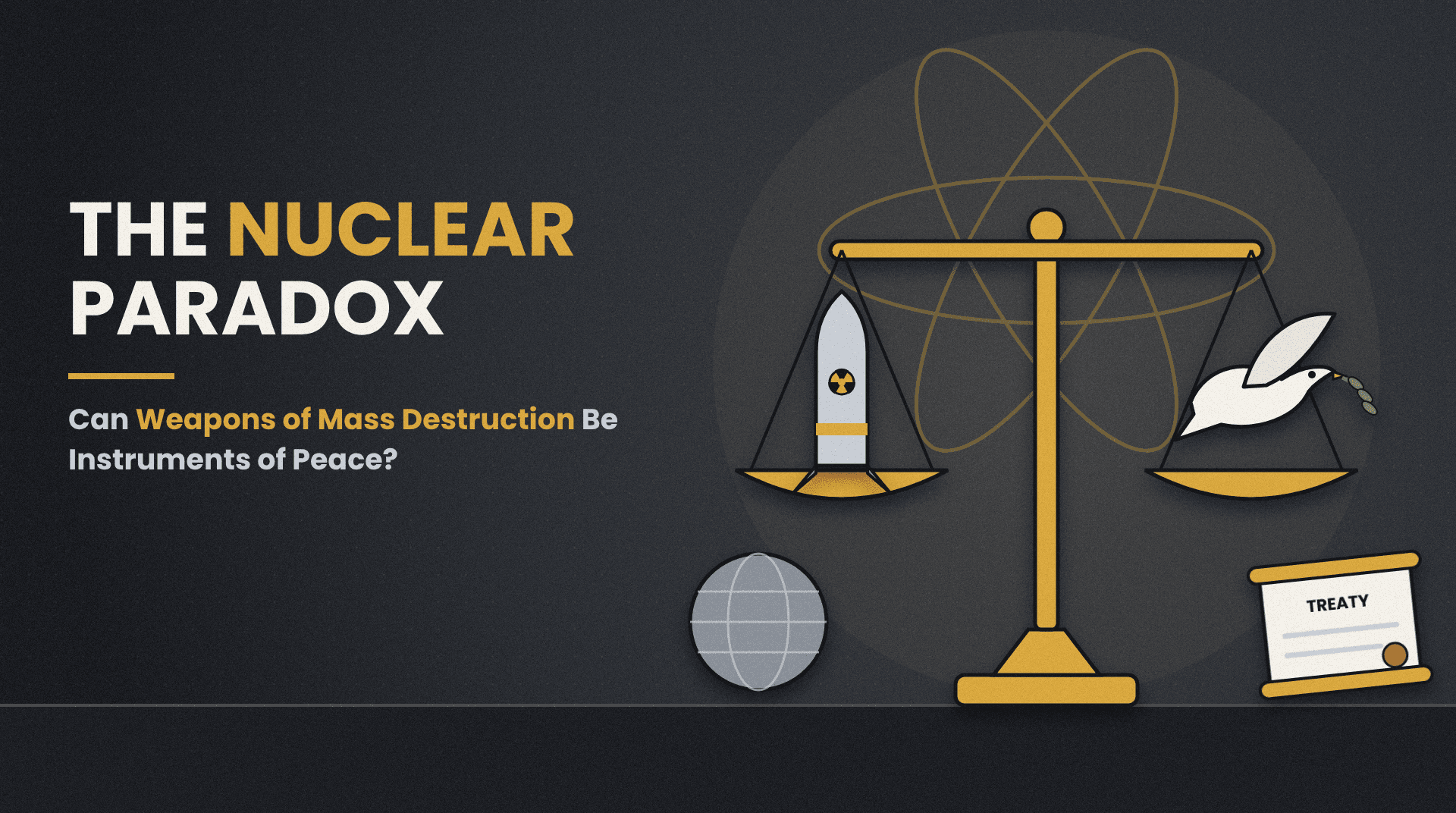
A seemingly innocuous question was posed to the International Court of Justice in July 1996: Is it lawful to threaten or use nuclear weapons? The judges (seven to seven), with the President's casting vote, determined on the one scenario that really counts: a state fighting for its survival. The Court ruled it could not determine if that was legal or illegal. The miniature version of that deadly impasse is summarized in a paragraph from the ICJ. The weapons threatening civilization have also been credited with averting war among the great powers; and the law has never been able to decide which of these two is endorsed.
In this article, I'll make the case that deterrence lives on more because it leaves a space around it than because the law calls for it. The true fault lies elsewhere: and that is the promise to disarm that is never enforced.
What the Court actually held
This opinion was commonly misunderstood in both directions in 1996. No rule allows the threat or use of nuclear weapons, and no rule of law bans it universally. Any use would have to comply with the restrictions on the use of force in the UN Charter and rules of armed conflict including the protection of civilians. In most scenarios, it can be difficult to see how a weapon with indiscriminate effects would meet those tests. But the Court didn't have to say never that. Deterrence exists on the continuum between "hard to see" and "never."
A promise nobody enforces
There was, however, complete agreement on one point: states must engage in good faith and bring negotiations on nuclear disarmament to a conclusion. That is the same as Article VI of the Non-Proliferation Treaty, whose deal was obvious. The non-nuclear states surrendered the bomb; the nuclear states pledged to strive towards giving up the bomb.
The deal seems one-sided after 30 years. On 27 April, the 2026 NPT Review Conference began but did not produce an outcome document. The Arms Control Association accused a dispute over Iran and the "intransigence" of the nuclear-armed nations of blocking new disarmament measures. In addition, it said that for the first time since 1972, the United States and Russia have no definition of the size of their respective nuclear stockpiles. An obligation ignored for several years without repercussions is not law. It is working as a hope.
Why a peace built on threats is fragile
Here's why it's important according to game theory. If you don't believe you can carry it out, you don't listen to the threat. If the other side doesn't believe you will, you don't. The answer is Peace by deterrence, which is based on readiness to do the very thing the law seeks to prevent. The logic also relies on rational leaders, correct information, and no accidents.
All of those assumptions are questionable in light of psychology. During a crisis, time is compressed, signals are misinterpreted, and fearful and habitual behavior is resorted to. If no one makes a mistake, Peace is in place; until the first mistake, it's stable. A legal scholar would not ask this question when deciding on a rule for humans, as they actually make their own decisions, but this is not the case with nuclear weapons.
India’s middle path
The Indian case is illustrative. At the UN General Assembly's First Committee on 20 October 2026, an Indian delegate reiterated India's pledge to include its no-first-use stance in a multilateral legal treaty, including a clause prohibiting the use of nuclear weapons against non-nuclear nations. The proposal is easy to pinpoint because it does not call for the abolition of nuclear weapons. It is also quite vulnerable. It doesn't touch the arsenals; it does not take any steps regarding the disarmament obligation; and it requires approval from the states that maintain the possibility of first use.
The 2017 Treaty on the Prohibition of Nuclear Weapons is on the opposite end of the spectrum. It's a straightforward legal prohibition, but no nuclear-armed country has ratified it, so it is only a prohibition for those who didn't have a nuclear weapon to start with. The more achievable option is a binding no-first-use treaty, provided it is regarded as a first step rather than a replacement for disarmament.
A conditional peace, not an instrument of peace
Can weapons of mass destruction be Peace? My response is that they can only be so for a time and conditionally. They may have helped hold the great powers at bay, but a covenant that is binding by the threat of catastrophe is a gamble on the future. The job of the law is to make that borrowed time a way out: verifiable limits, a timetable for the disarmament negotiations the Court already said should be held, and a law against first use.
But this paradox cannot be solved by deciding if the bomb is good or bad. It will be addressed when states cease using the loophole in the law as a blank check.
Author: Bhumi Khurana, Law Student
(Integrated Program in Law), Indian Institute of Management, Rohtak.
Sign in to join the discussion.
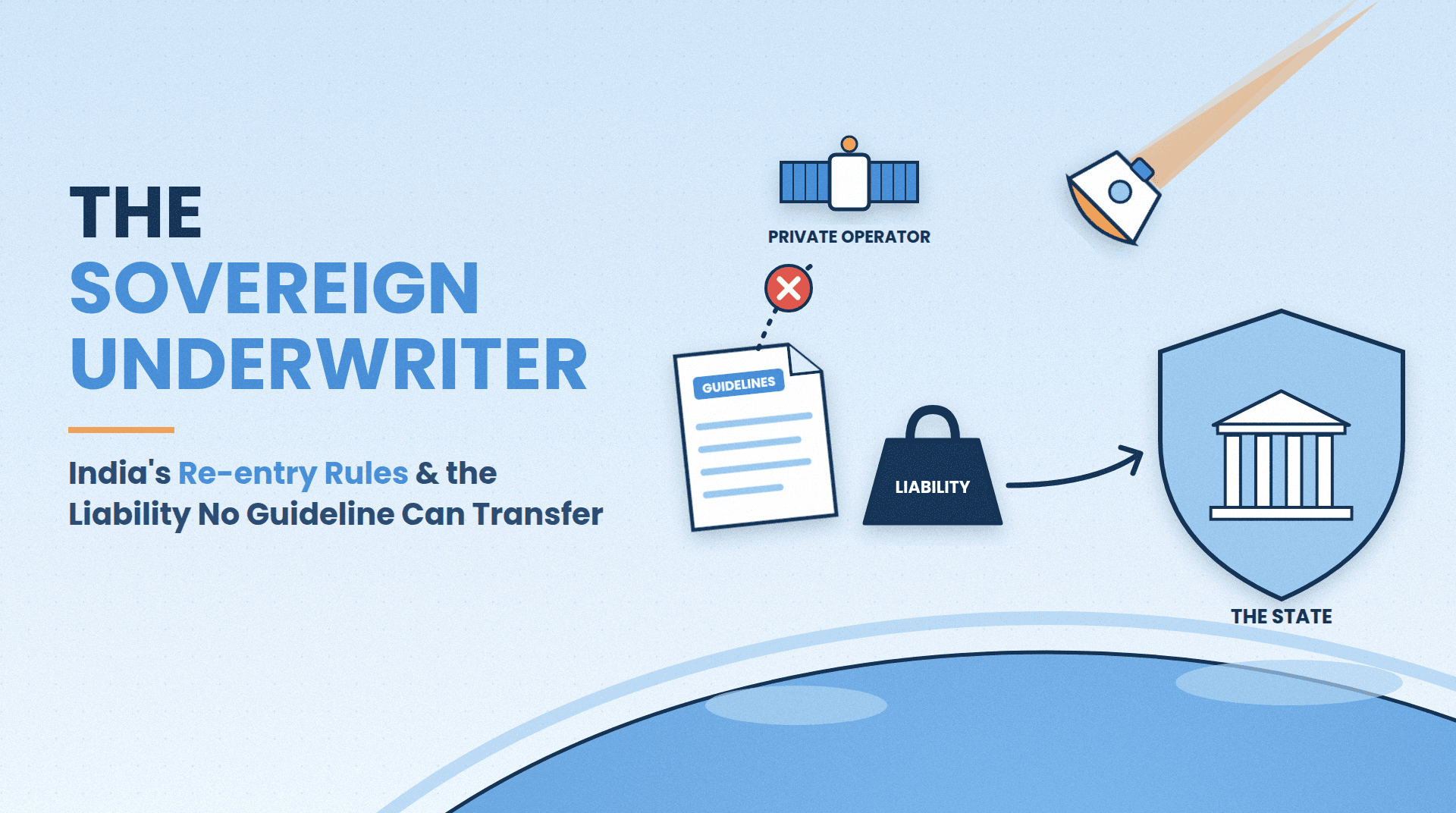
India has converted a sovereign treaty obligation into a private indemnity without a statute to carry it, and the seams show in three places: before international claimants, before Indian citizens, and inside the risk number on which the whole scheme rests.