Jyeshtha Aggarwal
8 Sept 2026 13 min read
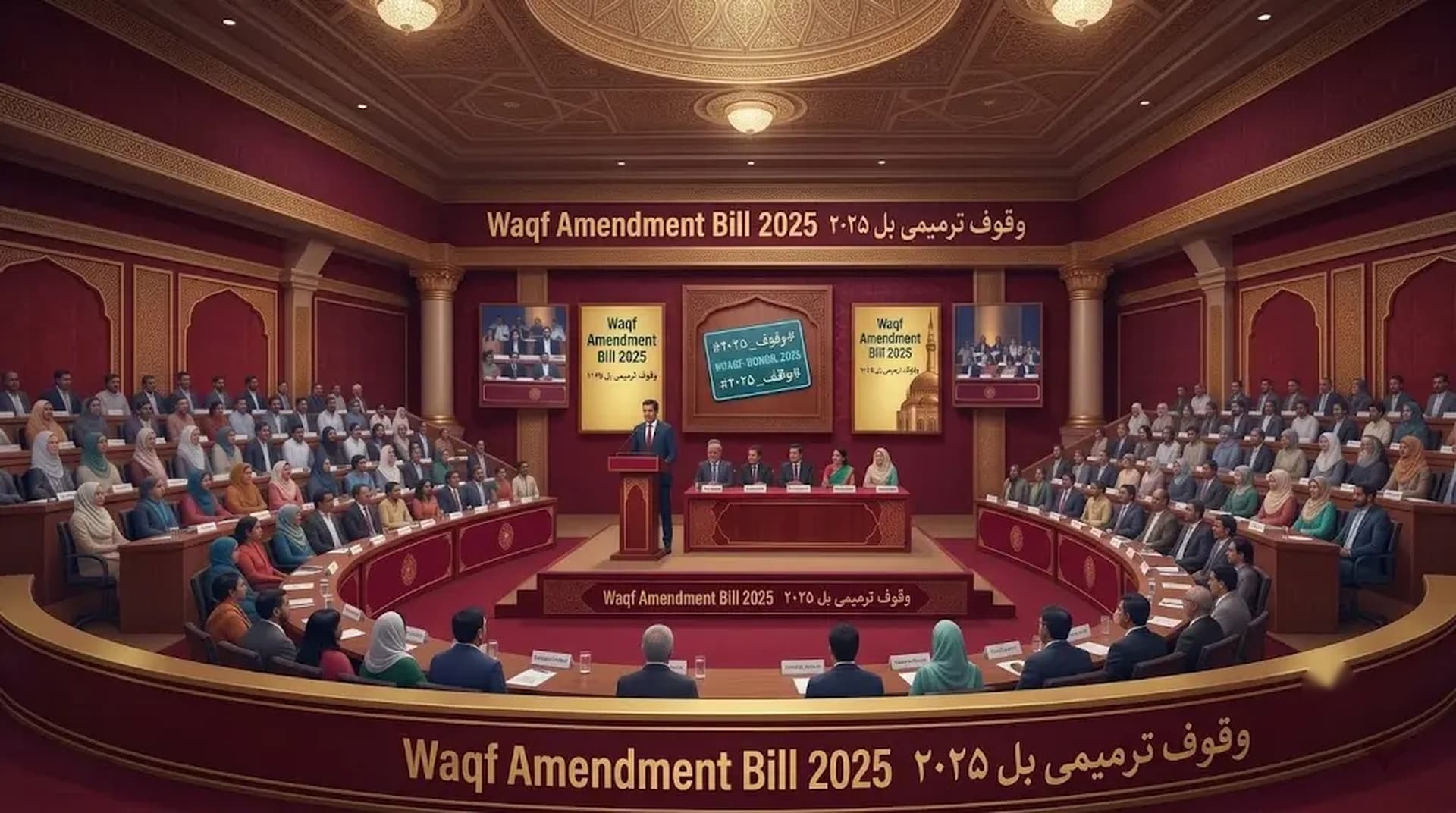
Donation is something that is immemorial from time, people have donated their wealth, body& property for the welfare of society and to support the people in need to build places of worship, shelter homes educational institutions .Under Islamic Law this is knows as WAQF, which is a permanent Islamic endowment where a Muslim person donates their movable or immovable property making it inalienable(unsellable, uninheritable) dedicated for the God (ALLAH).
Earlier Once a property becomes waqf it is waqf always. In India earlier the waqf property was under MUSSALMAN WAQF ACT 1923, WAQF ACT 1954, THE WAQF ACT 1995 &WAQF(AMMENDMENT) ACT 2013.
The new WAQF AMMENDMENT ACT,2025 along with MUSSALMAN WAQF(REPEAL)ACT 2025, replaces and amend earlier laws primarily replacing the old colonial laws to modernize the management, increase the transparency as well as addressing inefficiency in waqf property administration in India. Now let us understand first of all what is waqf and how it all started in India,
The Arabic the meaning of word WAQF is “detention”, “stopping”
It is a permanent donation on the name of god by a Muslim person for the purpose of welfare of society, support in building Mosque , Hospitals, Educational Institutions, and Shelter Homes which is managed by a manager called as mutawalli who oversees its use and ensures it serves the intending purpose.
In India this concept was flourish with the rise of Muslim rulers and Muslim leaders. During the British era this idea was further criticised but then introduced various laws for the accounting management and acknowledging the family benefits and religious importance.
THE WAQF ACT 1995 OVERVIEW:-
The main objective of the act was to provide better administration and management and anything else related to the waqf.
It establishes the Central Waqf Council and the State Waqf Board, which keeps the Central and State Government informed about the activities relating to Waqf. It also regulates the judicial proceedings and obstructions in judgement related to the waqf. It distributes the power between the Chief Executive Officer and waqf board. It strengthens the finances for the management of waqf and contribution of mutawalli also increased.
But there are some controversies also regarding the waqf act 1995 like the jurisdiction of waqf tribunals and exclusion of civil court jurisdiction.
In the case of Nagore Andavar Sambiranichatty Dhoopam Family Trust, nagapattinam Vs. S. Jegabar Ali the High Court of Madras reaches to the conclusion that civil court has no jurisdiction as per Section 85 of the Waqf Act 1995,and all the issue related to waqf and waqf property will ought to be presented before waqf tribunals only. This act failed to support any improvement in developing waqf institutions and administrations.
THE WAQF (AMMENDMENT)ACT,2013 OVERVIEW:-
The amendment introduced various significant changes including the creation of 3-member Waqf Tribunal including a Muslim law expert and mandate of two women member on each state waqf board. It also prohibits the sale or gifting of waqf property and increases the leases period of waqf property from 3 years to 30 years for their proper utilisation.
Another name for the Waqf (Amendment) Act, 2025, is the Unified Waqf Management, Empowerment, Efficiency and Development (UMEED) Act, 1995, abbreviated as the UMEED Act, 1995, which significantly reforms the original 1995 Waqf Act in India.
NEED FOR THE WAQF AMENDMENT ACT 2025:-
The objective of WAQF AMANDMENT ACT 2025 is to amend the Waqf Act 1995 to redress the issues and challenges in regulating and managing the waqf property and waqf related matters.
These are the following issues concerned with the Waqf board:-
Irrevocability of Waqf Properties:-One of the core issues of waqf board that the principle of “once a waqf, always a waqf” leads to dispute over the claim of properties.
Legal disputes and poor management:- The illegal occupation of waqf land, the mismanagement of ownership, delays in property registration and surveys and huge piles of pending cases in front of waqf tribunals. The decision of waqf board can only be taken in waqf tribunals.
Incomplete survey of waqf property:- The work of survey commissioner is not up to date and in states like Gujrat and Uttarakhand it has not even started yet. Due to lack of expertise and poor coordination and communication with the other department slow down the registration process.
Misuse of Laws:- Using of waqf laws inappropriately leads to communal riots in several places and Section 40 of the waqf act has been widely misused to declare private properties as waqf land escalating the tensions.
Constitutional validity of the waqf act:-The waqf act applies only towards a one community and no similar law exist for such other communities which makes it discriminatory for others. Several PIL have been filed to know whether waqf is constitutional or not and the response is not received yet.
SALIENT FEATURES OF WAQF AMMENDMENT ACT,2025:-
The Amendments bill aimed to transform the administrating process in the waqf board and to create data accessible technically and speedily and make economic and social benefit to the society.
Unified Waqf Management:-Dealing with one of the core issues of waqf management is the proper management of all the resources, the backlog in the tribunals, the delaying process in the judgement and also the risk of biasness.
Empowerment of Central Waqf Council and State Waqf Board: including representatives from various communities and also the upliftment of backward Muslim class and women in the Decision making process to enhance transparency and effective governance.
KEY REFORMS IN THE WAQF (AMMENDMENT )BILL,2025:-
Separation of trust from waqf:- Muslim created trust under any law will no longer be considered waqf ,ensuring full control over trust.
Eligibility for waqf declaration :-Only practising Muslim for at least 5 years can dedicate their own property to waqf.
Protection of waqf by users properties:-Already registered properties remains waqf unless disputed or identified as governmental land.
Women’s right in family waqf:- Women must receive their right full inheritance before waqf dedication with special provision for widows, divorced women and orphans.
Transparent waqf management:- Mutawallis must register property detail on the central portal within 6 months to maintain accountability.
Non-Muslim representation:-Two Non-Muslim member will be included in both state and Central waqf board to ensure inclusivity.
Reduce Annual Contribution:-Waqf institution mandatory contribution to waqf board reduced from 7% to 5%.
Annual Audit Reform:-Waqf institution earning over 1 lakh Rupees annually must go under audit by state government appointed auditors.
EXAMPLE OF SOME INCIDENT WHERE NON-MUSLIM PROPERTY WAS DECLARED AAS WAQF PROPERTY :-
Tamil Nadu: A farmer in Thiruchenthurai village was unable to sell his land due to the Waqf Board’s claim over the entire village. This unexpected requirement prevented him from selling his land to repay a loan for his daughter's wedding.
Govindpur Village, Bihar: In August 2024, The Bihar Sunni Waqf Board’s claim over an entire village in August 2024 affected seven families, leading to a case in the Patna High Court. The case is sub-judice.
Kerala: In September 2024, around 600 Christian families in Ernakulam district are contesting the Waqf Board’s claim over their ancestral land. They have appealed to the Joint Parliamentary Committee.
Karnataka: In 2024, Farmers protested after the Waqf Board designated 15,000 acres in Vijayapura as Waqf land. Disputes also arose in Ballari, Chitradurga, Yadgir, and Dharwad. The government, however, assured that no evictions would take place.
Uttar Pradesh: Complaints have been raised against alleged corruption and mismanagementby the State Waqf Board.
CONSTITUTIONAL CHALLENGES ARISING OUT OF WAQF AMMENDMENT:-
The primary constitutional issues arising from the Waqf Act, particularly with the 2025 amendments, revolve around the rights to religious freedom, equality, property, and federalism guaranteed under the Indian Constitution.
Violation of Religious Freedom (Articles 25 and 26): Petitioners argue that several amendments interfere with the right of Muslim communities to manage their own religious affairs and institutions.
Mandatory "practicing Muslim" requirement: A provision mandating that a person must have practiced Islam for at least five years to create a Waqf has been challenged as an arbitrary intrusion into an individual's religious autonomy and discriminatory against new converts. The Supreme Court has stayed this provision until a proper mechanism for its determination is established.
Inclusion of non-Muslim members: The inclusion of non-Muslims on the Central Waqf Council and State Waqf Boards is challenged as a violation of the community's right to manage its religious institutions, especially since similar laws for Hindu or Sikh endowments limit membership to followers of those faiths.
Abolition of "Waqf by User": The removal of the principle that a property can be recognized as Waqf based on long-standing public religious use, without a formal deed, is challenged as it could strip centuries-old properties of their Waqf status and infringes upon established Islamic personal law and legal precedents.
Violation of Equality and Non-discrimination (Articles 14 and 15): The Act is alleged to be discriminatory as it imposes unique restrictions and oversight mechanisms on Muslim endowments that do not apply to other religious charitable institutions, thereby creating unequal treatment.
Violation of Property Rights and Due Process (Article 300A and Article 21): Concerns are raised over provisions allowing a government-appointed officer (e.g., a District Collector) to unilaterally determine if a property is government land and alter revenue records without a fair judicial process. The Supreme Court has stayed these specific adjudicatory powers of the Collector, noting they violate the principle of natural justice and separation of powers.
Violation of Federalism: Critics argue that the amendments centralize too much power in the Union government (e.g., central audits, rule-making authority over registration and databases) on a subject ("charities and charitable institutions, charitable and religious endowments") that falls under the State List of the Constitution.
Restrictions on Tribal Land: A provision barring the creation of Waqfs on land belonging to members of Scheduled Tribes is challenged for potentially infringing upon the rights of Muslim members within tribal communities, failing to recognize that tribal status is not lost upon conversion.
JUDICIAL REVIEW AND ROLE OF SUPREME COURT:-
The Supreme Court exercises judicial review over the Waqf Act, 1995 (and its 2025 amendment), examining its constitutional validity, legislative competence, and adherence to fundamental rights. In a significant interim order in September 2025, the Court stayed several contentious provisions of the amendment.
Role of the Supreme Court
The Supreme Court's primary role in matters related to the Waqf Act is to act as the ultimate arbiter of constitutional law and ensure legislative actions align with the Constitution's basic structure and fundamental rights.
Constitutional Review: The Court has the authority to declare laws or amendments passed by the legislature as unconstitutional (ultra vires) if they violate any provision of the Constitution, such as Articles 14, 25, 26, 30, or 300A.
Balancing Rights: The judiciary plays a critical role in balancing minority religious autonomy (Article 26) with the state's power to regulate public order, morality, and health, and ensuring due process and property rights for all citizens.
Ensuring Due Process: The Court ensures that any action taken under the Act follows the principles of natural justice and separation of powers, preventing arbitrary executive action in property disputes.
Appellate Authority: While Waqf Tribunals have original jurisdiction over most disputes, and appeals go to the High Courts, the Supreme Court is the final court of appeal on significant questions of law and constitutional challenges.
KEY STAYS BY THE SUPREME COURT
In its interim order on the Waqf (Amendment) Act, 2025, the Supreme Court stayed the operation of several key provisions:
Five-Year Practice Rule: The provision requiring a person to have practiced Islam for at least five years before creating a waqf was stayed, as no clear mechanism for verification was provided, which could lead to arbitrary application.
Adjudicatory Powers of Collectors (Section 3C): The Court stayed the provision granting District Collectors the power to unilaterally decide if a property is government land and not waqf property during an inquiry. This was deemed a violation of the separation of powers; such property disputes must be decided by judicial or quasi-judicial tribunals.
Property Status During Inquiry: The Court directed that a property under inquiry should retain its waqf status and not be dispossessed or have third-party rights created until a Waqf Tribunal makes a final decision.
PROVISIONS UPHELD OR NOT STAYED
The Supreme Court did not stay the entire amendment act, upholding certain reformative provisions:
Mandatory Registration: The requirement for compulsory registration of all Waqf properties to enhance transparency was allowed to remain in force.
Applicability of Limitation Act: The removal of the exemption from the Limitation Act, 1963, meaning claims against encroachments must be filed within a specified time limit, was upheld to ensure legal certainty.
Non-Muslim Representation: Provisions for including a limited number of non-Muslim experts on the Central Waqf Council and State Waqf Boards were not stayed, with the Court setting caps on their numbers.
BROADER LEGAL AND POLICY IMPLEMENTATION IN WAQF ACT:-
Digitization and Transparency: The Act mandates a centralized digital registry for all Waqf properties to track usage, prevent encroachment, and improve financial accountability.
Abolition of 'Waqf by User': The Act removes the provision where a property could be deemed Waqf solely based on long-standing religious use, requiring formal documentation for future dedications. Existing 'waqf by user' properties remain valid unless disputed.
Government Property and Tribal Land Protection: The amendment specifies that government lands or properties within Fifth and Sixth Schedules (tribal lands) cannot be declared Waqf properties. Disputes over government claims are handled by the District Collector.
CHANGES TO WAQF BOARDS' COMPOSITION AND POWERS
Inclusion of Non-Muslim Members: It mandates the inclusion of non-Muslim members in both the Central Waqf Council and State Waqf Boards, aiming for greater inclusivity and diversity of expertises.
Nominated Members: Members are now nominated by the government rather than elected, a change intended to reduce politicization, but which critics argue curtails community autonomy
Women's Representation: The Act reinforces provisions for female representation on the boards and ensures women's inheritance rights are protected before a property is dedicated as Waqf.
DISPUTE RESOLUTION AND JUDICIAL OVERSIGHT:
Waqf Tribunals: The composition of tribunals has been altered, removing the Muslim law expert and allowing appeals to the High Court, providing a judicial check on the decisions.
Application of Limitation Act: The Act makes the Limitation Act, 1963, applicable to Waqf properties, which means claims for encroachment must be filed within a specified time frame.
CONCLUSION:-
The Waqf (Amendment) Act, 2025 marks an important attempt to reform the administration of waqf properties by introducing measures for greater transparency, accountability, and regulatory oversight. While the Act seeks to address long-standing issues such as mismanagement, encroachments, and lack of proper records, it has also sparked significant constitutional and political debate. Critics argue that certain provisions dilute the traditional autonomy of waqf institutions and may infringe upon the fundamental right to religious freedom under Articles 25 and 26 of the Constitution. The Supreme Court’s decision to allow the Act to operate while examining specific contentious provisions reflects a balance between legislative intent and constitutional safeguards. Ultimately, the success of the Amendment will depend on judicial interpretation and fair implementation, ensuring that administrative reforms do not come at the cost of minority rights and religious autonomy.
Jyeshtha Aggarwal
Maharaja Surajmal Institute, GGSIPU
Sign in to join the discussion.
Childhood is often regarded as the purest expression of human innocence. Yet the very mind we instinctively associate with innocence is also one still learning how to remember, interpret, and make sense of the world.