Dipti Mishra
16 Sept 2026 3 min read
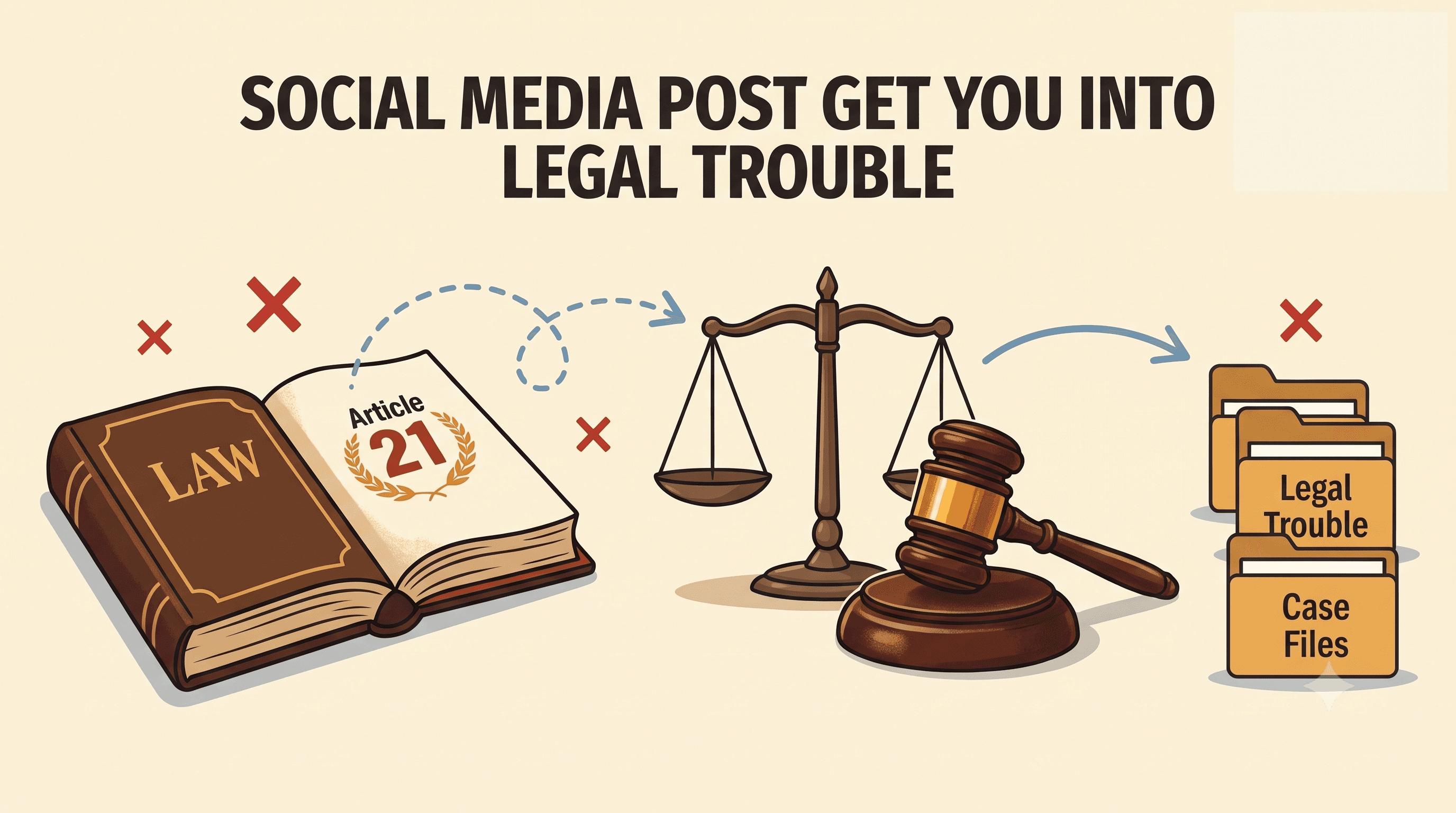
This creates a legal question that is easy to overlook: when does an impulsive online reaction become conduct with real legal consequences?
When Emotion Meets the Law
Social media encourages immediate reactions. People often post when they are angry, frustrated, excited, or looking for attention. An online audience can also make arguments escalate. Unlike a private conversation, however, a social media post can be reproduced and circulated long after the original emotion has passed. The real difficulty lies in the gap between temporary emotion and a permanent digital record. A person may regret a statement minutes later, while a screenshot of it may continue to circulate.
Freedom of Expression Has Boundaries
The Constitution of India protects freedom of speech and expression under Article 19(1)(a). Article 19(2) permits reasonable restrictions on that freedom in specified circumstances, including defamation, public order, decency or morality, and incitement to an offence. This does not mean that controversial opinions are automatically unlawful. Criticism and disagreement are important parts of public discussion. The legal question becomes more serious when an online statement affects another person's reputation or involves conduct covered by a specific law.
When Does Criticism Become Defamation?
Section 356 of the Bharatiya Nyaya Sanhita, 2023 deals with defamation. It covers an imputation concerning a person that is made or published with the intention, or knowledge or reason to believe, that it will harm that person's reputation. Consider a simple example. A person has an argument with a local shopkeeper and posts that the shopkeeper is a “fraud” who cheats customers, without a reasonable basis for the allegation. Because such a statement can reach a large audience quickly, the reputational impact may be significant. However, criticism is not automatically defamation. Section 356 contains exceptions, including certain statements involving truth and public good and opinions expressed in good faith in circumstances recognized by the provision. The distinction between an opinion, criticism, and a factual allegation therefore matters.
The Screenshot Problem
Privacy adds another dimension. During online disputes, people often share screenshots of private conversations to prove their side of an argument. But a conversation shared privately can become public within seconds. The issue is not simply whether a screenshot can be posted. It is whether publishing it may unnecessarily expose another person's private information, harm their reputation, or create other legal concerns depending on the circumstances. This is where technology changes the nature of an ordinary disagreement. A private exchange that might once have ended with the conversation can now become a permanent and widely circulated record.
Why Instant Reactions Matter
Social media creates a mismatch between the speed of decision-making and the duration of consequences. The decision to post may take ten seconds; the consequences of that post may continue for months or even years. In my view, the biggest problem is not that people have the freedom to speak online, but that they often do not realize how permanent their words can become. An online statement can move from a personal reaction to a public record almost instantly. This is why basic legal awareness should be treated as an important part of digital literacy.
A Little Caution Goes a Long Way
This does not mean that people should stop expressing themselves online. Instead, users should pause before posting about another person and ask a few basic questions: Am I expressing an opinion or making a factual allegation? Is the information verified? Am I unnecessarily sharing somebody else's private information? Could my words reasonably be understood as a threat or harassment? These questions do not require legal expertise. They simply encourage people to recognize that online expression can affect real people beyond the screen. The challenge for law is therefore not to treat every unpleasant post as unlawful. It is to maintain a balance between protecting freedom of expression and protecting legitimate interests such as reputation and privacy. For users, the same balance begins with understanding that a moment of online anger can create a record that outlives the anger itself.
Dipti Mishra
B.A Student
Veer Bahadur Singh Purvanchal University
Sign in to join the discussion.

The natural law theory may be considered the most durable foundation of jurisprudence, allowing one to look at the validity, morality, and purpose of the positive law. As suggested by Italian jurist Giorgio Del Vecchio, natural law is a system of high principles like morality, justice, ethics, right reason, equality, and freedom as a constant striving for justice.
The law can protect property, enforce obligations, and provide remedies for legal wrongs. But it cannot force someone to love another person. A promise may begin in the heart, but only certain promises can find their way into the courtroom. Perhaps that is where the law wisely draws its line: it can regulate the legal consequences of love, but it cannot regulate love itself.