Anant Gupta
19 Sept 2026 6 min read
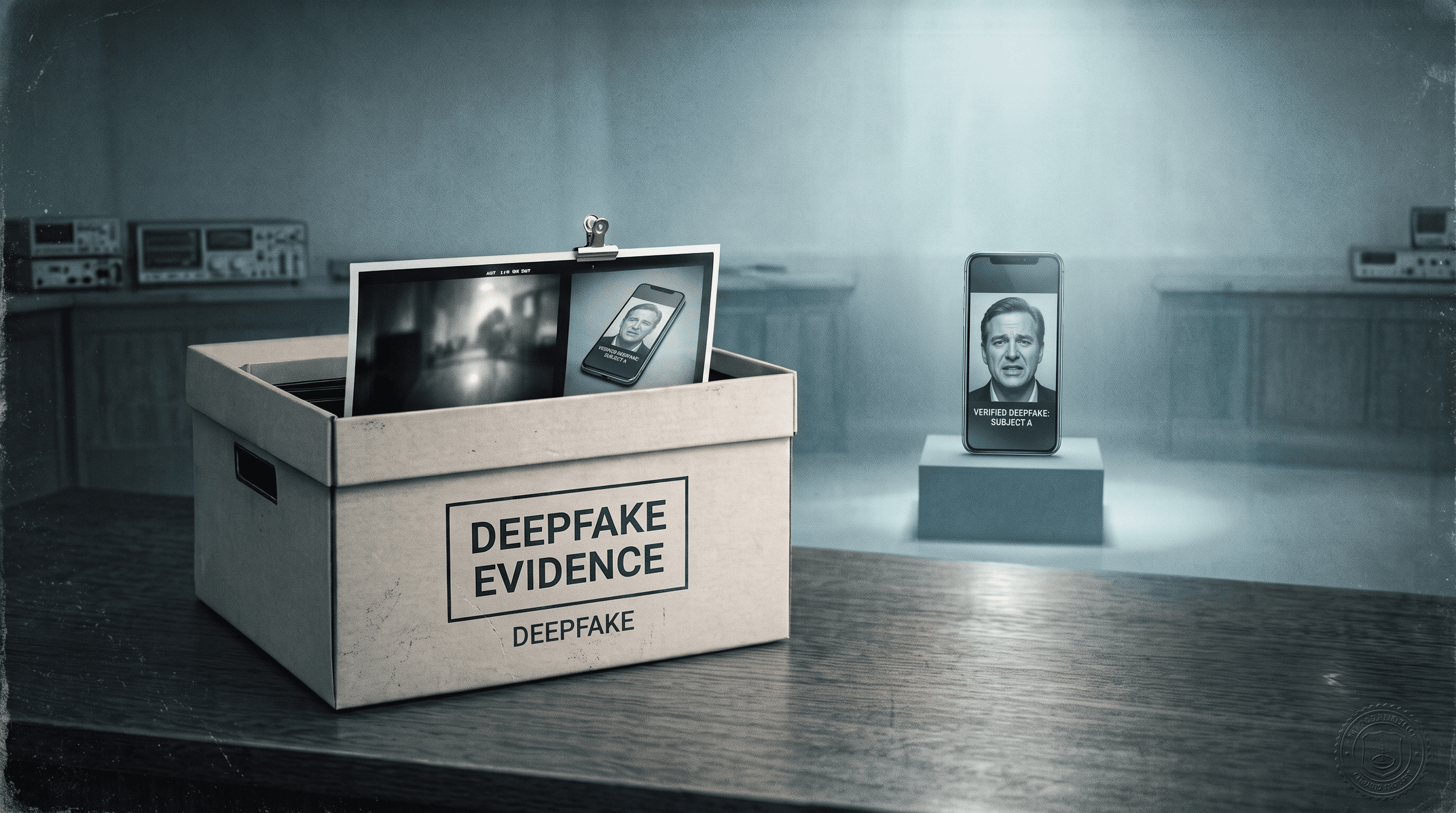
Deepfake technologies put into question the belief that visual and audio evidence provides an accurate depiction of the reality because although the legal process involves examination and cross-examination of the evidence in order to uncover the truth, both of them presuppose that the human mind is able to discern fact from fiction. Nonetheless, psychology shows that this is not always possible because perception is affected by cognitive biases and sensory illusions. It is necessary to understand that deepfakes reveal a serious flaw of evidence law which involves the use of assumptions about human cognition which do not necessarily apply anymore. Thus, the integration of psychological knowledge into the process of formulating evidentiary rules and working in court is crucial in order to avoid this problem.
I. Deepfakes and the Growing Reliance on Digital Evidence
Deepfakes are those synthetic media that are produced utilizing artificial intelligence technology and especially utilizing methods based on deep learning, to create realistic but fabricated images, videos or audio recordings. In contrast to classical manipulations, deepfakes cannot be detected just by looking at them because they look quite real. Modern legal systems have begun to heavily depend on digital evidence, where all kinds of electronic information, CCTV footage, call logs and content from social networks are essential to conducting investigations. In the case of India, the use of such evidence has been legalized as part of the Information Technology Act of 2000 and integrated into the Indian Evidence Act of 1872 (now Bharatiya Sakshya Adhi Niyam of 2023 Sections 61 & 62). Such reliance on digital evidence presumes that digital evidence is inherently reliable and authentic. However, in the context of deepfakes, one must assume that there is no guarantee that any digital information is not deepfake.
II. Psychological Foundations: Why Humans Are Easily Deceived
The vulnerability of legal systems to deepfakes is rooted not merely in technological sophistication but in human psychology.
a. Visual Credibility Bias: People generally have a tendency to believe their eyes more than any other form of perception. Psychological studies suggest that humans attribute more credibility to information when they visually perceive it as compared to when they hear or read the same information. This “seeing is believing” heuristic is deeply ingrained and often operates unconsciously.
b. Confirmation Bias: People generally understand any information or a situation based on their prior assumptions or beliefs. If a deepfake corresponds to people's assumptions and beliefs, they are less likely to doubt its credibility.
c. Human Decision-Making Biases: Humans' decision-making process often includes various heuristics (mental shortcuts rather than deliberate analysis) which, while being effective, significantly decrease their accuracy in many cases. In particular, heuristics reduce the accuracy of people's evaluation of complex situations, such as deepfakes, where media content might be digitally altered.
d. Illusion of Truth Effect: Repeated exposure to an information increases the likelihood of it being perceived as true, regardless of its actual veracity. In the context of deepfakes, repeated circulation of manipulated media can reinforce false beliefs. Crucially, these cognitive limitations are not confined to common people. Empirical research indicates that even trained professionals, including judges, are susceptible to bias and perceptual error. The legal system’s reliance on human judgment therefore becomes a structural weakness in the age of synthetic media.
III. Evidence Law and Its Rationalist Assumptions
Evidence laws in India rest upon the principle that there exists a possibility of obtaining truth through rational methods. Processes like cross-examinations, expert testimonies and document verifications aim to validate pieces of evidence. According to sections 61 and 63 of the Bharatiya Sakshya Adhiniyam 2023, evidential standards of electronic records should be certified before being accepted into evidence. Nevertheless, these standards focus more on issues related to evidentiary admissibility rather than on epistemological considerations. It is assumed that once procedural requirements are met, the court would be able to evaluate the evidence rationally. Such an approach becomes increasingly problematic as deepfakes can bypass standard procedures used in the evaluation of digital records. Even if any doubt arises, humans are simply unable to process the evidence accurately in terms of its authentication.
IV. The Crisis: Structural Failures in the Age of Deepfakes
The interaction between deepfakes and human cognition demonstrates several problems for the legal system:
a. Authenticity Problem: If one can make fake digital evidence believable enough, it loses its value as proof. The court will find it difficult to know if the evidence is authentic or manipulated.
b. Epistemic Instability: The legal process operates under stable assumptions about truth. However, with deepfakes, the truth becomes probabilistic instead of knowable.
c. Evidentiary Burden Misalignment: The emergence of deepfakes leads to a host of questions: Who must prove whether something is real or fake? Making people prove that a piece of digital evidence was manipulated may be too much to ask.
d. Illusion of Judicial Competence: There is a high probability that judges will underestimate their incompetence when evaluating manipulated digital evidence. Taken together, these problems indicate that the legal process lacks the necessary tools to respond to deepfakes.
V. Comparative Perspectives and Emerging Responses
Across the globe, legal frameworks have started to respond to the disruptive possibilities offered by deepfakes, especially when the reliability of information is key. In the United States, for example, regulatory discussions and judicial decisions have become increasingly oriented toward the consequences of deepfakes in relation to elections, criminal justice processes and defamation. Problems include doctored videos with the potential to deceive the electorate, as well as fabricated audiovisual materials that might lead juries to be misled and affect judicial outcomes. In the EU, regulations have been developed to categorize and regulate artificial intelligence systems, including those with the capacity to create deepfakes as part of their operations. It appears that legal frameworks have started to realize the disruptive possibilities of deepfakes and their potential to affect legal processes.
VI. Towards Reform: Bridging Law and Psychology
However, reforms must be conducted from a holistic perspective that takes into account the intersection of technology, legal procedure, and cognitive processes. Legal and judicial education must include an understanding of the human cognitive fallibility which allows to see the inherent imperfection of credible visual evidence. At the same time, evidentiary framework must be enhanced through better authentication processes, re-evaluation of the application of traditional standards of proof in cases related to deepfakes, and development of proper presumptions with respect to artificial intelligence. Ultimately, the problem of deepfakes is not only related to the authenticity of particular pieces of evidence but also to the epistemological assumptions that underlie legal truth-seeking process. Traditionally, the law has been based on the idea of human perception being a tool to reconstruct reality. However, the psychology shows that perception is always selective, fallible, and open to manipulation. In an environment when the reality itself can be artificially manufactured, evidentiary procedures must go beyond the assumption of the veracity of credible evidence. Thus, the future of evidence law will be in combining psychology with changes in law and technology to ensure that the search for truth is methodologically solid and not based on the authenticity of the evidence.
Anant Gupta
Third-Year B.A. LL.B. (Hons.)
Dr. B. R. Ambedkar National Law University, Sonepat
Sign in to join the discussion.

Indian criminal courts have, since the mid-1990s, protected survivors of sexual violence from a peculiar demand: that trauma be remembered like an invoice, in perfect order, down to the make of a car or the exact hour of an assault. Courts now accept that delay in reporting and gaps in a victim's account do not, by themselves, indicate falsehood.
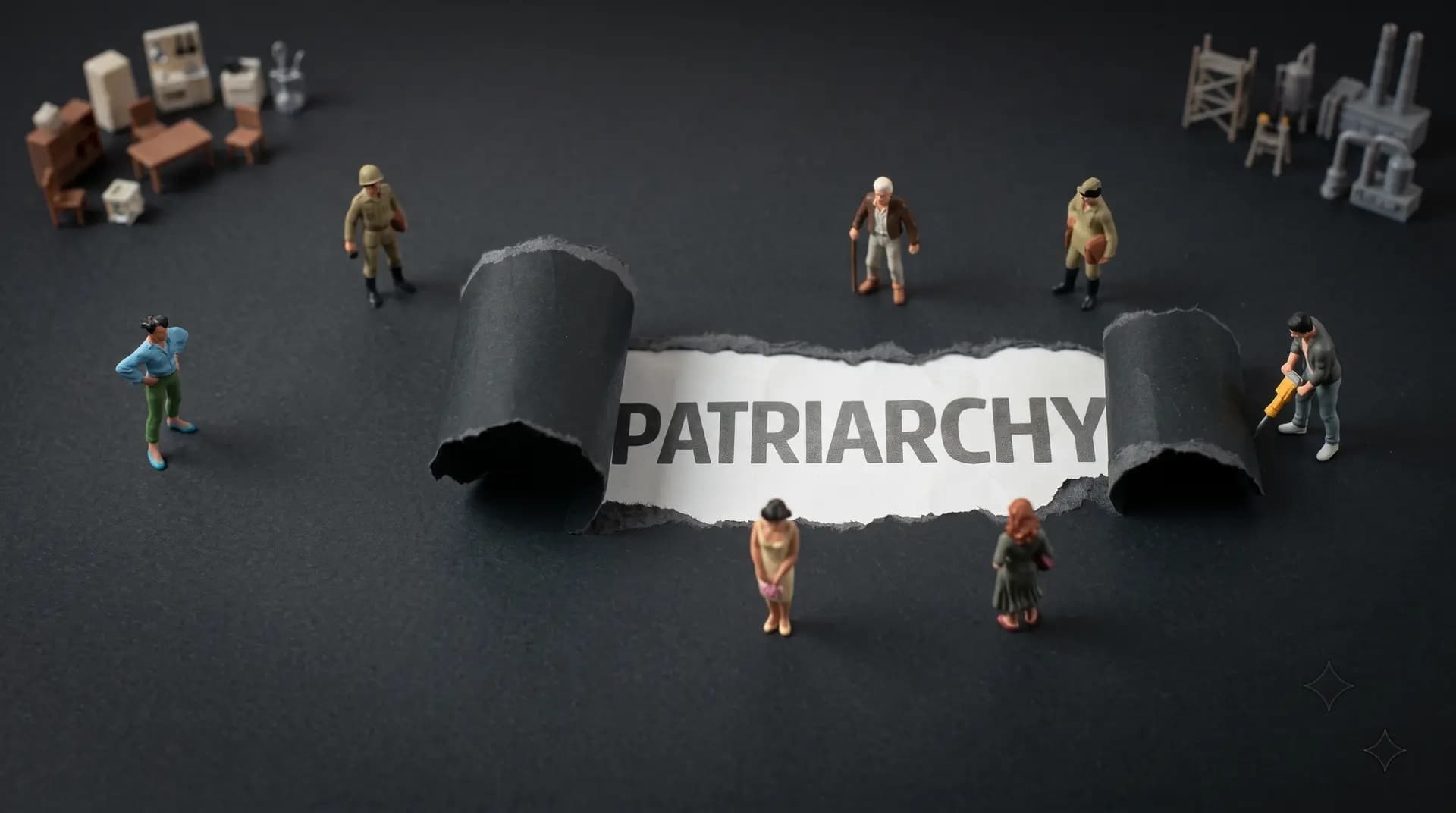
Patriarchy is one of the oldest and most deeply entrenched forms of social organization; it refers to a kind of social structure in which men possess more authority, power, and control than women, particularly in the areas of family, politics, economics, and culture.