Kavya Shukla
6 Sept 2026 10 min read
The assessment of trauma victim is often based on general assumptions about remembrance and behavior. The scars on the psyche are invisible through the socio-legal lens ordinarily used in reading testimonies. However, trauma is result of a disturbing experience causing helplessness, fear, dissociation, or other disruptive feelings. It has an intense impact on the functional aspects of a victim, affecting memory and perception. This tension raises a significant evidentiary question: if inconsistency with standards of victimhood provides a legitimate basis for doubting testimony?
Professionals are increasingly becoming aware of the fact that trauma among victims is not a rare occurrence.[i] Such victims show distinct deviations from the ‘ideal victim’ standards currently being heavily relied upon by the judiciary. The Supreme Court has particularly cautioned about disbelieving a traumatised prosecutrix in sexual-offence cases.[ii] Forensic psychologists identify these patterns and provide an independent psychological assessment of the victim.[iii] They inform about the scientific compatibility of memory patterns with trauma, and if evidentiary conclusions can legitimately be derived from them.
The Architecture of Memory
Human memory is not a tape recording of the past experiences.[iv] It is built through experiencing, perceiving, consolidating, storing, and retrieving events. However, during a traumatic event, the emphasis may narrowly be on the immediately threatening information. This interferes with the processing of peripheral details while leaving particularly silent fragments unusually vivid.[v] It produces an apparent paradox where a victim may remember the event both intensely and incompletely simultaneously.
The inconsistent remembrance is not legally irrelevant but its probative value must be contextually assessed. For instance, a survivor of a sexual assault may remember the colour of the clothes worn by the assailant, a particular sentence, or physical sensation of being restrained. She might yet be unable to establish the incident in precise chronology. However, such fragmented memory should not automatically translate into rejection of her testimony.
Research concerning PTSD sufferers indicates that victims can experience intrusive trauma memories while simultaneously exhibiting difficulties in autobiographical or episodic memories.[vi] Forensic assessment must distinguish between memory vividness and memory accuracy. A vivid recollection is not necessarily totally accurate, as uncertainty about peripheral details does not always establishes fabrication.
Evidence extracted through victim’s memory can contaminate through post-event information, repeated questioning, discussion with other witnesses, or suggestive identification procedures. Notwithstanding, an early uncontaminated memory test may be substantially more informative than later recollections shaped by investigative processes. The implication for experts is that they must consistently inquire and inform the courts under what psychological and investigative conditions a victim’s memory was encoded, retained, and retrieved.[vii]
Unexpected Victim Behaviour
The most common misconception about trauma victims is that their behaviour is entirely predictable. Difficulty arises when conduct does not conform to judicial expectations. For instance, it is expected that a rape victim would scream, immediately report the offence, resist physically, sever contact with the perpetrator, and display visible emotional devastation.[viii] However, trauma responses may include fright, flight, freeze, dissociation, avoidance, emotional numbing, and attempts to make ordinary routines, but no single response can be considered as universal.[ix] Accordingly, their absence cannot be equated with falsehood.
Every behaviour requires contextual interpretation by an expert and not every unexpected observation is necessarily fabricated. Research examining delayed reporting of sexual assault cases has found associations between non-reporting or delayed reporting and factors including acquaintance with the accused, partial or complete amnesia, and consensual interaction occurring before the assault.[x]Another study documents that greater peri-traumatic dissociation was associated with more fragmented memories and incoherent accounts during the police examination. Significantly, those perceptions of incoherence were themselves associated to increased reluctance in proceeding with the case.[xi] The legal implication is that delay may be significant factor, but not necessarily an indicator of non-genuineness.
These unexpected behavioural patterns create a troubling loop: trauma leads to a fragmented recollection and apparently inconsistent account of incident, resulting in disbelief in the testimony of the victim, and withdrawal from the legal process. A testimony impacted by trauma can itself become evidence against the victim. Forensic psychology does not ask the court to believe every explanation offered by a victim, but it requires the court to avoid substituting cultural expectations for scientific evidence.
The Conundrum of Rape Myths
Rape myths are socially embedded assumptions about the supposed behaviour of genuine victim. Empirical researches have consistently demonstrated that such assumptions influence the perception of victims and decisions within the criminal justice system.[xii] The problem is not merely moral. It penetrates deeper into the treatment meted out to a rape victim within the legal system. If an investigator believes that a real victim would immediately report the offence, a delayed complaint may be deemed as suspicious. If a public prosecutor believes that a genuine response from a rape victim involves fear and lamenting, he would consider calmness as a sign of deception. If a judge believes that resistance is a natural response, the absence of physical injuries may be interpreted as evidence of consent.
However, these stereotypical beliefs rarely correspond with the reality. A study found that not a single case within its sample possessed all the characteristics traditionally associated to the ‘real rape’ stereotype.[xiii] The expertise of forensic psychologist is better directed towards explaining why certain behaviours that appear counterintuitive are psychologically possible, and why certain assumptions about trauma lack scientific foundation. Indian jurisprudence increasingly recognizes the dangers of evaluating victim’s testimonies through stereotypical standards as in Mathura rape case[xiv] and present position is shaped around sensitivity and scientific approach.
A Story of Caution
Elaine accused her father George Franklin of murdering Susan Nason. She claimed about recovering memory of witnessing the murder and Franklin was convicted largely on the basis of her testimony. This became one of the landmark cases about controversy surrounding recovered memories. Questions were raised about circumstances under which complainant’s recollections emerged, including the allegations concerning hypnosis and therapy.[xv] An essential distinction was demonstrated: a person’s genuine belief in a memory does not scientifically establish the accuracy of every recollected component.
Psychological researchers indicate that some people can recall previously inaccessible dramatic experiences while experimental research demonstrates that suggestive procedures may lead to false autobiographical memories as well.[xvi] The lesson is: extreme conclusions must be avoided. It should neither be assumed that ‘repression of traumatic memories and subsequent recovery proves authenticity’ nor ‘the occurrence of the event could be disproved if the victim could not remember it for a long time.’ Memories should instead be evaluated according to the circumstances of the case supplemented by independent evidence.
In State of Punjab v. Gurmit Singh,[xvii] court said that delayed reporting and alleged unnatural conduct could not become automatic reasons to disbelieve a prosecutrix. It cannot be ignored that sexual offences carry distinct social pressures and hesitation in reporting arises from concerns about reputation, family honour, and the consequences following disclosure. The significance of this case lies in its support to the principle associated to forensic psychology: victim behaviour must be understood contextually, and not through an imagined template of the ideal victim.
It has also been observed that while a witness can become more confident after repeated exposure to a particular narrative, a truthful trauma victim could become less confident when repeatedly challenged.[xviii] Thus, confidence can itself be misleading and is not an interchangeable variable to accuracy.
The forensic psychologist distinguishes between central contradictions and peripheral discrepancies. For example, certainty about the timing of the assault, and contradiction about the identity of the perpetrator, both have consequences of distinct significance. A scientific evaluation therefore seeks: what kind of information has changed, when it changed, and why it might have changed.
Towards an Informed Approach
A trauma-informed approach brings us to these five principles relevant to a mature forensic system: the behaviour of the victim should not be treated as a substitute for credibility assessment; early memory evidence should be preserved before investigative contamination, the contradictions must be contextually evaluated, both the extremes of excessive scepticism and unquestioned acceptance must be resisted, and the forensic psychologists should be treated as interpreters of psychological evidence and not as certifiers of victim’s credibility.
The deepest lesson of trauma-informed forensic psychology is that human behaviour after traumatic experience is not a code that can be mechanically cracked. A narration in a chronological order is not necessarily more reliable than remembering and communicating the incident in fragments. An expert cannot provide definite answers to whether the truth has been buried or falsehood has been constructed, but can only indicate if testimony is impacted by trauma.
Though the law passionately seeks a coherent testimony, trauma victims often possess a deconstructed memory. The forensic experts assist in making that memory decipherable to the courts and explain why human memory sometimes refuses to act like evidence, even when it carries truth of an experience. The relevant judicial question should not be if a victim behaves ideally. Rather, it should seek inferences through aid of scientific literature about victim’s behaviour, improving the quality of reasoning behind evidence assessment.
[i] S. N. Gold, The relevance of trauma to general clinical practice, S(1) Psychological Trauma Theory Research Practice and Policy 114 (2008).
[ii] Tulshidas Kanolkar v. State of Goa, (2003) 8 SCC 590.
[iii] Lisa M. Rocchio, Ethical and Professional Considerations in the Forensic Assessment of Complex Trauma and Dissociation, 13 Psychological Injury and Law 124 (2020).
[iv] Bharwada Bhoginbhai Hirjibhai v. State of Gujarat, (1983) 3 SCC 217.
[v] Todd C. Buckley, Edward B. Blanchard & W. Trammell Neill, Information Processing and PTSD: A Review of the Empirical Literature, 20 Clinical Psychology Review 1041 (2000).
[vi] Claire L. Isaac, Delia Cushway & Gregory V. Jones, Is Posttraumatic Stress Disorder Associated with Specific Deficits in Episodic Memory?, 26 Clinical Psychology Review 939 (2006).
[vii] Laura Mickes, Brent M. Wilson & John T. Wixted, The Cognitive Science of Eyewitness Memory, 29 Trends in Cognitive Sciences 655 (2025).
[viii] Paul S. Appelbaum, Trauma and Memory: Clinical and Legal Controversies (Oxford University Press 1997).
[ix] A.W. Burgess, Rape trauma syndrome, 1 Behavioral Sciences & the Law 97 (1983).
[x] Sofie Stokbæk, Cecilie Ls Kristensen & Birgitte Schmidt Astrup, Police Reporting in Cases of Sexual Assault: A 10-Year Study of Reported Cases, Unreported Cases, and Cases with Delayed Reporting, 17(3) Forensic Science Medicine and Pathology 395 (2021).
[xi] Amy Hardy et al., Does Trauma Memory Play a Role in the Experience of Reporting Sexual Assault During Police Interviews? An Exploratory Study, 18 Memory 171 (2010).
[xii] Kimberly A. Lonsway & Louise F. Fitzgerald, Rape Myths: In Review, 18 Psychology of Women Quarterly 133 (1994).
[xiii] Genevieve F. Waterhouse, Ali Reynolds & Vincent Egan, Myths and Legends: The Reality of Rape Offences Reported to a UK Police Force, 8 Revista de Psicología 1 (2016).
[xiv] Tukaram v. State of Maharashtra, (1979) 2 SCC 143.
[xv] Franklin v. Duncan, 884 F. Supp. 1435, 1438–40 (N.D. Cal. 1995); George Thomas Franklin v. Jim Fox, 312 F.3d 423, 426-30 (9th Cir. 2002).
[xvi] Chris R. Brewin & Bernice Andrews, Recovered Memories of Trauma: Phenomenology and Cognitive Mechanisms, 18 Clinical Psychology Review 949 (1998).
[xvii] (1996) 2 SCC 384.
[xviii] Charles A. Morgan III & Steven M. Southwick, I Believe What I Remember, but It May Not Be True, 112 Neurobiology of Learning and Memory 101 (2014).
Kavya Shukla,
Student at The Rajiv Gandhi National University of Law, Patiala
Sign in to join the discussion.

Indian criminal courts have, since the mid-1990s, protected survivors of sexual violence from a peculiar demand: that trauma be remembered like an invoice, in perfect order, down to the make of a car or the exact hour of an assault. Courts now accept that delay in reporting and gaps in a victim's account do not, by themselves, indicate falsehood.
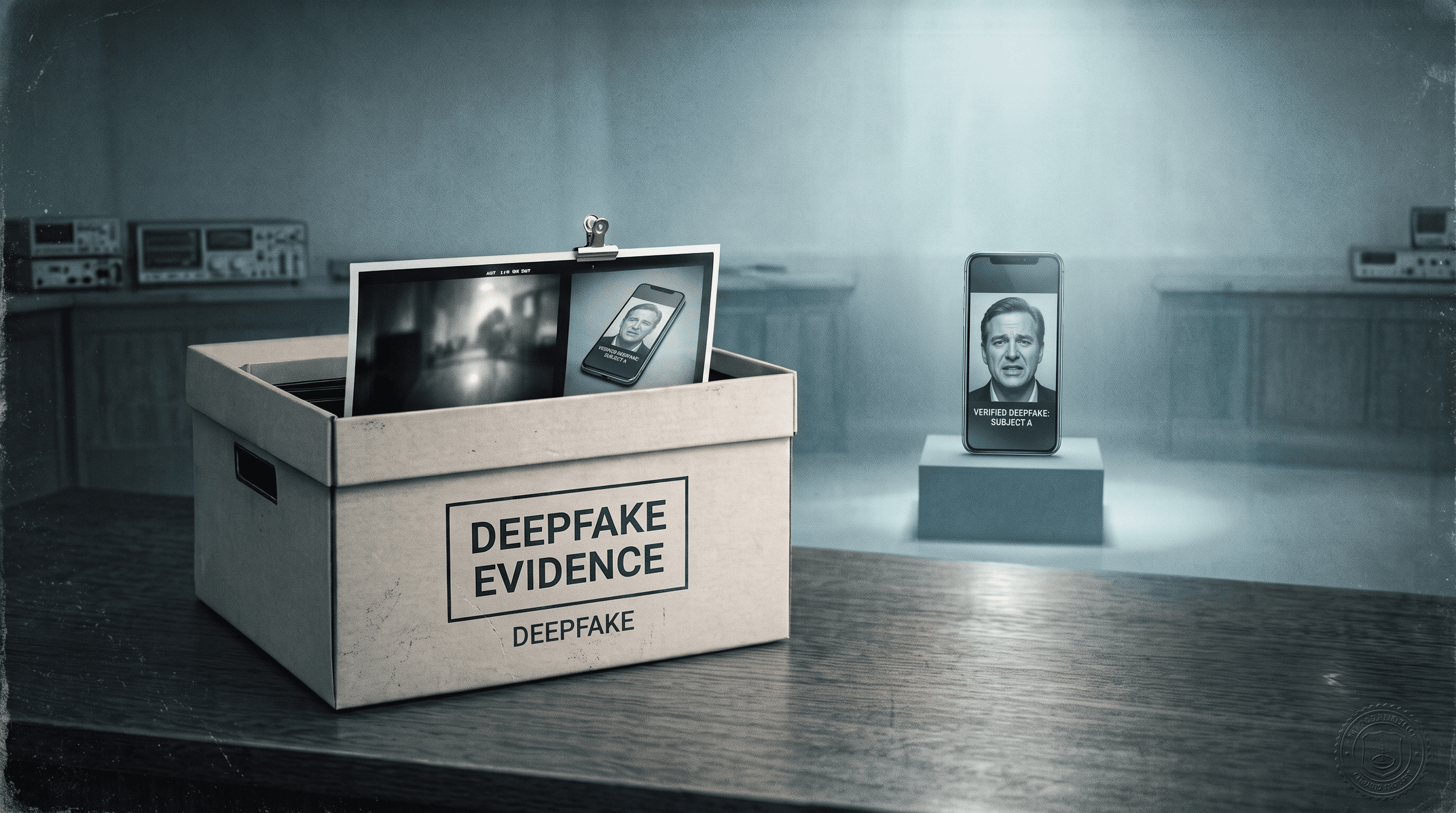
Consider a criminal case where there are clear video evidence and distinct audio evidence. This kind of evidence is considered to be very credible. However, what if the evidence is a deepfake?