Yashasvi Maharshi
29 Sept 2026 4 min read

For 153 years, Indian law has said one specific thing about a bet that if you lose, nobody can make you pay. Section 30 of the Indian Contract Act, 1872 declares wagering agreements void, which sounds like a prohibition and has been taught as one in law schools ever since. It is not. A void contract is simply one a court will not enforce. Section 30 never made betting a crime, never stopped a platform from taking your money, and never asked how the winner actually got paid. It only promised that if a dispute over a bet ever reached a courtroom, the judge would decline to touch it.
That distinction sat quietly for over a century because it rarely mattered. Informal bets on cricket matches or elections do not generate paper trails or lawsuits; the loser either pays up out of social obligation or does not, and nobody sues over it. But the distinction stopped being academic the moment real money gaming moved online. Fantasy sports, rummy platforms and betting-adjacent apps-built business models on exactly the gap Section 30 left open which is that the contract underlying every bet was void, but the transaction never needed a court to enforce it. Money moved through prepaid wallets, UPI, and escrow accounts the moment a game ended, not through a decree. Section 30 could refuse to recognize these agreements all it liked but it had no purchase on money that already changed hands electronically before anyone thought to litigate.
This is the quiet failure that the Promotion and Regulation of Online Gaming Act, 2025 finally addresses, and it is worth being precise about what changed. The 2025 Act does not amend Section 30 or strengthen its voidness. It abandons that entire framework and reaches for a different tool altogether: outright prohibition of online money games, backed by licensing through a National Online Gaming Commission and criminal penalties, including imprisonment, for operators who run unlicensed real money platforms. Skill-based esports and fantasy formats survive if they obtain a license; anything built on staking money against an uncertain outcome does not. Where contract law spent a century saying, “we will not help you collect,” the new statute says, “you may not operate,” which is a categorically different kind of intervention. One polices remedies after the fact. The other polices market entry before the fact.
That shift is not merely cosmetic, and it is also not obviously going to work, which is what makes this a genuinely open legal question rather than a settled one. The Act is currently under challenge before a three-judge Supreme Court bench, and the petitions raise an argument that deserves to be taken seriously rather than waved away as industry self-interest. Betting and gambling sit in Entry 34 of the State List, which has historically let states like Goa and Sikkim run their own regulated gaming regimes. A central statute imposing a blanket, India-wide prohibition sits uneasily against that constitutional design, and the petitioners have also raised Articles 14, 19(1)(g) and 21, arguing that an outright ban, rather than calibrated regulation, is a disproportionate response to real but manageable harms like addiction and underage access. The rules under the Act were still unnotified for months after assent, and the matter has already been pushed between hearing dates once, which tells you the government itself has not found this an easy law to operationalize.
There is also a harder question sitting underneath the constitutional one. Section 30's failure was never really about weak language. Courts have applied it consistently and broadly since at least the 1950s, from horse racing to cricket to, eventually, online formats. What defeated it was that voidness assumes a plaintiff who needs a court, and the entire architecture of app-based betting was built to never need one. A prohibition-and-licensing regime does not have that particular problem, since it does not wait for a dispute to arise before acting. But it inherits a different one: enforcement now depends on identifying and shutting down unlicensed platforms, many of which, as with earlier offshore gambling sites, can simply relocate their servers and keep collecting from Indian users through the same payment rails Section 30 could never touch. Changing the legal instrument does not by itself close the gap between what a statute prohibits and what a payment gateway will still process. Whether the 2025 Act actually closes that gap or has simply rewritten an old failure in a stricter register, is the real test still to come.
Yashasvi Maharshi
3rd Year B.A.L.L.B Student at RGNUL
Sign in to join the discussion.

In India the practice survives as khatna or khafz, performed mostly on six- and seven-year-old girls in the Dawoodi Bohra community. There is no official data on it: the government told the Supreme Court that no official data supported the practice’s existence
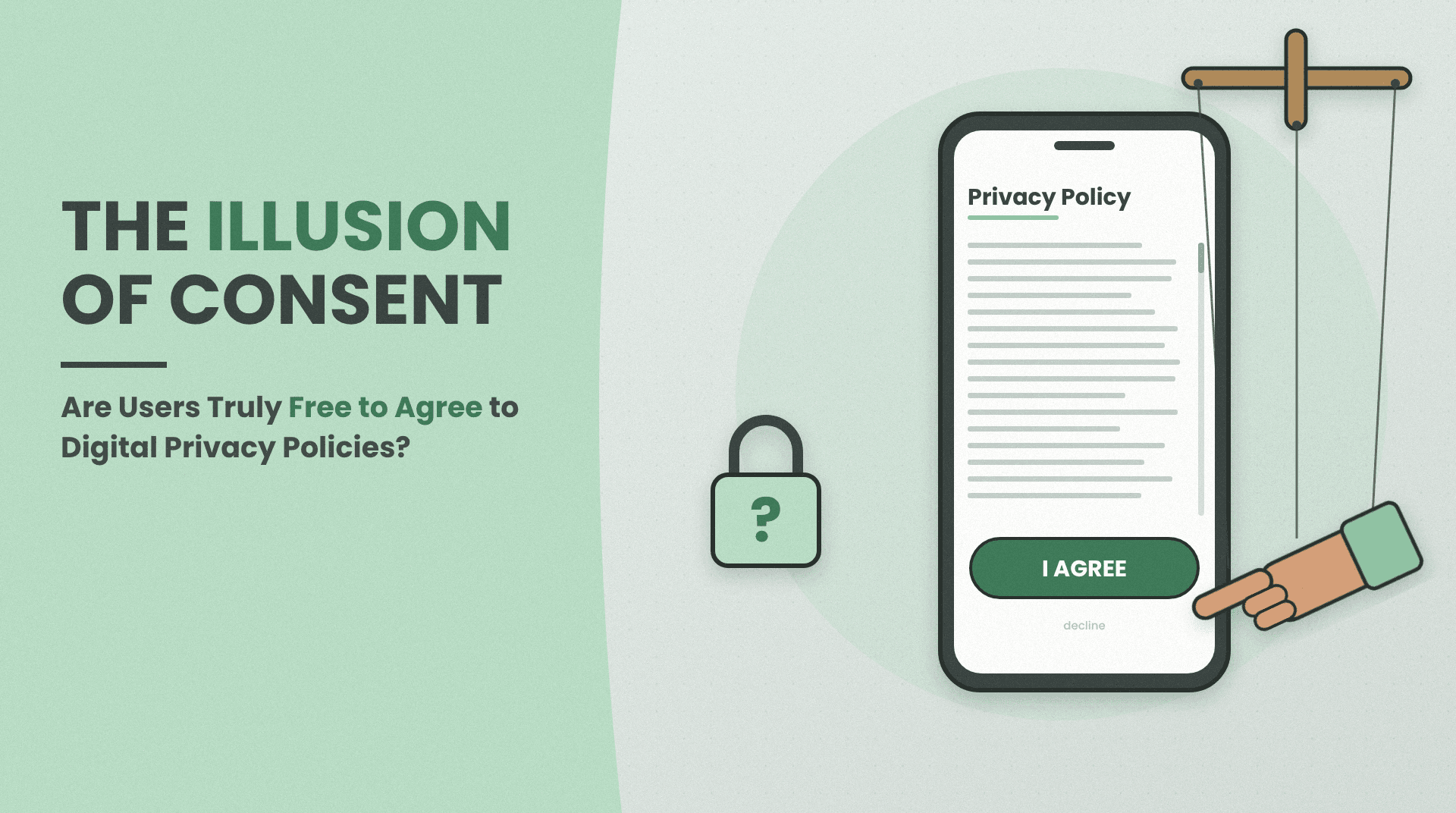
Consent should be judged by whether a person understood what they agreed to, not by whether a click was logged. Until the law asks that question, “I Agree” will stay closer to ritual than choice.