Ishraque Khan Niyazi
24 Aug 2026 4 min read
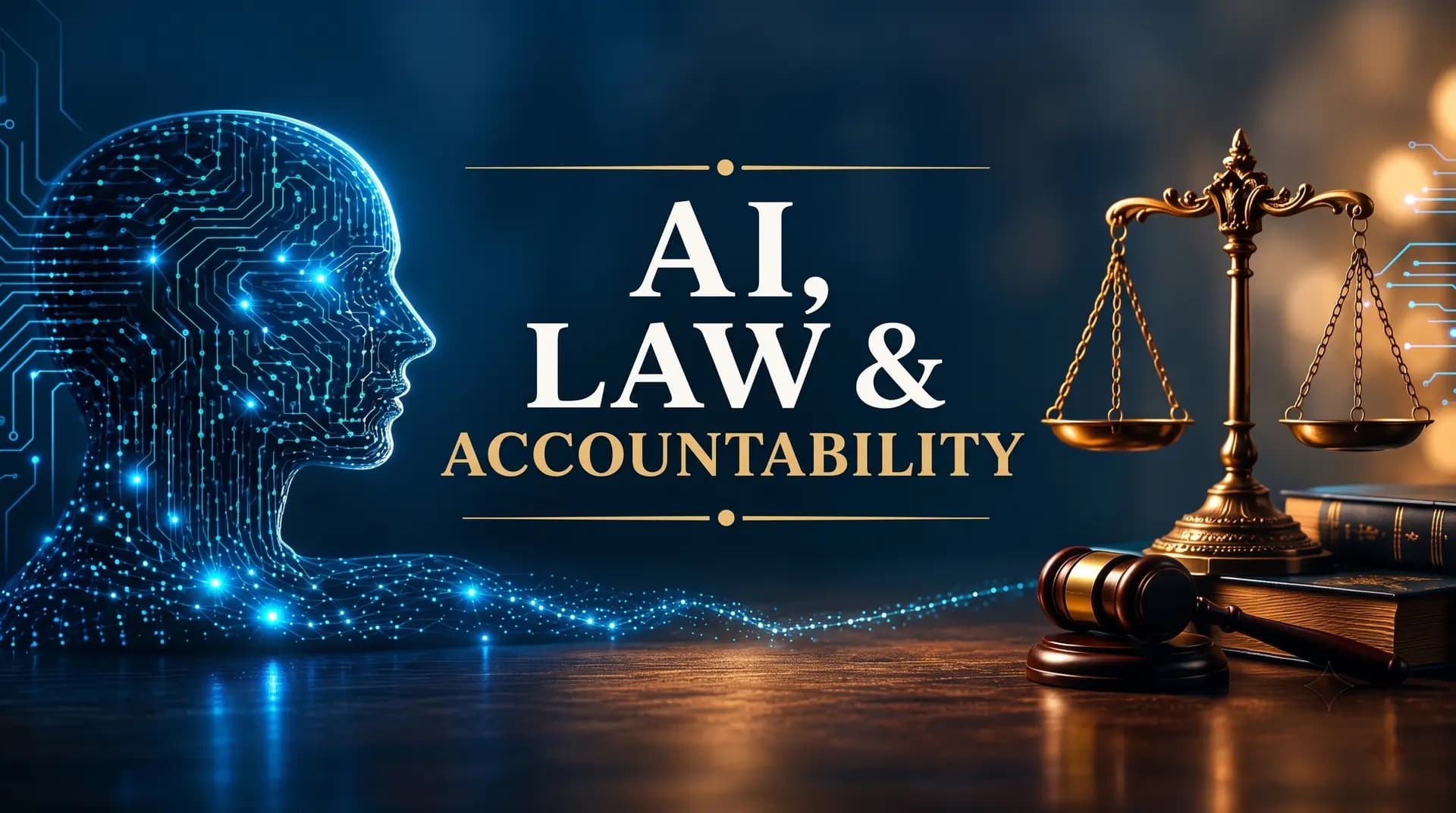
Imagine you get a notice. Of going to a lawyer right away you upload the paper to an AI app. In a few seconds the AI app finds the right laws explains what might happen tells you what to do next and even writes a reply for you.
You follow what the AI app tells you to do. Later you find out the AI app misunderstood an important fact. Because of a missed deadline or a bad legal plan you suffer harm.
Who is responsible?
This is not just a "what if" question. As artificial intelligence gets better at reading papers finding risks and telling people what to do it is getting very hard to tell the difference between a simple tech tool and someone giving real legal advice.
From information to legal advice
There is a big difference between explaining a law and telling a person what they should do.
Saying "this rule usually applies to jobs" is just giving information. But saying "because of your situation you must file a claim under this rule within seven days" is something. That sentence applies the law to a person and tells them exactly what action to take.
This difference matters a lot in India because being a lawyer is about more than standing in a court. In Bar Council of India v. A.K. Balaji the Supreme Court said that practicing law includes things like giving opinions and writing legal papers. The Court also said the Advocates Act 1961 controls these activities.
Section 29 of the Advocates Act says only advocates can practice law and Section 33 says that with some exceptions people must be registered as advocates to work in courts and with authorities.
AI systems do not fit into these rules. AI systems are not advocates. Ai systems are starting to do work that looks a lot like real legal practice.
The accountability gap
Suppose an AI platform gives legal advice, and a user loses money or faces legal trouble. Many people could be blamed: the user who trusted the AI platform the person who built the AI platform the company that sold the AI platform or even a lawyer who helped design the system.
Our current laws do not give an answer for this.
The Consumer Protection Act 2019 might help. Its rules on product liability say that a service provider can be held liable if a service is bad, careless or fails to give warnings. Whether these rules apply to an AI-based legal service depends on the facts and how the user and the platform interact. We cannot just assume that every mistake an AI system makes leads to a lawsuit.
The bigger problem is not that AI systems make mistakes. Humans and experts make mistakes too. The real hard question is who bears responsibility when a system is built to influence a decision but calls itself just "technology.”
What happens when AI starts acting?
Things get more serious when AI moves past just giving advice. Think about a system that watches deadlines writes legal notices talks to the other side and starts a court filing all because a user gave a simple command.
At that point the question is no longer "was the AI answer right?" but who gave the AI permission to take this legal action?”
We cannot treat human oversight like a simple checkbox. If an app gives a legal decision to a user and just adds a tiny note saying "this is AI info, not legal advice " that note might not fix the problem of who is to blame. The way the service actually works is what matters.
A system that only looks up court cases is very different from a system that looks at your specific facts tells you a legal strategy and then carries out that strategy.
India needs a framework
AI can help many people in India get legal information. For people who cannot pay for a lawyer away technology can help explain hard words organize papers and show what questions to ask a professional. Being able to access information should not give people a false sense of safety.
Legal AI systems should be built with limits. Legal AI systems should show the difference between facts and personal advice admit when they are not sure keep a record of what they said and clearly state when a human lawyer must step in.
Importantly new rules should decide who is responsible at every step of the AI process. The developers, the companies, the lawyers and the users do not all have the level of blame. Responsibility should depend on how control each person has over the AI system and what happens next. The future of tech should not just be about how well an AI can read a law or write a notice. It should be about whether the AI system's honest, about what it cannot do.
The real question is not if machines will take the place of lawyers. The real question is whether when software starts making decisions the law will know who is responsible when the software gets it wrong.
ISHRAQUE KHAN NIYAZI

Author is a Lawyer and Senior Software Engineer at Galaxy Weblinks inc | React js | React Native.
Sign in to join the discussion.
The natural law theory may be considered the most durable foundation of jurisprudence, allowing one to look at the validity, morality, and purpose of the positive law. As suggested by Italian jurist Giorgio Del Vecchio, natural law is a system of high principles like morality, justice, ethics, right reason, equality, and freedom as a constant striving for justice.

The law can protect property, enforce obligations, and provide remedies for legal wrongs. But it cannot force someone to love another person. A promise may begin in the heart, but only certain promises can find their way into the courtroom. Perhaps that is where the law wisely draws its line: it can regulate the legal consequences of love, but it cannot regulate love itself.