Athira Das
21 Nov 2026 5 min read
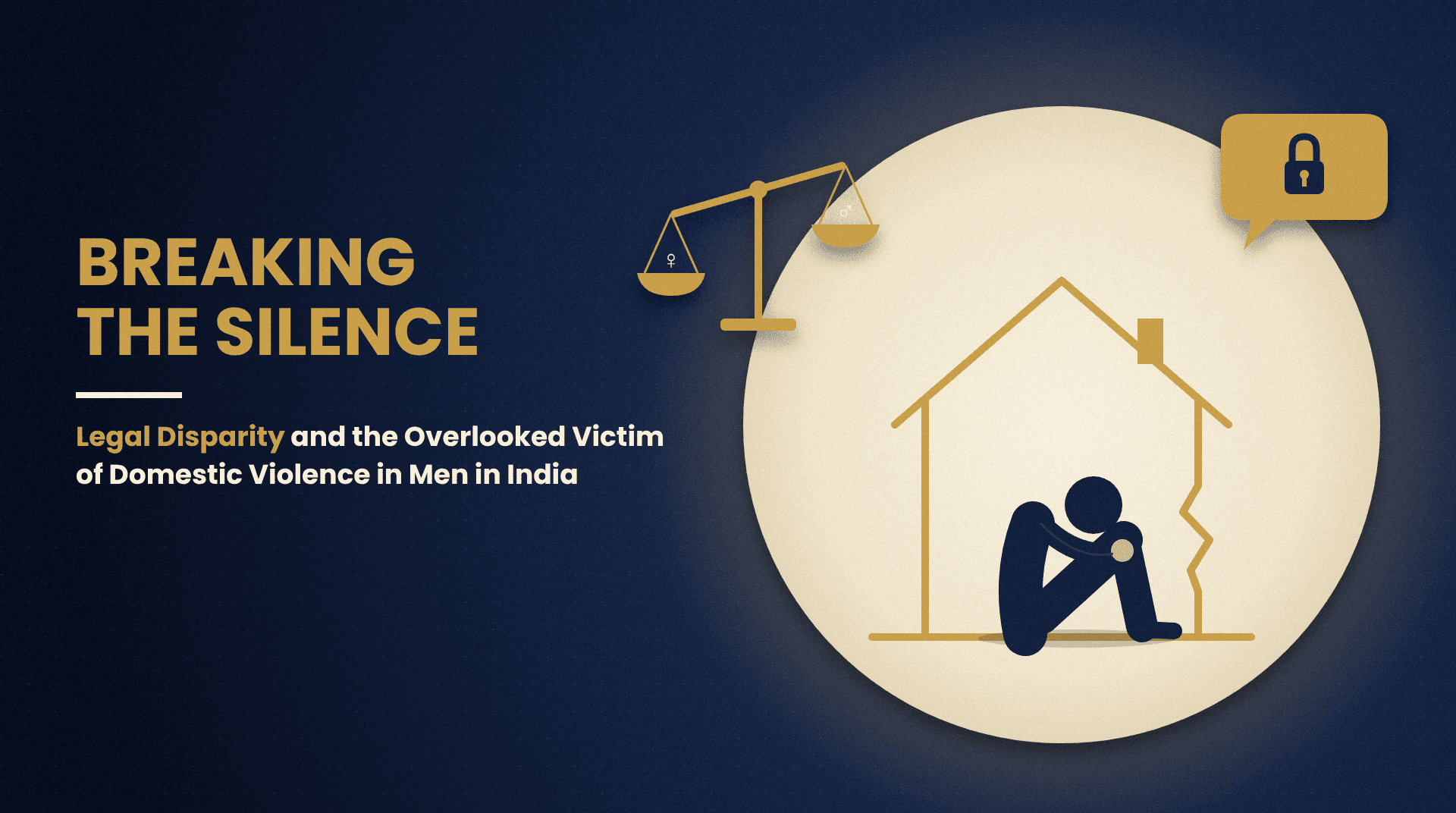
Domestic violence in India is still often seen as a 'woman’s issue' even though women still face more danger. This has led to a system in place that protects women, which leaves men as an afterthought. When men face emotional, financial or legal abuse at home they are not noticed or protected. This is not to say that the protection for women is not important. To have fairness men must also be seen as victims. Section 2(q) of the Protection of Women from Domestic Violence Act 2005 defines the person who is hurt as a woman. Section 85 of the Bharatiya Nyaya Sanhita, 2023 (s. 498A of IPC) also only protects women against cruelty by their husband or relatives. After changing the criminal law there is still a law that is only for women. The courts have seen that these rules are meant to protect but have also said that they are misused. They often lead to accusations against entire families forced deals and damage to social life. Women have access to special, targeted laws designed specifically to protect them, whereas men facing similar issues must use standard, everyday criminal laws.
A Biased Framework
When laws are made to protect people from violence it is assumed that men will be the ones doing the harm. This may have made sense before but has now created a problem. Men who speak up about being hit cut off from money kept away from their kids or threatened with charges are often not believed. Police stations and officers are trained to deal with women who are hurt while shelters and counsellors are mostly for women.
Judicial observations over the last two decades illustrate the tension. In Sushil Kumar Sharma v. Union of India, the Supreme Court acknowledged that the Section 498A could become “a new legal terrorism”, due to the growing trend of frivolous complaints, famously noting that the misuse of Section 498A of IPC. In Arnesh Kumar v. State of Bihar and later in Rajesh Sharma v. State of U.P. the Court introduced procedural safeguards precisely because arrest had become routine and often automatic. A bench of Justices BV Nagarathna and N Kotiswar Singh has, cautioned against abusing matrimonial laws to settle personal grudges against husbands and their families. These interventions recognise that a gender-specific criminal provision, however well-intentioned, can itself generate secondary victimisation. Yet the underlying statute remains unchanged under the BNS. The civil law under the PWDVA was partially opened by Hiral P. Harsora v. Kusum Narottamdas Harsora, which struck down the restriction of “respondent” to adult males. Women can now be proceeded against under the Act, but the category of “aggrieved person” stays closed to women. The asymmetry persists.
Masculinity and Social Stigma
Men do not come forward because of what society expects. Men are taught to be strong to be the ones who provide and never show weakness. Men who admit they were hurt are often laughed at lose their place in society and are seen as having caused the violence. The same reasons that protect women are making men stay quiet. Studies and real stories show that men who face abuse from their partners are more likely to have depression, anxiety and even thoughts of suicide.
This causes problems for those in health and social services. People in these jobs are not trained to see men as victims. Might ignore their stories. They might send them to 'anger management counseling.' This creates a cycle. Since there is reporting there is also little information. That justifies the lack of help and makes the stigma worse.
What Needs to Change to Provide Equal Protections
Many countries have stopped using laws that only protect one gender. For example, the Domestic Abuse Act 2021 in the UK and family violence laws in Australia. These are about the relationship, not the persons gender. India does not need to copy countries laws, but it can take some good ideas. Civil orders, home orders and money help can be given to anyone in a relationship who is hurt. Criminal crimes can be the same for all. Still give extra help to women as history shows they need it. Article 15(3) allows help for women but does not mean they should not be protected at all.
Changes can be made without taking away the help. The definition of 'aggrieved person' in the PWDVA should be updated. A similar or combined civil case should be created so men can claim. Police, officers and judges should be trained to deal with men as victims. Some shelters and help lines should get money so men can use them. At the end, it should be required for the National Crime Records Bureau and NFHS to collect data, on men who are hurt. It should also be required for victims to go through counseling before going to court, which is already being planned through court orders. This will reduce the misuse of the law while letting real victims of both genders file a claim.
Now men have no help. This makes people not trust the protection laws. If a law is seen as unfair and misused real victims of all genders will suffer. The legal system says it wants justice but can't ignore a group of people who are hurt. Men should be. Given the same chance to get civil help, fair investigations and no judgment.
Athira Das | 4th Year, BBA LLB (Hons.)

National Forensic Sciences University, Delhi Campus
Sign in to join the discussion.
A major issue in digital evidence is the difference between admissibility and reliability.
What if someone walks in and decides the dead are simply available?