Nandini Vats
3 Oct 2026 5 min read
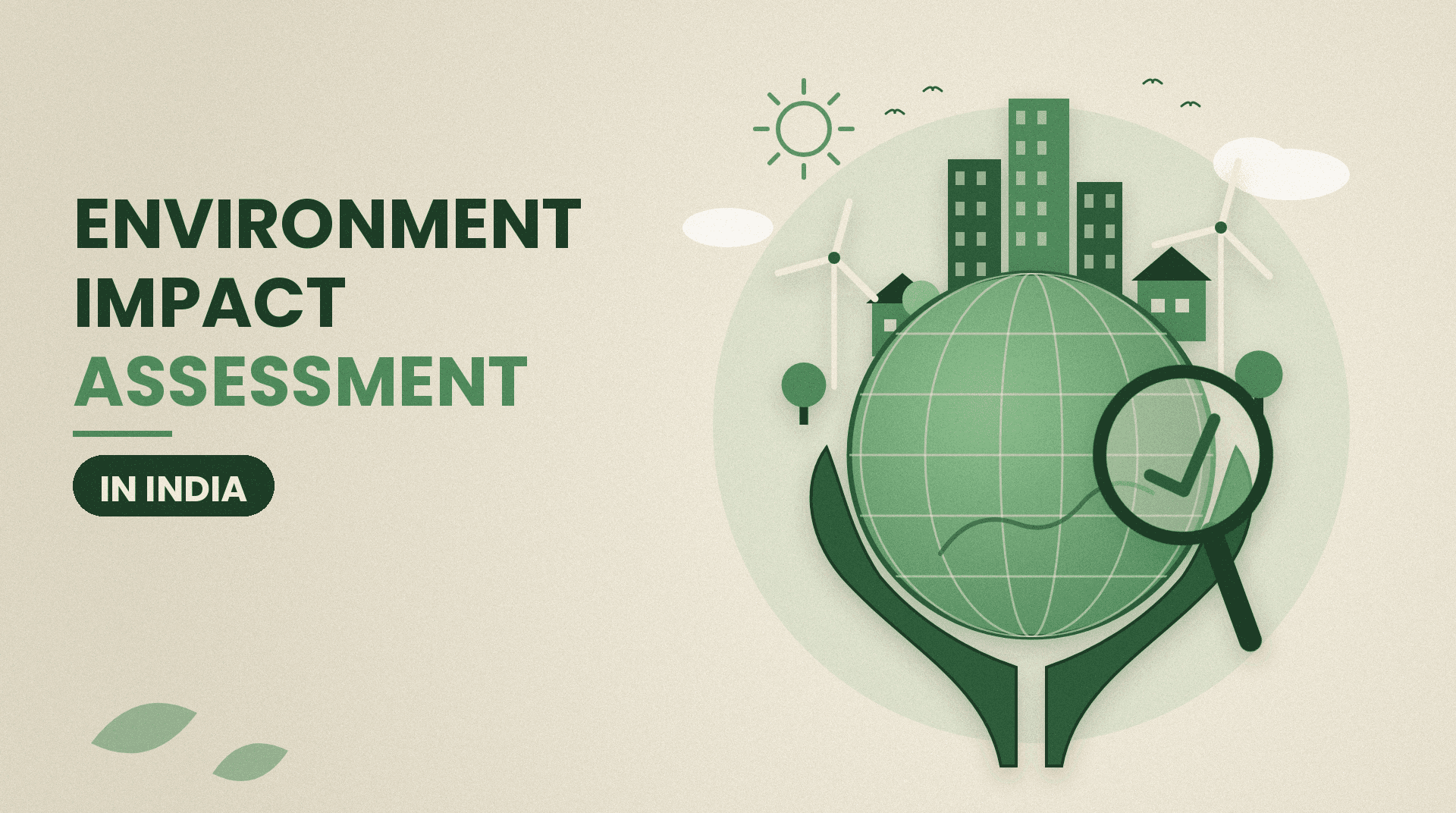
The requirement to conduct an Environmental Impact Assessment (EIA) before authorising activities likely to cause significant adverse environmental harm has become a near-universal feature of environmental regulation. It originated in United States domestic law and has since been absorbed into international environmental law through treaties, Principle 17 of the Rio Declaration, and customary international law as recognised by the International Court of Justice in Pulp Mills. India’s domestic EIA regime is examined here in three parts: the statutory framework, the principal exceptions that qualify it, and an assessment of how necessary and how practically effective the regime is.
A Statutory and Regulatory Framework
India’s EIA regime rests on the Environment (Protection) Act, 1986 (EPA), enacted in the aftermath of the Bhopal gas disaster and following the 1972 Stockholm Conference. Section 3 of the EPA confers on the Central Government a broad rule-making power to protect and improve the environment, exercised through the Environment (Protection) Rules, 1986, Rule 5 of which authorises restrictions on new projects pending environmental clearance. Acting under this power, the Ministry of Environment and Forests issued the EIA Notification 2006, which remains, with amendments, the operative instrument.
The 2006 Notification divides projects into Category A, cleared by the Central Government on the recommendation of an Expert Appraisal Committee, and Category B, screened and cleared at the State or Union Territory level. Category B projects are further screened into B1, which require a full EIA, and B2, which do not. A locational safeguard treats an otherwise Category B project as Category A where it falls within ten kilometres of a protected wildlife area, a critically polluted zone, a notified eco-sensitive area, or an international or inter-State boundary, reflecting the same transboundary and shared-resource sensitivity that animates the customary international obligation. The Notification prescribes four sequential stages: screening, scoping, public consultation, and appraisal. Public consultation, comprising a public hearing at the project site and a written-comment process, is intended to bring the concerns of affected communities into the appraisal record before a clearance decision is taken.
B Exceptions to the EIA Requirement
The Environmental Impact Assessment has several exceptions. First, rule 5(4) of the 1986 Rules allows the Central Government to dispense with prior notice and public consultation where immediate action is considered necessary in practice this emergency exception has been invoked more expansively than its text suggests, curtailing public participation in individual cases. Second, an entire sub-category of projects, Category B2, together with several classes of smaller building, area-development, and linear infrastructure projects, is exempt from public hearing and for B2, from a full EIA report altogether on the premise that their environmental footprint does not warrant the full process.
Third, and most contested, is the practice of ex post facto or post-facto environmental clearance, by which projects that commenced or were completed without prior clearance are permitted to seek regularisation after the fact. The Supreme Court rejected this practice as inconsistent with the precautionary principle in Common Cause v. Union of India and again in Alembic Pharmaceuticals Ltd v. Rohit Prajapati, holding that a retrospective clearance turns the polluter-pays principle into a pay-and-pollute licence and forecloses the very assessment the process is meant to secure. The National Green Tribunal reached a similar conclusion in S.P. Muthuraman v. Union of India. Despite this, the Ministry issued a 2021 Office Memorandum reintroducing a standard operating procedure for violation cases, which the Madras High Court struck down in 2024 as unlawful, illustrating a recurring tension between executive practice and judicial doctrine on this point.
Fourth, the Ministry’s draft EIA Notification 2020, published for public comment but never finalised or brought into force, proposed to institutionalise post-facto clearance through a formal violation window, to shorten the public-hearing notice period from thirty to twenty days, and to enlarge the list of projects exempted from public consultation or from EIA entirely. The draft attracted sustained criticism precisely because it would have codified the practices the courts had already disapproved, and it remains in abeyance.
The case for the EIA requirement in India is strong on its own terms. Environmental clearance has been treated by the Supreme Court as an incident of the right to life under Article 21, and a country with India’s density of population, biodiversity, and industrial expansion has an evident need for a structured, ex-ante mechanism to weigh projects against their environmental costs before, rather than after, resources are irreversibly committed. The four-stage process, the categorisation by risk, and the locational safeguard for ecologically sensitive and border areas are each defensible design choices that track the same logic international law has converged on.
In practicality effectiveness is uneven. Compliance monitoring after clearance is granted, the stage where an EIA’s conditions are actually enforced, is resourced far more thinly than the appraisal stage itself, which helps explain why post-facto regularisation keeps recurring as an administrative default rather than a rare emergency measure. The B2 and public-hearing exemptions, while administratively efficient, remove precisely the projects whose cumulative, small-scale impacts (in construction and urban development, for instance) are hardest to assess without local input. And the repeated attempt, through the 2021 Office Memorandum and the unfinalized 2020 draft, to reintroduce ex post facto clearance after the Supreme Court had twice rejected it suggests a gap between the judiciary’s interpretation and the executive’s administrative power, rather than an isolated lapse.
On balance, the EIA requirement in India is necessary and, in its formal design, broadly sound its practical weakness lies less in the statutory architecture than in enforcement capacity and in a persistent executive appetite for retrospective regularisation that the courts have had to check repeatedly rather than once. India’s EIA regime, anchored in the EPA 1986 and the EIA Notification 2006, gives domestic effect to the same customary obligation the International Court of Justice recognised in Pulp Mills. Its central design, risk-based categorisation, staged process, and a locational trigger for sensitive and border areas, is coherent. Its principal vulnerabilities are the exceptions that erode public participation and the recurring, judicially disapproved practice of post-facto clearance, both of which point to enforcement and institutional will as the more pressing reform priorities, rather than the underlying statutory obligation itself.
Nandini Vats
UPES, Dehradun
Sign in to join the discussion.

Moots reward elaborate memorials, rhetorical flourishes and exhaustive citation. Courts often do not. Real drafting values short, clear pleadings over decorative language. Courtroom advocacy is also less theatrical; credibility built over years matters more than a polished speech. Moots also skip the unglamorous side of practice: client interviews, procedural compliance, filing defects, limitation, and the patience that repeated adjournments demand.
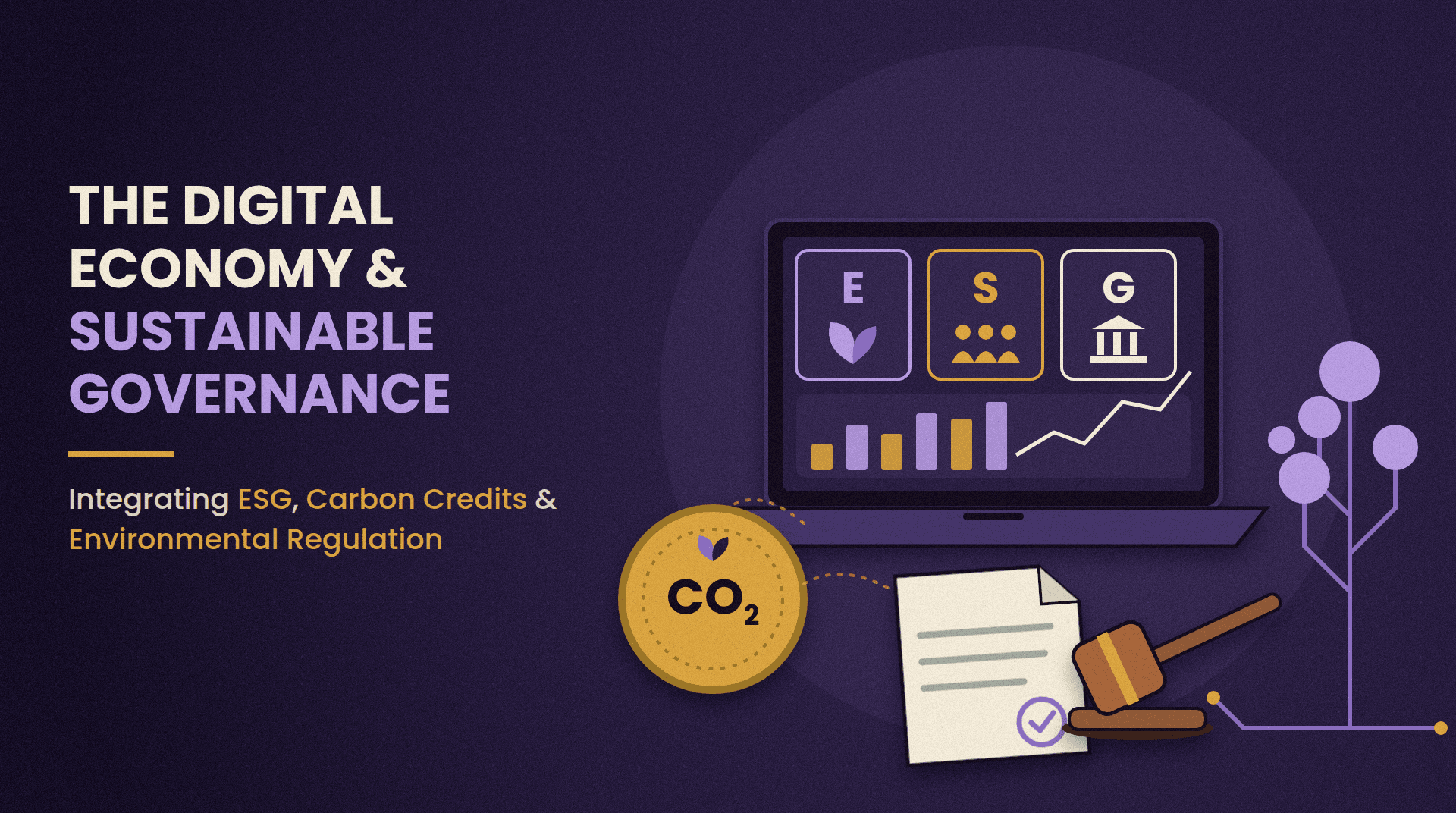
Digital technologies can address some shortcomings of field-based verification. Remote sensors can measure forest cover and methane and other greenhouse-gas emissions faster and over a wider area than traditional field methods. Digital Measurement, Reporting and Verification (dMRV) can improve transparency while reducing costs. But digital tools bring their own challenges.