Atika Khan
20 Oct 2026 2 min read
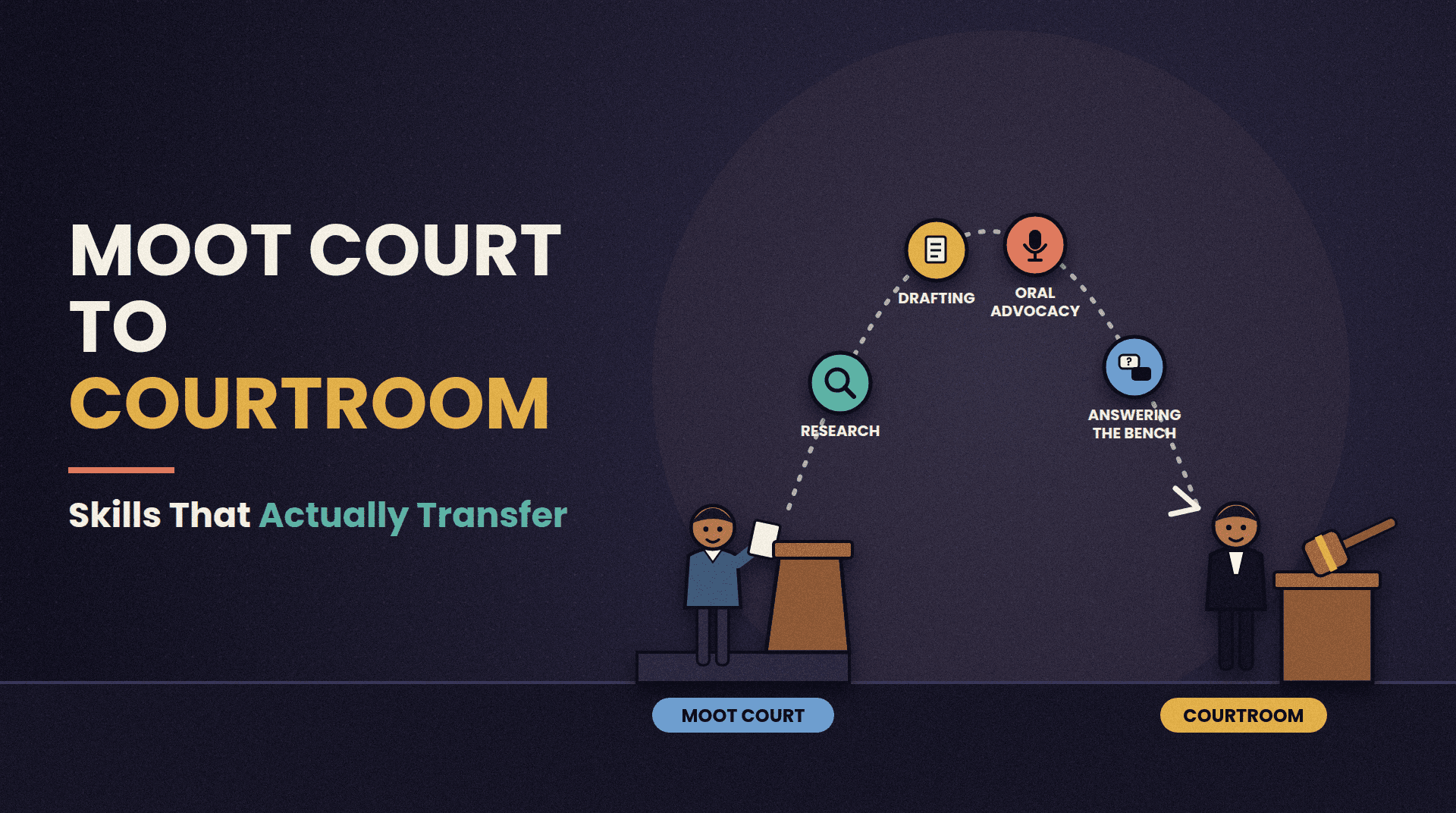
Every year, thousands of law students spend sleepless nights preparing memorials, rehearsing oral arguments and bracing for questions from the bench. When they step into real practice, many wonder whether any of it mattered. The honest answer is yes, though not always in the way students expect. Some moot habits carry straight into the courtroom; others need to be unlearned.
1. Reading the record before the law
A good mooter learns that the moot proposition is everything. Every fact, date and annexure can win or lose the case. In practice, this becomes the habit of reading the case file thoroughly before opening a single judgment. Most hearings turn on facts, not grand legal principles. The lawyer who knows page 47 of the paper book usually has the edge.
2. Framing issues sharply
Moot memorials force students to break a dispute into precise issues. This is exactly what courts expect, whether in framing issues in a civil suit under Order XIV CPC or identifying the core question in a bail or writ matter. A clearly framed issue guides the judge and keeps your argument disciplined.
3. Research with purpose
Mooters learn to find authorities quickly and test them against the facts. Practice sharpens this further: you must check whether a judgment has been overruled, distinguished or followed, and whether bench strength matters. One binding precedent, correctly applied, is worth more than ten persuasive ones.
4. Handling questions from the bench
This is the most valuable transfer. Moot judges interrupt constantly, and students learn to answer directly, concede gracefully and return to their roadmap. Real judges do the same, only with less time and more impatience. The ability to say “Yes, My Lord, but…” without losing composure is learned in moot rooms.
5. Time discipline
Fifteen minutes per speaker teaches brevity. In a crowded cause list, counsel may get two. Students who learned to open with their strongest point, rather than a long preface, adapt quickly.
What does not transfer
Moots reward elaborate memorials, rhetorical flourishes and exhaustive citation. Courts often do not. Real drafting values short, clear pleadings over decorative language. Courtroom advocacy is also less theatrical; credibility built over years matters more than a polished speech. Moots also skip the unglamorous side of practice: client interviews, procedural compliance, filing defects, limitation, and the patience that repeated adjournments demand.
Making the transition count
Students can bridge the gap with a few simple habits:
a Intern with litigating advocates and observe actual hearings.
b Practise drafting plaints, written statements and bail applications, not just memorials.
c Learn procedure early: CPC, BNSS and your High Court’s own rules.
d Read real case files, not only reported judgments.
Mooting is not a rehearsal for practice; it is a training ground for the mind of an advocate. Clarity of thought, respect for facts, composure under questioning and economy of words are skills that last an entire career. The courtroom will teach the rest, one hearing at a time.
Atika Khan
Sign in to join the discussion.

Digital technologies can address some shortcomings of field-based verification. Remote sensors can measure forest cover and methane and other greenhouse-gas emissions faster and over a wider area than traditional field methods. Digital Measurement, Reporting and Verification (dMRV) can improve transparency while reducing costs. But digital tools bring their own challenges.

Imagine a farmer who sows his crop right after the first monsoon rains, just as his family has done for generations. This year, the rain vanishes for weeks. When it finally returns, it comes all at once, washing his seedlings away. He has no real insurance and zero savings to lean on. He isn’t thinking about global carbon targets or international treaties. He only knows that his livelihood has become completely unpredictable, and no one seems answerable for it.