Mohammed Sufaid
12 Nov 2026 4 min read
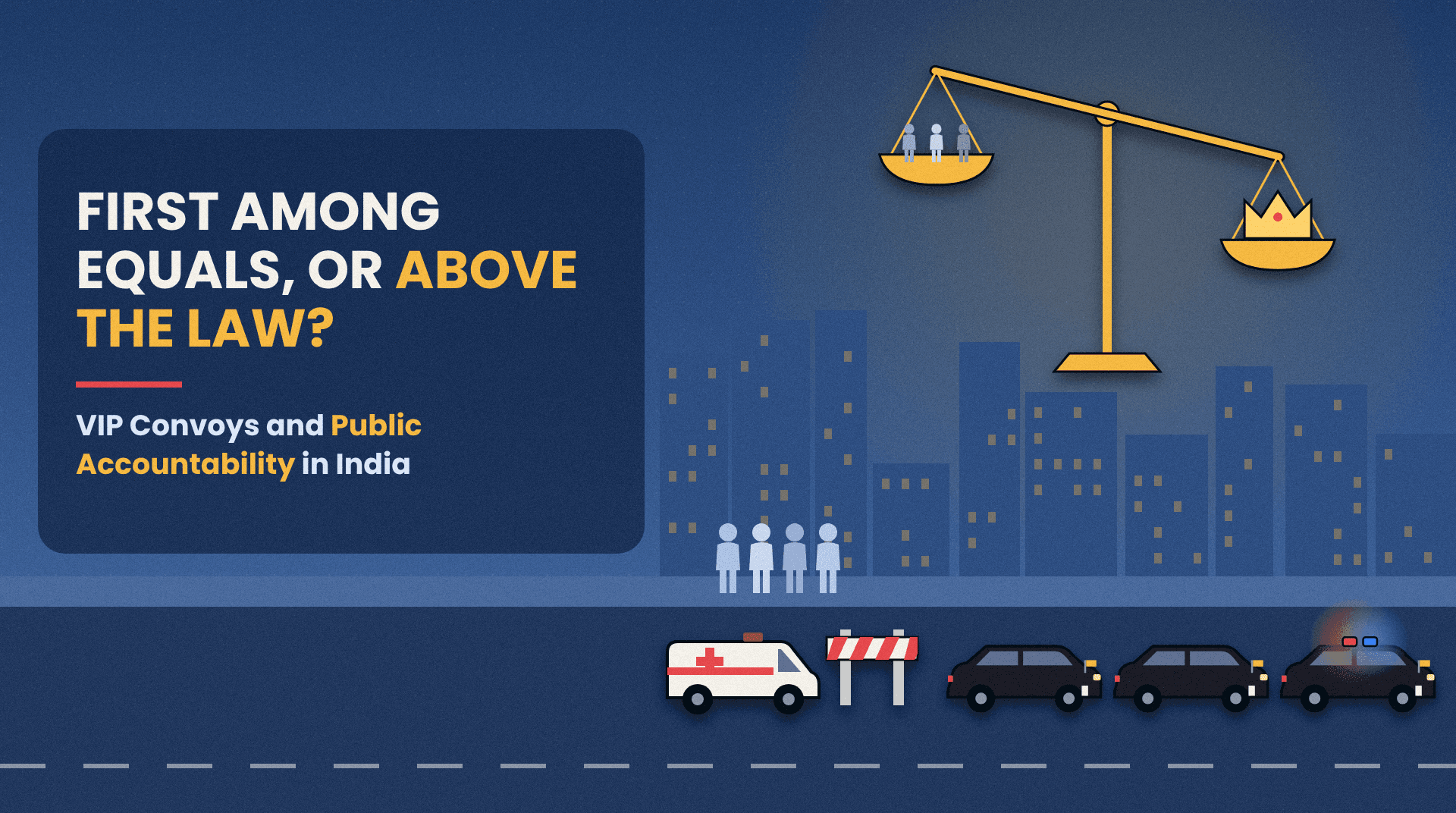
In India, VIP convoys often raise questions about how public officials are treated compared with ordinary citizens. When traffic is stopped for a convoy, hundreds of people may have to wait on the road. Workers may arrive late at their jobs, students may miss classes, and people facing emergencies may struggle to reach hospitals on time. What frustrates people even more is the feeling that, no matter how often they raise these concerns, their grievances go unheard while those in power continue with their journeys. Public servants are called servants of the people because their responsibility is to serve the public. However, unnecessary traffic stoppages for VIP convoys can create the opposite impression: that the public exists to serve those in power. Public office is a responsibility, not a personal privilege, and the people public officials serve should not feel less important simply because they lack power or influence. While the security of public officials is important, the time, needs and concerns of ordinary citizens deserve equal consideration. This raises an important question: in a democratic country like India, should holding a position of power mean that a person's convenience takes priority over everyone else?
Equality Before Law
Article 14 of the Indian Constitution guarantees equality before the law and equal protection of the laws. In simple terms, the State must not deny any person equality before the law, regardless of position or influence. This does not mean that public officials cannot receive special security when there is a genuine threat to their safety. The real issue arises when special arrangements are made for convenience rather than necessity. Public office comes with responsibilities, and the authority given to officials should not become a reason to place their interests above those of ordinary citizens. Any special treatment must have valid justification and should not be used as an excuse for unnecessary restrictions on public movement.
Judicial Perspective and Existing Rules
The issue of VIP privilege has also come before the Supreme Court of India. In Abhay Singh v. State of U.P., the Court considered questions concerning VIP security, road closures and the use of beacons and sirens. Its operative directions principally addressed who could use red beacons and under what conditions, along with related restrictions on sirens. Although the case is relevant to the wider discussion of VIP privileges, it should not be presented as laying down a complete set of rules governing traffic stoppages during VIP movements. The issue was also addressed in a 2016 Rajya Sabha parliamentary answer by the Ministry of Home Affairs concerning VIP traffic movement in Delhi. The answer stated that traffic stoppage for safe passage should be limited to the President, Vice-President, Prime Minister and visiting foreign dignitaries given President- or Prime Minister-level security cover. In other cases, traffic should not be stopped. It also referred to minimising inconvenience, keeping stoppages as short as possible and facilitating emergency vehicles. Karnataka offers a practical example of this principle. In 2023, Chief Minister Siddaramaiah announced that he would give up the 'zero traffic' protocol for his motorcade. The following day, Bengaluru Police directed personnel not to hold up ordinary traffic merely to facilitate the Chief Minister's movement. This shows that security protocols and unnecessary stoppages are not always the same thing. The real issue is not whether public officials deserve security, but whether the restrictions imposed on ordinary citizens are genuinely necessary and proportionate.
Accountability and the Way Forward
To address this problem, authorities need to take a few steps. They should establish clear rules on when traffic may be stopped for VIP movements and which dignitaries require such arrangements. High-ranking public officials and other individuals facing genuine security threats may require temporary traffic restrictions, depending on their assessed security needs. However, these restrictions should last only as long as necessary. Police should avoid completely blocking roads wherever possible and ensure that ambulances and other emergency vehicles can pass safely without compromising genuine security protocols. Records of major traffic stoppages should be maintained, and citizens should have a way to report unnecessary delays. Officials who misuse their authority should face appropriate consequences. Security is important, but it should not cause unnecessary inconvenience to ordinary citizens. Those with power must remember that their position comes with a responsibility towards the public. Public office should be a symbol of service, not a reason to stand above the people it is meant to serve.
Mohammed Sufaid
Al Ameen College of Law, Bangalore
Sign in to join the discussion.
A major issue in digital evidence is the difference between admissibility and reliability.
What if someone walks in and decides the dead are simply available?