

Indian Space Policy 2023
Adhiraj Sahgal
3 Nov 2026 14 min read
- Introduced
- 3 Nov 2026
Instrument / layer | Legal status | Principal authority | Core function | Position |
Indian Space Policy 2023 | Policy instrument | Department of Space / ISRO policy framework | Overarching policy; private participation; role of IN-SPACe; space sustainability and liability-policy direction | Operational |
IN-SPACe NGP 2024 | Regulatory norms / procedures | IN-SPACe | Authorisation procedures and conditions for specified NGE space activities | Operational |
IN-SPACe 2026 sub-orbital advisory | Advisory guidance | IN-SPACe | Treatment of lower-powered sub-orbital/model-rocketry activity below mandatory NGP threshold | Operational guidance |
DoT / GMPCS and telecom authorisation | Telecom authorisation under statutory telecom framework | Department of T elecommunicati ons / WPC | Customer-facing satellite communication services and related telecom permissions | Operational; migrating into Telecommunicate actions Act portal architecture |
TRAI satellite service + spectrum framework | Recommendation Ons / consultations | TRAI with DoT implementation | Service-authorisation categories and spectrum assignment design for satellite communications | Continuing evolution |
Outer Space Treaty + Liability Convention etc. | International treaties | United Nations treaty framework / Indian State obligations | State responsibility, authorisation/supervision, international liability and registration context | Binding international baseline |
DFSM 2030 / ISSAR / SSA-STM | Policy / operational sustainability framework | ISRO / IS4OM / DoS | Debris mitigation, conjunction assessment, disposal and space situational awareness | Strengthening; target horizon 2030 |
Space Activities Bill | Proposed legislation; not enacted | Parliament / Department of Space process | Prospective comprehensive statutory framework for entities, authorisation, liability, insurance, penalties and dispute resolution | Pending / requires verification of latest draft |
Chronological timeline
on 3rd March 1967
India signs the Outer Space Treaty (OST) - India signed the OST in 1967. The treaty framework is foundational because Article VI makes States responsible for national activities in outer space, including non-governmental activities, and requires authorization and continuing supervision of non-governmental entities. Source : United Nations Treaty Collection; UN COPUOS / UNOOSA. Primary international-law record. India is party to the Outer Space Treaty, Liability Convention, Registration Convention and Rescue Agreement; LTS Guidelines adopted by COPUOS in 2019.) (Link) (Link) (Link)
On 15th August 1969
ISRO was established - ISRO established ISRO was formed in 1969, providing the institutional base from which India's state-led space programme and later commercialization eveolved. (Link)
On 1st June 1972
Dept of Space and Space commission - India established the Department of Space and Space Commission in 1972, placing national space policy and programme coordination within a dedicated governmental structure. (Link)(Link)(Link)
On 9th July 1979
India accedes to Liability Convention- India acceded to the Convention on International Liability for Damage Caused by Space Objects. The Convention gives the international liability regime operational form, including absolute liability for certain damage on Earth and a fault-based rule for damage in outer space. (Source: UN space treaties and LTS guidance United Nations Treaty Collection; UN COPUOS / UNOOSA. Primary international-law record. India is party to the Outer Space Treaty, Liability Convention, Registration Convention and Rescue Agreement; LTS Guidelines adopted by COPUOS in 2019. ) (Link)
On 14th July 1980
Rescue Agreement Accession - India became a party to the Agreement on the Rescue of Astronauts, the Return of Astronauts and the Return of Objects Launched into Outer Space. (source : UN space treaties and LTS guidance United Nations Treaty Collection; UN COPUOS / UNOOSA. Primary international-law record. India is party to the Outer Space Treaty, Liability Convention, Registration Convention and Rescue Agreement; LTS Guidelines adopted by COPUOS in 2019.) (Link)
In 1997 India adopted SATCOM Policy as part of its pre-statutory sectoral policy architecture for satellite communications. ( Source : Draft Space Activities Bill, 2017 + Explanatory Note Department of Space, Government of India; copy reproduced by PRS Legislative Research. Primary draft. Dated November 2017; proposed framework for commercial space activity, licensing, safety and liability/insurance.) & (Lok Sabha Unstarred Question on Space Activities Bill Government of India, Department of Space, 26 June 2019. Primary parliamentary record. Bill was under pre-legislative consultation; liability linked to policy.) (Link) (Link) (Link)
In 2011 – There was a Remote sensing data policy which became another sector specific instrument. (source : Lok Sabha Unstarred Question on Space Activities Bill Government of India, Department of Space, 26 June 2019. Primary parliamentary record. Bill was under pre-legislative consultation; liability linked to policy.) (Link) (Link) (Link)
In 2013 – The dept of space recorded the international law association’s model law on National space legislation, submitted to UNCOPUOS in 2013. (Source: Draft Space Activities Bill, 2017 + Explanatory Note Department of Space, Government of India; copy reproduced by PRS Legislative Research. Primary draft. Dated November 2017; proposed framework for commercial space activity, licensing, safety and liability/insurance.) (Link - Explanatory Note, para. 12, around p. 3 of the explanatory note)
On 28th April 2016, Parliament acknowledged the policy led regulation – A Rajya Sabha answer recorded the existence of the SATCOM Policy 1997 and Remote Sensing Data Policy 2011. (Link 28 April 2016 - Rajya Sabha: In response to Unstarred Question No. 596, the Department of Space informed the Rajya Sabha that Cabinet-approved policy guidelines governed space activities through the Remote Sensing Data Policy, 2011 (RSDP-2011) and Satellite Communication Policy, 1997 (SATCOM Policy-1997). The same response recorded that the Department was preparing a National Space Act and had a draft under consideration for pre-legislative consultation) (Official Rajya Sabha PDF, p. 287. )
In Nov 2017 – The draft space activities bill was released and along with that during the time of nov-dec – Draft architecture: licensing, safety, liability and insurance which proposed a Central Government regulatory/licensing mechanism, prohibition of unauthorised commercial space activity, safety and treaty-compliance conditions, financial guarantees/insurance, registration, investigation and penalties. (source : Draft Space Activities Bill, 2017 + Explanatory Note Department of Space, Government of India; copy reproduced by PRS Legislative Research. Primary draft. Dated November 2017; proposed framework for commercial space activity, licensing, safety and liability/insurance. ) (Link)(Link)(Link)
In June 2019, COPUS adopts 21 long term sustainability guidelines The UN Committee on the Peaceful Uses of Outer Space adopted 21 voluntary LTS Guidelines covering registration, contact information, conjunction assessment, debris mitigation and international cooperation. (Link Para. 163 - adoption of the 21 Guidelines Annex II - full text of the 21 LTS Guidelines
Report covers 12–21 June 2019.)
24th June 2020 – India opened the space sector to wider private participation - Government reforms shifted India from a primarily supply-driven public-sector model towards stronger demand-driven use and private-sector participation. The reform package envisaged IN-SPACe as an enabling and regulatory mechanism. (Link) (Link)
22nd September 2020 – In Space operational role publicized – promote private investment and innovation. (Link)
On 29th July, 2021- Space activities bill was still under active consideration – the central govt stated that the bill remained under active consideration and was intended to provide a regulatory framework while promoting private players. It was not introduced in Parliament. (Link) (Link)
3rd April 2023, ISSAR 2020 released Indian space situational report 2022, reflecting the growth and importance of space situational awareness, collision risk assessment. (Link) (Link - 3 April 2023-ISSAR 2022 and growing importance of Space Situational Awareness: ISRO published the highlights of its Indian Space Situational Assessment Report (ISSAR) for 2022; ISRO states that the report itself was released in March 2023 by Shri S. Somanath and compiled by IS4OM. The assessment highlighted the growing space-object population, increasing congestion, close-approach monitoring and collision-risk mitigation. ISRO reported approximately 14,000 internally generated close-approach alerts within 1 km, a further 13,000 alerts from USSPACECOM, and 22 collision-avoidance manoeuvres in 2022)
In April only The Indian Space Policy 2023 created the overarching policy architecture for end-to-end participation by non-government entities, clarified stakeholder roles and placed IN-SPACe at the centre of authorisation and promotion (Link) (Apart from these, PDFs have been uploaded. )
On 21st nov 2023, 1st LEO constellation capacity authorization was made – OneWeb India - IN-SPACe authorised Eutelsat OneWeb constellation capacity for India. The authorisation was valid for five years and remained subject to DoT spectrum assignment and other regulatory permissions. (Link) (Link)
In April 2024 – Debris free space missions 2030 was declared - At the IADC annual meeting in Bengaluru, ISRO/DoS announced an objective of debris-free missions by Indian actors by 2030, including disposal, collision-avoidance and no intentional breakup measures; a formal public note followed. (Link) (Link)
In may 2025 – New space activities bill draft was reportedly finalized - The Indian Express reported that a new draft had been finalised for circulation to stakeholder ministries. The reported objective was to give statutory backing to IN-SPACe and update issues from the 2017 draft, including insurance and intellectual-property treatment. The draft itself was not publicly released in the source located. (Link) (Link)(Link)
On 10th June 2025, DoT GMPCS - Authorization list includes Jio, One Web and Starlink (Link) (Link)(Link)(Link)
In March 2026 - 410th Standing Committee report: legislative gap called clear and pressing - Parliament's Standing Committee noted the absence of a comprehensive legislative framework and stated that space activities were being guided by policy documents and guidelines. It called the need for a comprehensive legal framework clear and pressing. The Department told the Committee a draft Bill was at an advanced stage and outlined proposed areas including authorisation, a statutory board, liabilities, insurance, penalties and a tribunal. (Link - paras 89–93, PDF pp. 46-47. Para 92 where the Department says Bill is at an advanced stage) (Link)
In April 2026- In space - IN-SPACe issued advisory guidelines clarifying that lower-powered sub-orbital launches below the mandatory NGP authorisation threshold are subject to a lighter advisory framework; the NGP threshold referenced is total impulse of at least 40,960 Ns for the specified sub-orbital activity. (PDFs uploaded)
On 24th September 2026 , Public debate over a revamped Space Activities Bill - Hindustan Times commentary argued for a fresh, modernised Space Activities Bill and highlighted the need to address categorisation, liability and insurance. This is policy commentary, not evidence of legislative introduction. (Link)
Progress and evolution 2017 draft to 2023 policy.
The 2017 draft represented a statute-first approach. The 2023 Policy instead immediately enabled end-to-end private activity through policy and an institutional authorization architecture, while leaving comprehensive legislation for a later stage.
2024 ngp. The NGP operationalised policy concepts into authorisation procedures and conditions. It is the central bridge between the non-statutory policy and the practical regulation of NGEs.2024-2026 telecom evolution. Satellite internet requires a parallel telecom path: service authorization and spectrum assignment.
Trai's 2024 consultations and recommendations, the 2025 spectrum work, and the 2026 SCN consultation reflect continuing redesign under the Telecommunications Act framework. 2026 advisory refinement. The sub-orbital/model-rocketry advisory shows calibrated regulation rather than one-size-fits-all authorisation. Statutory consolidation still pending. The Standing Committee's 2026 report shows that policy and norms are not viewed as a complete substitute for legislation.
Liability evolution
International baseline: OST and Liability Convention. 2017 draft: licensing accompanied by financial assurance/insurance and a statutory framework for liability. 2023 Policy: IN-SPACe is tasked with formulating liability guidelines and related safety/security conditions. 2025 reported Bill: insurance was reported as part of the new statutory design. 2026 Committee record: liabilities and insurance were among the topics identified for the prospective Bill.
International decisions
The OST requires States to bear international responsibility for national activities, including those carried out by non-governmental entities, and therefore requires national authorization and continuing supervision. This is the treaty-level rationale for a domestic authorisation system such as IN-SPACe. Liability. The Liability Convention provides the international damage-liability framework. In broad terms, it imposes absolute liability for damage caused on the Earth's surface or to aircraft in flight and a fault-based standard for certain damage elsewhere in space. Domestic legislation is important because international responsibility does not by itself provide a detailed Indian licensing/insurance architecture for operators.
Current status
1. Indian Space Policy 2023: in force as the overarching policy instrument. It provides the high-level vision, role allocation and private-sector framework, including IN-Space authorisation.
2. IN-space NGP: operational. The 2024 NGP is the principal authorisation framework implementing ISP 2023 for specified non-government space activities. April 2026 advisory guidance further refines the treatment of lower-powered sub-orbital/model-rocketry activities. Operational but layered.
3. DoT provides telecom authorisation mechanisms such as GMPCS, while WPC spectrum assignment remains a separate step. TRAI has been actively reshaping service-authorisation and satellite-spectrum frameworks under the Telecommunications Act 2023.
4. Dedicated Space Activities Act: not enacted as of 4 October 2026. The 2017 draft never reached parliamentary passage; a new draft was reported in 2025, and the 2026 Standing Committee recorded advanced-stage drafting and recommended a comprehensive statutory framework.
5. Liability and insurance: incomplete statutory consolidation. India is bound internationally by the OST and Liability Convention, and ISP 2023 assigns IN-Space a role in developing liability-related guidelines. A comprehensive domestic allocation of third-party liability, insurance, indemnity, financial assurance and catastrophic risk is part of the unfinished statutory debate.
India Space Law & Policy: Legislative and Regulatory Roadmap Page 156. Space debris: progressively stronger policy treatment. India has moved from compliance with international debris-mitigation norms toward a national DFSM 2030 objective backed by SSA/STM infrastructure and annual assessment reports. The sustainability side of the regime is therefore further advanced than the comprehensive liability statute, although enforcement and private-sector allocation of responsibility still need clearer statutory treatment.
Overall trajectory
Direction: strengthening and commercialising operational regulation, with statutory consolidation lagging behind implementation.
Core tension: rapid authorisation and innovation versus legal certainty, parliamentary accountability, liability allocation and long-term sustainability. Most important unresolved question: whether the eventual Space Activities Act will merely codify the current policy/NGP model or materially redesign authorisation, liability, insurance, institutional powers and dispute resolution.
Current final form: a layered regime, not a single statute.
Final analysis
Indian model was transformed from a policy fragmented, state dominated model to a commercially open, institutionally separated and more procedural regime. The 2017 draft was an early attempt at enacting the entire sector at once. That effort stalled. The 2020 reforms, on the other hand, allowed for participation by the private sector, and ISP 2023 provided a detailed policy framework around IN-SPACe. This architecture was transformed into operational norms for authorisation in 2024 in the NGP and measurable results were generated by 2026. The key turning point is not the passing of a new Act (which is not yet done) but rather the choice to take the sector into operation through policy and delegated administrative arrangements while waiting for the passage of the new Act. That is why this was able to be commercialised so quickly and why Parliament continues to demand for statutory certainty. Satellite internet is a good reason that the “space law” concept is not sufficient for the ecosystem. A constellation / satellite operator may be subject to space-segment authorisation issues while communication services to users are controlled at the same time by a telecom authorisation and spectrum rules. India is still working on that interface as per the TRAI process for 2024-2026. The next leg of the legal landscape is liability and debris. There are minimum rules in international law, and India has been establishing its own sustainability capability, step by step, through SSA/STM, DFSM 2030 and debris-mitigation reporting. However, since there is no specific legislation, the exact distribution of risk among the various domestic actors (launchers, operators, service providers, insurers, and the State) remains unclear. Things that are unknown or unsolved. The public record recorded here does not constitute the text or clause-by-clause status or date of parliamentary introduction of Bill 2025/2026; it does not completely catalog international arbitrations arising in the space sector in India; and it does not exhaustively record the status of introduction of the Bill in Parliament. Those are verification gaps and not the fact that such material does not exist. Speculative assessment. The most probable policy direction would be the consolidation of the existing IN-SPACe framework, rather than its repeal: a future statute may be in the form of a consolidation of the existing IN-SPACe framework, rationalisation of the classification of authorisations, elaboration of the liability/insurance and dispute-resolution framework, while the licensing of telecom and spectrum would continue to be separate. This is a forecast, not a government policy.
Adhiraj Sahgal
National University of Study and Research in Law, Ranchi
More tracked legislation
EV & BATTERY Regulation in India
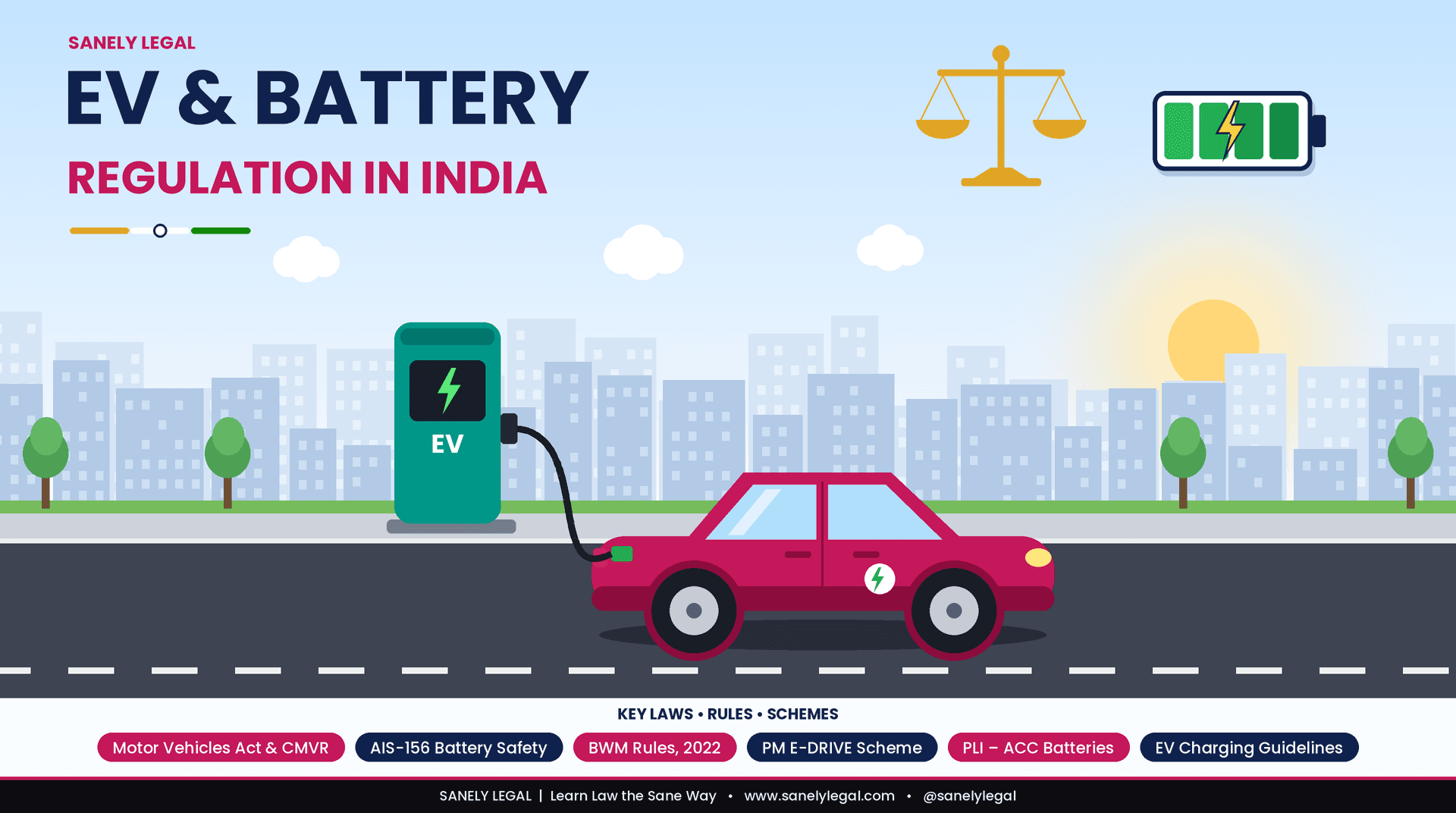
India's EV policy began with an approach that treated electric and hybrid mobility as a national industrial and transport question. The National Mission for Electric Mobility was approved in 2011, followed by the National Electric Mobility Mission Plan 2020, launched in January 2013. The Plan was intended to create a long-term path for adoption, domestic capability, research and development, testing, charging and supply-side support.
NBFC Scale Based Regulation (SBR) Framework RBI implementation
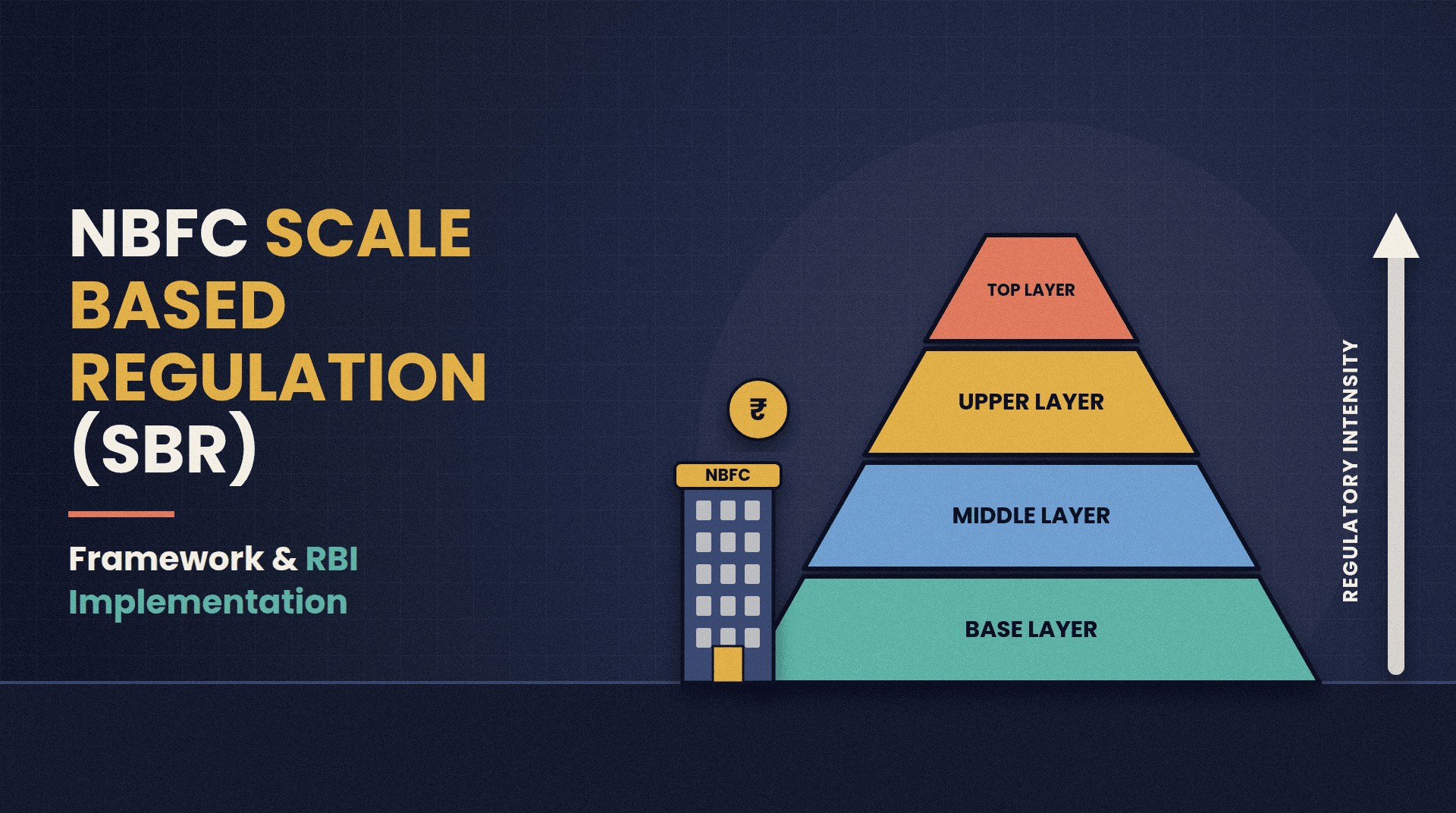
The objective was to make regulatory intensity broadly proportionate to the size, complexity and perceived risk of an NBFC.The framework became operational from 1 October 2022, while certain individual requirements had separate implementation timelines. The Upper Layer was designed for NBFCs considered to warrant enhanced regulatory requirements.

M&A – Competition Act Deal-Value Threshold Rules
This report is exploratory in nature. It traces the legislative and regulatory evolution of the 'deal-value threshold' (DVT) introduced into India's merger-control regime under Section 5(d) of the Competition Act, 2002, from its statutory origin in the Competition (Amendment) Act, 2023 through its operationalisation via Ministry of Corporate Affairs (MCA) rules .