

Digital Competition Bill: Ex-Ante Regulation of Big Tech in India
Siya Holkar
13 Oct 2026 23 min read
- Introduced
- 13 Oct 2026
The Indian Digital Competition Bill (DCB) is a paradigm shift in regulation from ex-post to ex-ante regulation, regulating "Systemically Significant Digital Enterprises" (SSDEs), which offer core digital services. The regime adds to the existing Competition Act of 2002 (amended in 2023)1 by introducing pre-determined conduct rules for large digital platforms before any anti-competitive injury is done. Until September 2026, the DCB is still in draft form after the March 2024 Committee Report on Digital Competition Law2, with recommendations made in August 2025 by the Parliamentary Standing Committee on Finance3.
1) Baseline: The Parent Act and Regulatory Framework Before the DCB
1.1 The Competition Act, 2002
Enactment: The Competition Act, 2002 was passed by Parliament in 2002 and received Presidential assent on 13 January 2003 (Act No. 12 of 2003)4.
Entry into force: The Act came into effect on 31 March 2003.
Regulator: The Competition Commission of India (CCI) is the statutory body responsible for enforcing the Act.
Original Objective: The Act was designed to: Prohibit anti-competitive agreements (Section 3)
1 The Competition Act, 2002, No. 12 of 2003, § 3–6 (India) (enacted Jan. 13, 2003)
2 Comm. on Digital Competition Law, Ministry of Corporate Affairs, Report of the Committee on Digital Competition Law (Mar. 12, 2024)
3 Standing Comm. on Finance, 25th Report: Evolving Role of Competition Commission of India in the Economy, particularly in the Digital Landscape (Aug. 11, 2025)
4 The Competition Act, 2002, No. 12 of 2003, § 3–6 (India) (enacted Jan. 13, 2003)
a Prohibit abuse of dominant position (Section 4)
b Regulate combinations (mergers, acquisitions, amalgamations) having appreciable adverse effect on competition (Sections 5–6)5
Original Regulatory Approach: The Competition Act, 2002 operates on an ex-post enforcement model the CCI intervenes after anti-competitive conduct has occurred and harm has been established through lengthy inquiry proceedings.
1.2 The Competition (Amendment) Act, 2023
Enactment: Received Presidential assent on 11 April 2023 (Act No. 9 of 2023). Key Amendments Relevant to Digital Markets:
Provision | Change | Relevance to Digital Markets |
Section 5 (Combinations) | Introduced Deal Value Threshold (DVT): transactions exceeding ₹2,000 crore require CCI approval if target has "substantial business operations in India" | Captures Big Tech acquisitions where target has low assets/turnover but high strategic value (e.g., startups, data-rich firms) |
Section 6 (Notice for combinations) | Reduced approval timeline from 210 days to 150 days; introduced green-channel notifications for certain categories | Faster merger review for time-sensitive digital deals |
Section 3 (Anti competitive agreements) | Expanded scope to include enterprises not in identical trade if participating in furtherance of agreement | Addresses complex multi sided platform agreements |
Settlement & Commitment Mechanisms (Sections 48A, 48B) | Introduced settlement and commitment procedures for faster resolution | Enables quicker remedies in fast-moving digital markets |
5 The Competition (Amendment) Act, 2023, No. 9 of 2023, § 5–6 (India) (enacted Apr. 11, 2023)
Notified Provisions: MCA notified certain provisions effective 18 May 2023 (Sections 1–5, 9–11, 13–18, 19 except clause (f), 25–27, 29, 31–32, 36–37, 39, 41–44, 45 except 64B). Remaining provisions await separate notifications6.
Regulator's Capacity Building: The CCI established a Digital Markets Division (DMD) in 2025 to develop expertise in technology markets, algorithmic pricing, AI, and big data challenges.
2)Legislative and Regulatory Timeline
Date | Event |
22 December 2022 | Parliamentary Standing Committee on Finance submits 53rd Report on "Anti-Competitive Practices by Big Tech Companies" recommending ex ante regulation and a dedicated "Digital Competition Act"7 |
6 February 2023 | Ministry of Corporate Affairs (MCA) constitutes Committee on Digital Competition Law (CDCL) to examine need for ex-ante regulatory framework8 |
12 March 2024 | CDCL submits Report along with Draft Digital Competition Bill, 2024; placed on MCA website for public consultation (12 March – 15 May 2024)9 |
15 May 2024 | Public consultation period closes; CDCL Report and Draft DCB available at MCA website |
11 August 2025 | Parliamentary Standing Committee on Finance presents 25th Report on "Evolving Role of CCI in the Economy, particularly in the Digital Landscape" before Parliament; recommends ex-ante framework with refined thresholds, evidence-based approach, and protection for MSMEs/startups10 |
6 Ministry of Corporate Affairs, Notification on Partial Enforcement of Competition (Amendment) Act, 2023 (May 18, 2023)
7 Standing Comm. on Finance, 53rd Report: Anti-Competitive Practices by Big Tech Companies (Dec. 22, 2022),
8 Comm. on Digital Competition Law, Ministry of Corporate Affairs, Report of the Committee on Digital Competition Law (Mar. 12, 2024)
9 Comm. on Digital Competition Law, Ministry of Corporate Affairs, Report of the Committee on Digital Competition Law (Mar. 12, 2024); Draft Digital Competition Bill, 2024 (Mar. 12, 2024), annexed to Report; Press Information Bureau, Press Release No. PRID=2013947 (Apr. 15, 2024).
10 Standing Comm. on Finance, 25th Report: Evolving Role of Competition Commission of India in the Economy, particularly in the Digital Landscape (Aug. 11, 2025).
August 2025 | Media reports indicate government "pauses" or "reconsiders" DCB's ex ante provisions due to innovation/startup concerns; MCA conducting market studies |
2025 (unspecified date) | CCI establishes Digital Markets Division (DMD) as dedicated unit for digital competition matters |
10 August 2026 | Parliamentary Committee report (25th Report) made public; renews Parliamentary backing for ex-ante framework with nuanced, phased implementation |
September 2026 | DCB not yet enacted; remains in draft form pending government decision on thresholds and scope |
3) Rules, Forms & Subordinate Legislation
3.1 Draft Digital Competition Bill, 2024 (Proposed Subordinate Framework)
Status: Draft Bill annexed to CDCL Report (March 2024); not yet introduced in Parliament as of September 202611.
Notifying Authority (Proposed): Central Government (Ministry of Corporate Affairs) via Official Gazette notification.
Key Features of Draft DCB:
(A) Scope and Applicability
• Applies to pre-identified Core Digital Services (CDS) listed in Schedule (amendable by Central Government):
a. Online search engines
b. Online social networking services
11 Comm. on Digital Competition Law, Ministry of Corporate Affairs, Report of the Committee on Digital Competition Law (Mar. 12, 2024); Draft Digital Competition Bill, 2024 (Mar. 12, 2024), annexed to Report.
c. Video-sharing platform services
d. Interpersonal communications services
e. Operating systems
f. Web browsers
g. Cloud services
h. Advertising services
i. Online intermediation services
(B) Designation of Systemically Significant Digital Enterprises (SSDEs) Twin Test for SSDE Designation:
Test | Criteria |
Significant Financial Strength | (a) India-specific turnover (b) Global turnover (c) Global market capitalisation (d) Gross Merchandise Value (GMV) |
Significant Spread | (a) At least 1 crore (10 million) end-users in India for the CDS, OR (b) At least 10,000 business-users in India for the CDS |
Self-Assessment Obligation: Enterprises meeting thresholds must inform CCI within 90 days.
Qualitative Criteria (Residuary Powers): CCI may designate enterprises not meeting quantitative thresholds if they have "significant presence" and ability to influence the market based on12:
• Resources and control over data
• Volume of data aggregated
• Network effects and economies of scale
12 Comm. on Digital Competition Law, Ministry of Corporate Affairs, Report of the Committee on Digital Competition Law (Mar. 12, 2024); Draft Digital Competition Bill, 2024 (Mar. 12, 2024), annexed to Report.
Associate Digital Enterprises (ADEs): Group enterprises providing same CDS are designated as ADEs to ensure comprehensive compliance across corporate groups.
(C) Obligations Under Chapter III of Draft DCB
Obligation Category | Specific Requirements |
Anti-circumvention | - No restructuring (division, split, fragmentation) to evade thresholds - No behaviour undermining effective compliance - No prevention of users raising non-compliance issues |
Reporting & Compliance | - Establish transparent complaint mechanism - Operate fairly, non-discriminatorily, and transparently |
Self-Preferencing Prohibition | SSDE shall not directly or indirectly favour: - Its own products/services - Related parties' products/services - Third parties with manufacturing/sale arrangements over independent business users |
Data Usage Restrictions | - No use of non-public business user data to compete with those users - No restriction on users using third-party applications |
Tying & Bundling | - No requiring/incentivising users of one CDS to use other SSDE products/services |
Regulatory Flexibility: CCI to frame service-specific regulations detailing obligations for each CDS, with differential obligations based on business model and user base size.
(D) Exemptions13
a Statutory Exemptions: Grounds for exemption provided in statute (like Section 54 of Competition Act)
b Regulatory Exemptions: CCI to specify features through regulations based on CDS and business models
c Government Exemptions: Central Government may exempt classes of enterprises in public interest
13 Comm. on Digital Competition Law, Ministry of Corporate Affairs, Report of the Committee on Digital Competition Law (Mar. 12, 2024); Draft Digital Competition Bill, 2024 (Mar. 12, 2024), annexed to Report.
(E) Enforcement & Remedies
Aspect | Provision |
Enforcement Authority | CCI (borrowing procedural framework from Competition Act, 2002) |
Investigation | Director General (appointed under Competition Act) to investigate contraventions when directed by CCI |
Penalties | - Maximum 10% of global turnover of SSDE (or group, if applicable) - Separate penalties for incorrect reporting and vicarious liability of key managerial persons |
Appeals | National Company Law Appellate Tribunal (NCLAT); Committee recommended separate bench for digital market appeals |
3.2 Existing Subordinate Legislation Under Competition Act, 2002 (as amended)
Instrument | Date | Authority | Relevance |
Competition Commission of India (Combinations) Regulations, 2024 | 10 September 2024 | CCI | Operationalises DVT; specifies "substantial business operations" thresholds for digital sector (10% GMV/turnover/users in India) |
CCI Guidelines on Deal Value Threshold | 2024 | CCI | Clarifies computation of transaction value, global turnover, and digital sector thresholds |
4) Implementation and Rollout Status
4.1 Current Status (as of September 2026)
Component | Status | Detail |
Draft Digital Competition Bill, 2024 | Pending | Not introduced in the Parliament; government reconsidering thresholds and startup impact after August 2025 Standing Committee Report |
Ex-Ante Regulatory Framework | Not in force | No ex-ante obligations currently applicable to digital enterprises; CCI continues ex-post enforcement under Competition Act, 2002 |
CCI Digital Markets Division | Operational (2025 onwards) | Established to build technical capacity for digital market regulation; focuses on market studies, algorithmic pricing, AI, and inter-regulatory coordination |
Deal Value Threshold (DVT) | In force (18 May 2023 onwards) | Transactions >₹2,000 crore with Indian target having "substantial business operations" require CCI approval; CCI (Combinations) Regulations, 2024 specify digital sector thresholds |
Public Consultation | Closed (15 May 2024) | MCA invited comments on Draft DCB from 12 March to 15 May 2024; stakeholder submissions analysed by CDCL |
4.2 Pending Actions
a Government Decision: MCA to finalise draft Bill after market studies and stakeholder consultations; no timeline announced
b Parliamentary Introduction: Bill to be introduced in Lok Sabha/Rajya Sabha after Cabinet approval; passage timeline uncertain
c Rulemaking: CCI to draft service-specific regulations for each CDS after Bill enactment.
d Designation Process: CCI to establish procedures for SSDE/ADE designation, self assessment reporting, and compliance monitoring14. 14 Standing Comm. on Finance, 25th Report: Evolving Role of Competition Commission of India in the Economy, particularly in the Digital Landscape (Aug. 11, 2025); Legal 500, An Update on India's Proposed Digital Competition Law (Aug. 26, 2026).
4.3 Transition Provisions (Proposed in Draft DCB)
a 90-Day Self-Assessment Window: Enterprises meeting SSDE thresholds must notify CCI within 90 days of commencement
b Phased Compliance: CCI may specify staggered compliance deadlines for different obligations based on CDS complexity
c Grace Period: No explicit grace period in draft; penalties applicable from date of designation unless exemptions granted15
5)Enforcement and Compliance Actions (Under Existing Framework)
5.1 CCI Enforcement in Digital Markets (Ex-Post, Under Competition Act, 200216)
Case | Date | Enterprise | Allegation | Outcome |
Search Bias (Android) | 2022 | Google LLC | Abuse of dominant position in Android mobile OS, app store, and search services | Penalty of ₹1,337.76 crore; CCI directed modification of business practices |
Play Store Billing Policy | 2022 | Google LLC | Mandatory use of Google Play Billing System; anti competitive tying | Penalty included in above order; CCI directed interoperability and alternative billing options |
WhatsApp Privacy Policy (2021) | 2021 | WhatsApp Inc. | Alleged abuse of dominance via data sharing with | CCI ordered investigation; matter pending as of 2025 |
15 Comm. on Digital Competition Law, Ministry of Corporate Affairs, Report of the Committee on Digital Competition Law (Mar. 12, 2024); Draft Digital Competition Bill, 2024 (Mar. 12, 2024), annexed to Report. 16 The Competition Act, 2002, No. 12 of 2003, § 3–6 (India) (enacted Jan. 13, 2003).
Amazon Future Coupons Deal | 2021 | Amazon.com NV Investment Holdings | Alleged gun-jumping (consummating deal before CCI approval) | CCI imposed penalty of ₹202 crore; order under appeal |
5.2 CCI Compliance Circulars and FAQs
Document | Date | Issuing Authority | Content |
CCI Advisory on Digital Markets | 2023 | CCI | Guidance on DVT applicability to digital sector acquisitions; clarification on "substantial business operations" test |
CCI (Combinations) Regulations, 2024 | 10 September 2024 | CCI | Specifies thresholds for digital sector: 10% of global GMV/turnover/users in India qualifies as "substantial business operations" |
CCI Press Release on DMD Establishment | 2025 | CCI | Announces Digital Markets Division; outlines focus areas (algorithmic pricing, AI, big data, inter-regulatory MoUs) |
6) Judicial and Legislative Challenges
6.1 Pending Litigation on Digital Market Cases
Case | Court/Tribunal | Status | Issue |
Google v. CCI (Android Order) | NCLAT | Appeal pending (as of 2025) | Google challenging penalty and directions on search bias, Play Store policies |
Amazon v. CCI (Future Coupons) | NCLAT / Supreme Court | Appeal pending | Amazon challenging gun-jumping penalty; questions on CCI's jurisdiction over foreign-to-foreign transactions |
WhatsApp v. CCI (Privacy Policy) | CCI / NCLAT | Investigation pending | Whether data sharing constitutes abuse of dominance; intersection with Digital Personal Data Protection Act, 2023 |
6.2 Parliamentary Questions and Industry Representations
Forum | Date | Issue Raised | Outcome |
Standing Committee on Finance (53rd Report) | 22 December 2022 | Anti-competitive practices by Big Tech; need for ex ante regulation | Recommended dedicated Digital Competition Act |
Standing Committee on Finance (25th Report) | 11 August 2025 | DCB thresholds impacting startups/MSMEs; need for evidence-based approach | Recommended refined thresholds, rebuttal mechanism for SSDE designation, market studies before enactment |
Industry Representations to CDCL | March– May 2024 | Concerns over compliance burden, innovation impact, overbreadth of obligations | CDCL Report acknowledges concerns; recommends differential obligations and exemptions |
Lok Sabha Questions | 2025–2026 | Status of DCB; timeline for introduction | MCA responded: "under consideration"; no firm timeline announced |
6.3 Comparative Challenges (International Context)
Jurisdiction | Challenge | Relevance to India |
EU Digital Markets Act (DMA) | Gatekeepers challenging designation (e.g., Apple, Meta, Google filing appeals) | India's DCB may face similar litigation on SSDE designation criteria |
UK Digital Markets, Competition and Consumers Bill | Industry lobbying for narrower scope; government revising thresholds | Informs India's August 2025 reconsideration of DCB thresholds |
US Antitrust Cases (Google, Meta, Amazon) | Ongoing DOJ/FTC litigation on monopolisation; no ex ante law enacted | Highlights limitations of ex-post enforcement that India seeks to address via DCB |
7) Comparative Angle
7.1 International Comparators
Jurisdiction | Legislation | Key Features | Comparison with India's DCB |
European Union | Digital Markets Act (DMA), 202217 | - Designates "Gatekeepers" based on quantitative thresholds (€7.5B turnover, 45M users) - Prohibits self preferencing, data combination, tying - Penalties up to 10% global turnover | India's DCB closely modelled on DMA; both use quantitative + qualitative thresholds, prohibit self-preferencing, and impose 10% global turnover cap |
United Kingdom | Digital Markets, Competition and Consumers | - "Strategic Market Status" (SMS) designation | UK's phased, evidence based approach influenced India's August 2025 |
17 Regulation (EU) 2022/1925 of the European Parliament and of the Council of 14 September 2022 on contestable and fair markets in the digital sector (Digital Markets Act), 2022 O.J. (L 265) 1.
Bill (DMCC), 202318 | - Pro-competitive conduct requirements - Emphasis on market studies and evidence based approach | Standing Committee recommendations for refined thresholds | |
Germany | Act Against Restraints of Competition (10th Amendment), 2021 | - "Paramount significance for competition across markets" designation - Prohibits self preferencing, data combination - FCO can impose behavioural remedies | Germany's earlier ex-ante amendment (2021) predates DMA; India's DCB adopts similar designation logic but with India-specific thresholds |
Japan | Act on Improving Transparency and Fairness of Digital Platforms, 2020 | - Designates "Specified Digital Platforms" - Requires transparency in terms, dispute resolution - Less prescriptive on conduct obligations | Japan's softer, transparency-focused approach contrasts with EU/India's prescriptive conduct rules; India may adopt transparency obligations via CCI regulations |
Australia | Digital Platform Services Inquiry (ACCC), 2019– 2024 | - Recommends ex-ante code for designated platforms - Focus on news media bargaining, app store fees | Australia's sectoral code approach (news media) differs from India's economy-wide DCB; both address app store and search bias concerns |
7.2 Connected Indian Legislation
Act/Policy | Relevance to DCB |
18 Digital Markets, Competition and Consumers Bill 2023 (UK) (Bill No. [●], 2022–23 Parl. Sess.).
Digital Personal Data Protection Act, 202319 | Data portability and interoperability obligations under DPDP Act may complement DCB's data usage restrictions; CCI and Data Protection Board to coordinate |
Information Technology (Intermediary Guidelines) Rules, 202120 | IT Rules govern content moderation and grievance redressal; DCB focuses on economic/competition aspects; potential overlap on platform obligations |
Consumer Protection (E-Commerce) Rules, 202021 | Addresses unfair trade practices, transparency in pricing; DCB addresses anti-competitive conduct; CCI and Consumer Affairs to coordinate enforcement |
National Competition Policy (Draft, 2021) | Aims to embed competition principles across sectors; DCB operationalises ex-ante competition in digital markets as subset of broader policy |
8) Dated Source Log
Primary Sources
No. | Source | Date | Type |
1 | The Competition Act, 2002 (Act No. 12 of 2003) | 13 January 2003 | Gazette Notification |
2 | The Competition (Amendment) Act, 2023 (Act No. 9 of 2023) | 11 April 2023 | Gazette Notification |
19 The Digital Personal Data Protection Act, 2023, No. 22 of 2023 (India) (assented to 11 Aug. 2023).meity+1
20 Information Technology (Intermediary Guidelines and Digital Media Ethics Code) Rules, 2021, G.S.R. 139(E) (Feb. 25, 2021) (India) [hereinafter IT Rules, 2021].static.pib.gov+1
21 Consumer Protection (E-Commerce) Rules, 2020, G.S.R. 462(E) (July 23, 2020) (India).
3 | MCA Notification on Competition (Amendment) Act, 2023 (partial enforcement) | 18 May 2023 | Gazette Notification |
4 | Report of the Committee on Digital Competition Law (CDCL Report) | 12 March 2024 | Expert Committee Report |
5 | Draft Digital Competition Bill, 2024 (Annexure IV to CDCL Report) | 12 March 2024 | Draft Legislation |
6 | Press Release: Committee on Digital Competition Law | 15 April 2024 | PIB Release |
7 | 25th Report of Standing Committee on Finance ("Evolving Role of CCI in the Economy, particularly in the Digital Landscape") | 11 August 2025 | Parliamentary Committee Report |
8 | CCI (Combinations) Regulations, 2024 | 10 September 2024 | CCI Regulations |
9 | Press Release No. 20/2025-26: CCI Digital Markets Division | 2025 | CCI Press Release |
10 | PRS Legislative Research: Digital Competition Law Summary | 23 September 2026 | Policy Brief |
Secondary Sources
No. | Source | Date | Type |
1 | "The Indian draft digital competition bill and report: a critical perspective" | 4 May 2025 | Academic Article |
2 | "An Update on India's Proposed Digital Competition Law" | 26 August 2026 | Legal Analysis |
3 | "Examining the Digital Competition Bill" | April 2025 | Policy Paper |
4 | "Digital competition bill, 2024 is ex-ante regulation the next best thing since sliced bread or a Frankenstein in the making?" | 2024 | Legal Commentary |
5 | "Policy Brief: The 25th Report of the Parliamentary Standing Committee on Finance" | 4 September 2025 | Policy Brief |
6 | "Evolving Role of Competition Commission of India" | 23 September 2026 | Report Summary |
7 | "Competition Newsletter – Quarter Three – 2025" | Q3 2025 | Industry Newsletter |
8 | "INDIA – COMPETITION LAW: YEAR-IN REVIEW 2025" | January 2026 | Legal Review |
9) Comprehensive Report: Evolution of India's Digital Competition Framework
9.1 The Original Act: Competition Act, 200222
The Competition Act, 2002 superseded the Monopolies and Restrictive Trade Practices Act, 1969 (MRTP Act) to harmonize India’s competition laws with international standards and requirements of the liberalized economy. The act mandates the creation of the Competition Commission of India (CCI), an independent regulatory body responsible for:
1. Prohibition of Anti-Competitive Agreements (Section 3): Cartelization (horizontal agreements) and exclusive dealings (vertical agreements) causing appreciable adverse effect on competition (AAEC)23.
2. Abuse of Dominant Position (Section 4): Ensuring that companies holding dominant positions in the market do not indulge in predatory pricing, denial of market access, or any form of discrimination.
3. Combination (Sections 5-6): Mergers, acquisitions, and amalgamations of enterprises above certain threshold limits.
22 The Competition Act, 2002, No. 12 of 2003 (India) (assented to 13 Jan. 2003).
23 The Competition Act, 2002, No. 12 of 2003, § 3 (India) (prohibiting anti-competitive agreements, including horizontal cartelisation and vertical exclusive dealings that cause an appreciable adverse effect on competition).
Enforcement Model: The Act adopted an ex-post approach CCI intervenes after anti competitive conduct occurs, following a fact-intensive inquiry process that can take 2–4 years. This model was designed for traditional markets where harm unfolds gradually, and remedies (penalties, behavioural orders) can restore competition.
9.2 First Major Amendment: Competition Law Review Committee (CLRC) Report, 2019
As part of its efforts to evaluate the effectiveness of the 2002 Act, MCA established the Competition Law Review Committee (CLRC) in 2018. CLRC 2019 Report has highlighted some shortcomings in addressing issues in digital markets:
a Time-consuming investigations: Digital markets tip quickly; after-the-fact enforcement is unable to stop dominance in the market.
b Narrow remedies: Fines and behavioural remedies might not be enough for restoring contestability in digital markets where the winner takes most of the pie. • Asset/turnover threshold: Big Tech mergers frequently involve companies with small assets and turnover but high strategic importance.
CLRC Recommendations:
a Introduce deal value threshold for combinations
b Strengthen CCI's technical capacity
c Consider ex-ante tools for digital markets (deferred for separate study)
9.3 Second Major Amendment: Competition (Amendment) Act, 2023
Based on CLRC recommendations, MCA introduced the Competition (Amendment) Bill, 2022 in August 2022. The Bill was passed by Lok Sabha on 29 March 2023, Rajya Sabha on 6 April 2023, and received Presidential assent on 11 April 2023 (Act No. 9 of 2023)24. 24 The Competition (Amendment) Act, 2023, No. 9 of 2023 (India) (introduced as the Competition (Amendment) Bill, 2022 in Aug. 2022; passed by Lok Sabha on 29 Mar. 2023 and Rajya Sabha on 3 Apr. 2023; received Presidential assent on 11 Apr. 2023)
Key Changes Introduced:
1. Deal Value Threshold (DVT): Transactions exceeding ₹2,000 crore require CCI approval if target has "substantial business operations in India" (Section 5(d)). a. Rationale: Capture Big Tech acquisitions of startups (e.g., Facebook WhatsApp, Google-Fitbit) that previously escaped scrutiny due to low target turnover/assets.
2. Settlement and Commitment Mechanisms: Introduced Sections 48A (settlement) and 48B (commitments) to enable faster resolution of anti-competitive conduct. a. Rationale: Reduce litigation time; allow enterprises to offer remedial measures without admitting guilt.
3. Expanded Definition of "Control": Broadened to include "material influence" over management or strategic decisions, capturing minority stakes with veto rights common in tech investments.
4. Increased Penalties: Turnover-based penalties now calculated on global turnover (not just India turnover), aligning with EU/UK practices.
Partial Notification: MCA notified certain provisions effective 18 May 2023; DVT and related regulations awaited CCI's (Combinations) Regulations, 2024.
9.4 Parliamentary Push for Ex-Ante Regulation: 53rd Report of Standing Committee on Finance (December 2022)
On 22 December 2022, the Parliamentary Standing Committee on Finance submitted its 53rd Report on "Anti-Competitive Practices by Big Tech Companies" to Lok Sabha.
Key Findings:
a Identified 10 predominant anti-competitive practices (ACPs) by Big Tech: a. Self-preferencing in search rankings
b. Mandatory use of proprietary payment systems
c. Pre-installation of own apps
d. Data aggregation across services to entrench dominance
e. Tying and bundling of services
f. Restrictions on third-party app stores
g. Algorithmic collusion
h. Killer acquisitions of potential competitors
i. Interoperability denial
j. Opaque terms for business users
• Network effects and economies of scale in digital markets lead to "winner-takes-most" outcomes, making markets irreversibly polarised once dominance is established. • Ex-post enforcement is insufficient: By the time CCI concludes inquiries (2–4 years), markets have already tipped; remedies cannot restore contestability.
Recommendations:
a Enact a dedicated Digital Competition Act with ex-ante obligations for large digital enterprises.
b Designate "Systemically Significant Digital Intermediaries" (SSDIs) based on quantitative thresholds (turnover, users, GMV).
c Prohibit specific conduct (self-preferencing, data combination, tying) for designated enterprises.
d Impose penalties up to 10% of global turnover for non-compliance.
9.5 Committee on Digital Competition Law (CDCL) and Draft DCB, 2024
Constitution: Following the 53rd Report, MCA constituted the Committee on Digital Competition Law (CDCL) on 6 February 2023, chaired by Dr. Manoj Govil (Secretary, MCA).
Mandate:
a Review Competition Act, 2002's efficacy for digital markets
b Examine need for ex-ante regulatory framework
c Study international practices (EU DMA, UK DMCC, German ARC amendments) • Draft legislation if needed
Deliberations: CDCL held consultations with:
a Industry chambers (NASSCOM, FICCI, ASSOCHAM)
b Government ministries (MeitY, RBI, SEBI, CCI)
c Legal and economic experts
d International regulators (EU DG COMP, UK CMA, Australian ACCC)
Report Submission: CDCL submitted its Report along with Draft Digital Competition Bill, 2024 on 12 March 2024.
Key Recommendations:
1. Introduce Digital Competition Act: Supplement Competition Act, 2002 with ex-ante framework targeting large digital enterprises.
2. Designate Systemically Significant Digital Enterprises (SSDEs): a. Quantitative thresholds: Twin test of financial strength (turnover, GMV, market cap) and spread (1 crore end-users or 10,000 business users in India). b. Qualitative criteria: Residuary powers for CCI to designate enterprises with significant market influence despite not meeting thresholds.
3. Core Digital Services (CDS): Pre-identified list of 9 services (search, social networking, video-sharing, communications, OS, browsers, cloud, advertising, intermediation) susceptible to concentration.
4. Conduct Obligations: Prohibit self-preferencing, data misuse, tying, and restrictions on third-party apps; CCI to frame service-specific regulations.
5. Enforcement: Borrow procedural framework from Competition Act; penalties up to 10% of global turnover; separate NCLAT bench for digital appeals.
Public Consultation: MCA placed CDCL Report and Draft DCB on its website for public comments from 12 March to 15 May 2024.
9.6 Parliamentary Reconsideration: 25th Report of Standing Committee on Finance (August 2025)
Presentation: Standing Committee on Finance presented its 25th Report on "Evolving Role of CCI in the Economy, particularly in the Digital Landscape" before Parliament on 11 August 2025.
Context: By mid-2025, industry stakeholders (startups, venture capital, Big Tech) raised concerns about DCB's potential impact:
• Compliance burden: Startups fear being designated as SSDEs prematurely, diverting resources from innovation.
• Overbreadth: Obligations may stifle product development and experimentation. • Global misalignment: India's thresholds may capture firms not designated as gatekeepers in EU/UK, creating regulatory arbitrage.
Key Recommendations:
1. Retain Ex-Ante Framework: Endorse ex-ante regulation but with refined thresholds to avoid inadvertently capturing fast-growing domestic firms.
2. Introduce Rebuttal Mechanism: Allow enterprises to rebut SSDE designation in exceptional cases (like EU DMA's efficiency defence).
3. Evidence-Based Approach: Conduct market studies to identify specific harms before finalising obligations; avoid "blanket restrictions.”
4. Protect MSMEs and Startups: Exempt enterprises below certain turnover/user thresholds; provide grace periods for compliance.
5. Strengthen CCI Capacity: Expand Digital Markets Division; hire technical experts in AI, algorithms, and data science.
6. Inter-Regulatory Coordination: Formalise MoUs with MeitY, RBI, SEBI, and Data Protection Board to avoid overlapping obligations.
Government Response: MCA acknowledged recommendations; media reports in August 2025 indicated government "pausing" DCB's ex-ante provisions to conduct further market studies and stakeholder consultations.
9.7 Current Status (September 2026): Pending Enactment
As of September 2026, the Digital Competition Bill has not been introduced in Parliament. Ongoing Developments:
a CCI Digital Markets Division (DMD): Operational since 2025; conducting market studies on search, app stores, cloud services, and online intermediation.
b MCA Consultations: Holding closed-door meetings with industry bodies (NASSCOM, Startup India, Big Tech) to refine thresholds and obligations.
c Parliamentary Pressure: Opposition parties and some MPs urging government to introduce DCB in upcoming Parliament session (Winter 2026).
Likely Next Steps:
1. Cabinet Approval: MCA to submit revised Draft DCB to Cabinet for approval (timeline uncertain).
2. Parliamentary Introduction: Bill to be introduced in Lok Sabha (or Rajya Sabha) post-Cabinet approval.
3. Parliamentary Committee Review: May be referred to Standing Committee on Finance for further scrutiny.
4. Passage and Notification: If passed, Central Government to notify effective date; CCI to frame regulations within 6–12 months.
Siya Holkar
More tracked legislation
NBFC Scale Based Regulation (SBR) Framework RBI implementation
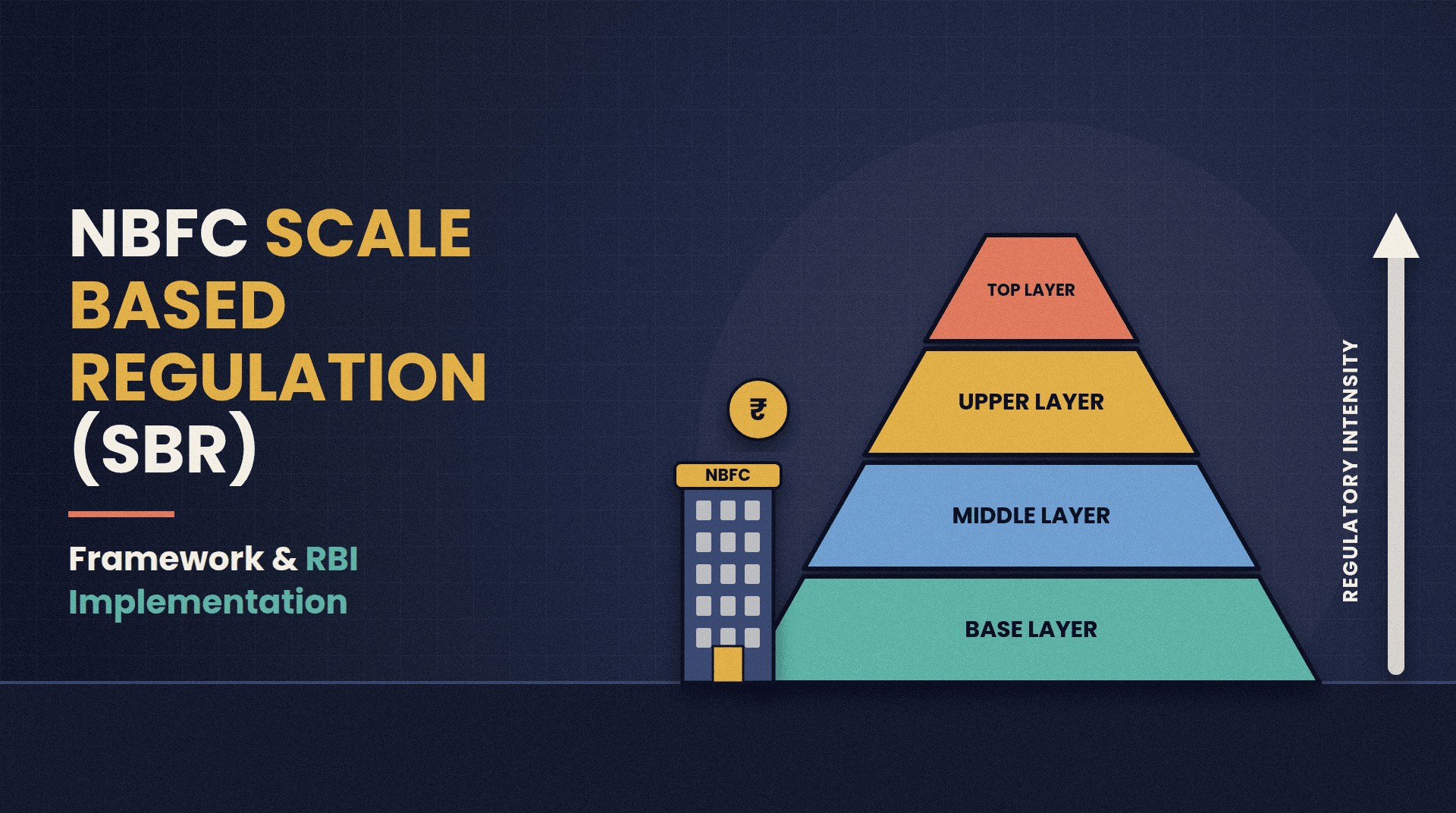
The objective was to make regulatory intensity broadly proportionate to the size, complexity and perceived risk of an NBFC.The framework became operational from 1 October 2022, while certain individual requirements had separate implementation timelines. The Upper Layer was designed for NBFCs considered to warrant enhanced regulatory requirements.

M&A – Competition Act Deal-Value Threshold Rules
This report is exploratory in nature. It traces the legislative and regulatory evolution of the 'deal-value threshold' (DVT) introduced into India's merger-control regime under Section 5(d) of the Competition Act, 2002, from its statutory origin in the Competition (Amendment) Act, 2023 through its operationalisation via Ministry of Corporate Affairs (MCA) rules .

Online Gaming - Promotion and Regulation of Online Gaming Act, 2025 (Act No. 32 of 2025)
the Promotion and Regulation of Online Gaming Rules, 2026. Enacted by the Parliament of India under the purview of the Ministry of Electronics and Information Technology (MeitY), this legislation marks a complete paradigm shift transitioning India from an era of fragmented, state-level anti-gambling statutes and contested judicial 'skill versus chance' jurisprudence into a unified, centralized, strict regulatory regime.