

Online Gaming - Promotion and Regulation of Online Gaming Act, 2025 (Act No. 32 of 2025)
Mohd Hasnain Sheikh
15 Oct 2026 12 min read
- Introduced
- 15 Oct 2026
Executive Summary
This tracking report delivers a comprehensive, systematic analysis of the legislative and regulatory framework governing online gaming in India, focusing directly on the landmark enactment of the Promotion and Regulation of Online Gaming Act, 2025 (Act No. 32 of 2025) and its subordinate framework, the Promotion and Regulation of Online Gaming Rules, 2026. Enacted by the Parliament of India under the purview of the Ministry of Electronics and Information Technology (MeitY), this legislation marks a complete paradigm shift transitioning India from an era of fragmented, state-level anti-gambling statutes and contested judicial 'skill versus chance' jurisprudence into a unified, centralized, strict regulatory regime.
The regulatory architecture established by Act No. 32 of 2025 rests on a strict statutory dichotomy: an absolute, un-bypassable prohibition on all real-money gaming (RMG) activities, paired with a state-backed promotional framework for non-monetary e-sports and casual online social games. Operationalized via the Online Gaming Authority of India (OGAI) from May 1, 2026, the statutory regime imposes rigorous penal provisions, financial transaction bans, advertising bans, and extraterritorial jurisdiction over offshore entities. Simultaneously, the Act has triggered intense constitutional litigation, leading to a historic Supreme Court transfer order under Article 139A consolidating all High Court writ petitions to test the central law against fundamental rights and federal legislative competence.
1. Evolution History & Baseline Framework
To evaluate the structural transformations brought by the 2025 legislation, it is vital to establish the statutory baseline and historic legal environment that preceded central intervention. For over a century, gaming and gambling regulation in India existed as a patchwork of colonial-era statutes, state-specific enactments, and judicial doctrine.
1.1 Pre-2025 Regulatory Landscape & Colonial Predecessor Statutes
The primary statutory baseline governing gaming in India was the Public Gambling Act, 1867 (Act No. 3 of 1867), a colonial statute enacted to penalize public gambling and the keeping of 'common gaming houses'. Under the Constitution of India (1850/1950), 'Betting and gambling' was designated as Entry 34 of List II (State List) in the Seventh Schedule. Consequently, state legislatures enacted localized legislation such as the Telangana Gaming Act 1974, Tamil Nadu Gaming Act 1930, Karnataka Police Act 1963, and Bombay Prevention of Gambling Act 1887. These state laws historically contained a statutory exemption clause (e.g., Section 11 of the Public Gambling Act, 1867), stating that the penal provisions of the Act shall not apply to 'any game of mere skill wherever played'. As internet penetration exploded, online gaming platforms sought shelter under this exemption, asserting that digital platforms hosting fantasy sports, rummy, and poker were lawful business activities protected under Article 19(1)(g) of the Constitution.
1.2 The Jurisprudential Divide: Skill vs. Chance Doctrine
Indian jurisprudence relied heavily on the 'preponderance of skill' test laid down by the Supreme Court of India in landmark decisions:
a Rummy Jurisprudence: State of Andhra Pradesh v. K. Satyanarayana (1968 2 SCR 387): Held that Rummy is predominantly a game of skill rather than chance, as holding and discarding cards requires memory and strategic judgment.
b Horse Racing & Fantasy Sports: Dr. KR Lakshmanan v. State of Tamil Nadu (1996 2 SCC 226): Settled that horse racing is a game of skill and defined a game of skill as one where success depends upon superior knowledge, training, attention, experience, and adroitness.
c High Court Protection: Junglee Games India Pvt. Ltd. v. State of Tamil Nadu (2021 SCC OnLine Mad 2762) & Avinash Mehrotra v. Rajasthan High Court (2021): High Courts repeatedly struck down state statutory amendments (e.g., in Tamil Nadu and Karnataka) that attempted to ban online skill gaming with stakes, ruling that total bans on skill games violated Article 19(1)(g).
1.3 The IT Rules 2021/2023 Intermediary Experiment & Its Limitations
Recognizing the cross-border digital nature of online gaming, the Central Government designated the Ministry of Electronics and Information Technology (MeitY) as the nodal ministry in December 2022. On April 6, 2023, MeitY notified amendments to the Information Technology (Intermediary Guidelines and Digital Media Ethics Code) Rules, 2021. The 2023 IT Rules introduced the concept of 'Online Gaming Self-Regulatory Bodies' (SRBs) empowered to verify permissible online real-money games. However, this co-regulatory model faced structural breakdowns: industry conflict of interest, failure to establish independent SRBs within the designated timeframe, aggressive proliferation of illegal offshore gambling platforms, escalating user addiction, and un-regulated money laundering. These systemic failures compelled Parliament to enact overarching primary legislation in 2025.
2. Dated Legislative & Regulatory Timeline
Date | Milestone / Event | Issuing Authority | Statutory Significance & Impact |
Jan 2, 2023 | Draft IT Gaming Rules Released | MeitY | Initiated public consultation on regulating online real-money games via SRBs. |
Apr 6, 2023 | IT Intermediary Rules Amended | MeitY | Notified framework for permissible online real-money games and SRB accreditation. |
Oct 1, 2023 | 28% GST Rollout on Full Face Value | Ministry of Finance / CBIC | Implemented CGST Amendment Act 2023, imposing 28% GST on initial deposits across all gaming platforms. |
Mar 14, 2025 | Standing Committee Report on Gaming | Parliament of India | Recommended overarching Central Act to curb financial frauds, addiction, and offshore gambling illegalities. |
Jul 28, 2025 | Introduction of Gaming Bill, 2025 | Lok Sabha (MeitY) | Bill No. 112 of 2025 introduced, proposing total prohibition on money games and establishment of OGAI. |
Aug 8, 2025 | Passage in Parliament | Lok Sabha & Rajya Sabha | Passed by voice vote in both Houses after extensive debates on player safety and sports promotion. |
Aug 22, 2025 | Presidential Assent (Act 32 of 2025) | President of India | Received assent; published in Gazette of India Extraordinary (G.S.R. / Act No. 32 of 2025). |
Sep 8, 2025 | Supreme Court Article 139A Transfer Order | Supreme Court of India | Supreme Court transferred all pending High Court challenges (Delhi, Karnataka, MP) to itself. |
Dec 18, 2025 | Draft PROG Rules Published | MeitY | Issued draft Promotion and Regulation of Online Gaming Rules for 45-day stakeholder comments. |
May 1, 2026 | PROG Rules Enforcement & OGAI Operationalized | MeitY / OGAI | Rules, 2026 came into full force; mandatory registration portals opened; real-money gaming bans became operational. |
3. Subordinate Legislation & Operational Architecture
Primary legislation sets macro policy, but subordinate rules operationalize compliance. Under Section 24 of Act No. 32 of 2025, MeitY notified the Promotion and Regulation of Online Gaming Rules, 2026 (Gazette Notification G.S.R. 142(E)), establishing the regulatory machinery.
3.1 The Online Gaming Authority of India (OGAI)
Rule 3 of the PROG Rules, 2026 establishes the Online Gaming Authority of India (OGAI) as an autonomous statutory body headquartered in New Delhi. OGAI consists of a Chairperson (an officer of Secretary rank to the Government of India) and six specialized members representing cybersecurity, public health/psychiatry, financial regulation (RBI nominee), sports administration, legal affairs, and consumer protection.
a Core OGAI Functions: Classification & Registration: Assessing game applications and certifying non-monetary e-sports and social games.
b Technical Auditing: Verifying source code, random number generators (RNG), and anti-bot compliance.
c Consumer Protection & Grievance Redressal: Maintaining an online portal to adjudicate user complaints against registered game publishers.
d Enforcement & Blocking Recommendations: Directing MeitY to issue blocking orders under IT Act Section 69A against un-certified or illegal gaming URLs.
3.2 Statutory Categorization Architecture
The PROG Rules, 2026 create a rigid tripartite classification structure:
1. Online Money Games (PROHIBITED): Defined under Section 2(1)(k) as any online game where a user deposits cash or cash-equivalents with the expectation of earning monetary winnings, prizes, or pecuniary rewards based on outcome regardless of skill involvement.
2. E-Sports (PERMISSIBLE & PROMOTED): Defined under Section 2(1)(e) as multi-player competitive sports games played in recognized virtual environments, conducted without real-money wagering, and accredited under the National Sports Governance Act, 2025.
3. Online Social Games (PERMISSIBLE WITH REGISTRATION): Defined as non-monetary casual digital games offered purely for entertainment, utilizing virtual non-transferable tokens with zero real-world cash liquidity.
4. Implementation & Rollout Status
As of the reporting date, the implementation status of Act No. 32 of 2025 is fully operational across the Union territory of India.
4.1 Total Ban on Real-Money Gaming Intermediaries
Sections 3, 4, and 5 of the Act impose an absolute statutory prohibition on the offering, hosting, publishing, or operating of any Online Money Game within India. The prohibition applies equally to domestic gaming corporations, foreign entities, and individual developers. Transition provisions granted domestic platforms a strict 60-day window from the notification of PROG Rules, 2026 to wind down real-money operations, refund user wallet balances, and shut down staking pools.
4.2 Financial & Banking Intermediary Restrictions
Under Section 7 of the Act, in coordination with the Reserve Bank of India (RBI), all financial intermediaries including commercial banks, payment system operators (UPI, credit/debit card networks), and payment gateways are legally barred from processing, facilitating, or settling financial transactions connected to any online money game. RBI issued Circular RBI/2026-27/18 directing payment aggregators to implement real-time merchant category code (MCC) filtering to auto-block transactions routed to gaming merchants.
4.3 Advertising and Sponsorship Embargo
Section 8 establishes a complete embargo on advertising, promoting, or endorsing online money games across print, electronic, digital, and outdoor media. The ban explicitly encompasses surrogate advertising, social media influencer promotions, and sports event sponsorships, effectively terminating multi-million dollar sponsorship agreements across Indian cricket and broadcast media.
5. Enforcement Actions & Regulatory Practice
Regulatory enforcement has escalated significantly following the activation of OGAI and MeitY enforcement cells.
5.1 Statutory Penal Provisions
a Operating Offense: Section 11(1) (Operating Money Games): Any person or entity operating an online money game faces imprisonment up to 3 years and/or a fine up to ₹10 Lakhs. Repeat offenders face mandatory imprisonment up to 5 years.
b Financial Offense: Section 11(2) (Financial Intermediaries): Financial institutions processing banned gaming transactions face monetary penalties up to ₹25 Lakhs per instance.
c Media Offense: Section 12 (Advertising Offense): Media outlets or influencers advertising prohibited games face fines up to ₹5 Lakhs for initial violations and up to ₹15 Lakhs for subsequent violations.
5.2 Extraterritorial Blocking & FIU-IND Actions
Recognizing that illegal money gaming platforms often operate from offshore tax havens (e.g., Curaçao, Malta, Philippines), Section 10 read with Section 69A of the IT Act grants MeitY emergency domain-blocking powers. Between May 2026 and September 2026, MeitY issued blocking orders against over 450 offshore gambling domain names and mirror sites. Concurrently, the Financial Intelligence Unit - India (FIU-IND) issued compliance notices to offshore gaming entities under the Prevention of Money Laundering Act (PMLA), 2002 for operating illegal financial channels and evading anti-money laundering reporting obligations.
6. Judicial Challenges & Constitutional Testing
The enactment of Act No. 32 of 2025 triggered immediate, widespread constitutional litigation initiated by leading gaming companies, industry associations (E-Gaming Federation, All India Gaming Federation), and technology investors.
6.1 High Court Writ Petitions & Key Constitutional Arguments
Dozens of writ petitions were filed across multiple High Courts, prominently including Delhi High Court (Head Digital Works Pvt. Ltd. v. Union of India), Karnataka High Court (A23 / Bagheera Carrom Pvt. Ltd. v. Union of India), and Madhya Pradesh High Court (Clubboom11 v. Union of India). Petitioners challenged the Act on four primary constitutional pillars:
1. Violation of Article 19(1)(g): Petitioners contend that games of skill (e.g., fantasy sports, rummy) are legitimate business activities protected under Article 19(1)(g), and a complete prohibition fails the test of proportionality under Article 19(6).
2. Arbitrary Manifestation under Article 14: Petitioners argue that obliterating the judicial distinction between skill and chance creates an unconstitutional equality between fundamentally unequal activities.
3. Legislative Competence Deficit: Petitioners submit that Parliament lacks legislative competence to enact the law, asserting that 'Betting and Gambling' falls exclusively under State List Entry 34.
4. Violation of Article 21: Alleging that prohibiting adults from engaging in private recreational skill gaming with monetary stakes infringes personal liberty and right to privacy.
6.2 The Supreme Court Consolidation Order under Article 139A
To prevent conflicting High Court rulings and establish nationwide finality, the Union of India filed Transfer Petition (Civil) Nos. 1820-1842 of 2025 under Article 139A of the Constitution. On September 8, 2025, a Supreme Court Bench granted the transfer petition, withdrawing all pending High Court writ petitions to itself. The Supreme Court observed that the constitutional validity of a central statute impacting digital infrastructure, monetary sovereignty, and public health requires unified adjudication. Interim orders passed by High Courts were stayed, ensuring that the central ban remains fully enforceable pending final disposal by the Apex Court.
7. Connected & Comparative Angles
7.1 Federalism & The State List vs. Union List Competence Conflict
A critical legal dimension of Task-4 is analyzing how Central Act 32 of 2025 interacts with State police powers. The Union Government anchors its legislative competence on Entry 31 of List I (Union List) 'Post and telegraphs, telephones, wireless, broadcasting and other like forms of communication' arguing that internet-based interstate data networks fall under central jurisdiction. Conversely, state governments and petitioners invoke Entry 34 of List II (State List) 'Betting and gambling'. This jurisdictional friction represents one of the most significant federalism battles currently before the Supreme Court.
7.2 The 28% GST Valuation Overlap & Supreme Court Review Petitions
Parallel to regulatory bans, the gaming industry faced severe tax demands under the CGST (Amendment) Act, 2023, which imposed a 28% GST on the full face value of contest entry amounts (CEA). Following the Supreme Court judgment upholding retrospective tax notices issued to platforms like Gameskraft, review petitions under Article 137 remain pending before the Supreme Court, creating a dual legal challenge of statutory ban and retrospective tax liability.
8. Comprehensive Dated Source Log
S.No. | Document / Source Title | Issuing Authority | Date & Ref. No. | Official Access Link / Reference |
1 | Promotion and Regulation of Online Gaming Act, 2025 (Bare Act) | Parliament of India / MeitY | Aug 22, 2025 | https://www.meity.gov.in/static/uploads/2025/10/8a7f103cefc68ed8aaa2ebc9a2ed7c13.pdf |
2 | Enactment & Scope of Gaming Act 2025 - Gazette Release | Press Information Bureau (PIB) | Aug 22, 2025 | |
3 | Promotion and Regulation of Online Gaming Rules, 2026 | MeitY / Gazette of India | Feb 14, 2026 | |
4 | Legislative Brief: Online Gaming Bill, 2025 | PRS Legislative Research | Jul 30, 2025 | https://prsindia.org/billtrack/the-promotion-and-regulation-of-online-gaming-bill-2025 |
5 | Supreme Court Article 139A Transfer Petition Order | Supreme Court of India | Sep 8, 2025 | |
6 | Constitutional Bench Analysis on Gaming Act 2025 | Supreme Court Observer | Sep 15, 2025 | https://www.scobserver.in/cases/challenge-to-the-promotion-and-regulation-of-online-gaming-act-2025/ |
7 | Banking & Payment Transaction Filtering Circular | Reserve Bank of India (RBI) | Apr 18, 2026 |
Mohd Hasnain Sheikh
More tracked legislation
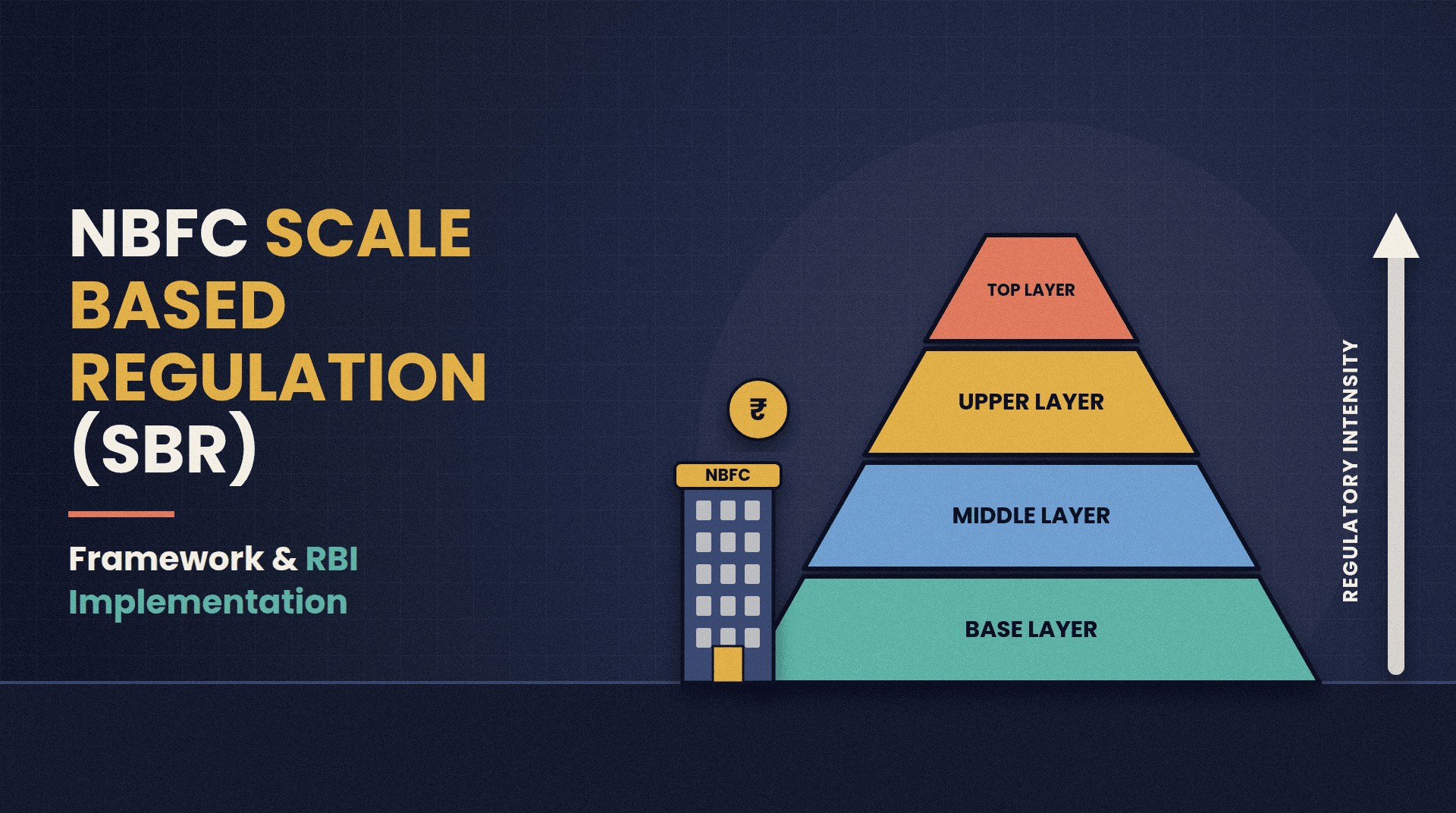
NBFC Scale Based Regulation (SBR) Framework RBI implementation
The objective was to make regulatory intensity broadly proportionate to the size, complexity and perceived risk of an NBFC.The framework became operational from 1 October 2022, while certain individual requirements had separate implementation timelines. The Upper Layer was designed for NBFCs considered to warrant enhanced regulatory requirements.

M&A – Competition Act Deal-Value Threshold Rules
This report is exploratory in nature. It traces the legislative and regulatory evolution of the 'deal-value threshold' (DVT) introduced into India's merger-control regime under Section 5(d) of the Competition Act, 2002, from its statutory origin in the Competition (Amendment) Act, 2023 through its operationalisation via Ministry of Corporate Affairs (MCA) rules .
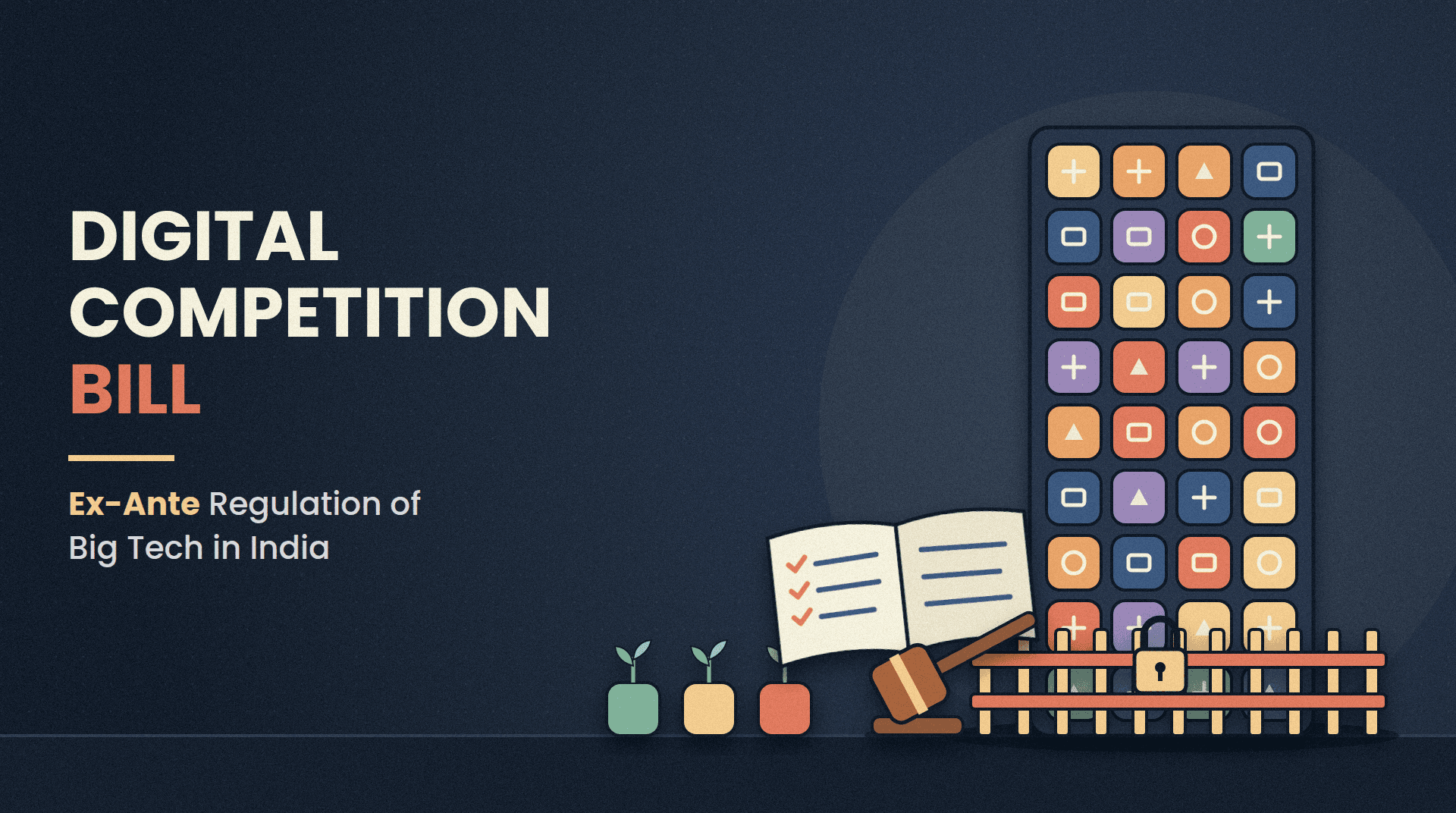
Digital Competition Bill: Ex-Ante Regulation of Big Tech in India
The Indian Digital Competition Bill (DCB) is a paradigm shift in regulation from ex-post to ex-ante regulation, regulating "Systemically Significant Digital Enterprises" (SSDEs), which offer core digital services. The regime adds to the existing Competition Act of 2002 (amended in 2023)1 by introducing pre-determined conduct rules for large digital platforms before any anti-competitive injury is done.