

FEMA-1999, Overseas Investment Rules, 2022 & RBI Clarifications
Credit: Swarn Keshav
3 Oct 2026 13 min read
- Introduced
- 3 Oct 2026

1. Executive Summary
India's overseas investment framework is built on FEMA 1999. Before 2022 Indias overseas-investment framework was mainly governed by the Foreign Exchange Management Regulations 2004 and related RBI directions. On 22 August 2022, the Central Government notified the Foreign Exchange Management (Overseas Investment) Rules 2022 as G.S.R. 646(E). On the same date, RBI notified the Foreign Exchange Management (Overseas Investment) Regulations 2022 as FEMA 400/2022-RB and issued the Overseas Investment Directions through A.P. (DIR Series) Circular No. 12. The new framework superseded the principal 2004 and 2015 instruments.
The 2022 regime replaced the JV/WOS-focused approach with the broader concept of a foreign entity. It clearly distinguishes Overseas Direct Investment (ODI) from Overseas Portfolio Investment (OPI), defines commitment, and introduces the concept of a strategic sector. RBI stated that the new regime was intended to promote ease of doing business, reduce the need for approvals and lower compliance costs. (JV – Joint venture and WOS - Wholly Owned Subsidiary) The regime has continued to develop through RBI clarifications. On 7 June 2024, RBI clarified the treatment of investments in funds and expanded the IFSC OPI facility to unlisted Indian entities. The consolidated Master Direction – Overseas Investment issued on 24 July 2024 incorporates the 2022 framework and the June 2024 amendment. (OPI – Overseas Portfolio Investment) Compliance is reporting-oriented. Transactions are routed through designated Authorised Dealer (AD) banks and the RBI’s Overseas Investment reporting system. Delayed reporting may attract a Late Submission Fee (LSF) under the OI Regulations and RBI Directions. The current RBI Master Direction provides the LSF framework and states that the LSF option is available up to three years from the date.
2. Baseline: FEMA 1999
The Foreign Exchange Management Act 1999 is the parent legislation. FEMA provides the basis for regulating foreign exchange and cross-border transactions. For investment, the important provisions include the framework for capital account transactions, authorised persons, RBI directions, penalties and compounding. Section 6 is central to capital-account transactions. Section 10 deals with authorised persons and Section 11 empower RBI to issue directions to authorised persons. Sections 13 and 15 provide the enforcement and compounding structure. The 2022 OI Rules and Regulations expressly derive their authority from FEMA, while RBI’s operational directions are issued under FEMA.
3. Position Before 2022
Before the 2022 reform, the principal overseas-security framework was the Foreign Exchange Management (Transfer or Issue of Any Foreign Security) Regulations 2004 associated with FEMA 120/2004-RB. RBI also maintained a Master Direction on Direct Investment by Residents in Joint Venture (JV) / Owned Subsidiary (WOS) Abroad. Acquisition and transfer of immovable property outside India was separately governed by the 2015 regulations.
Resident individuals had been permitted to make ODI from 5 August 2013, subject to the conditions and the LRS limit. The 2022 reform expressly superseded the 2004 foreign-security framework and the 2015 overseas-immovable-property regulations. RBI’s 2022 Directions also superseded the JV/WOS Master Direction.
4. Three–Layer 2022 Regulatory Scheme
Instrument | Authority | Main function |
FEMA, 1999 | Parliament | Parent statute; provides powers and the basic legal framework. |
OI Rules, 2022 | Central Government / Ministry of Finance | Substantive rules, schedules, permissions, limits and conditions. |
OI Regulations, 2022 | Reserve Bank of India | Regulatory and reporting framework under FEMA. |
OI Directions / Master Direction – Overseas Investment | RBI | Detailed operational directions to authorised persons and AD banks. |
5. Key Concepts
5.1 Foreign Entity
The 2022 system stopped using the JV/WOS terms and used the wider idea of a "foreign entity". The RBI Directions say it is an entity that is created, registered or set up outside India, including in an IFSC in India, that has limited liability and follows the framework.
5.2 Overseas Direct Investment (ODI)
ODI covers buying shares or joining the memorandum of a foreign entity; investing 10% or more in the shares of a listed foreign entity; or investing with control when the holding is less than 10%. Once an investment is called ODI it stays ODI even if the percentage goes below 10% or control is lost.
5.3 Overseas Portfolio Investment (OPI)
OPI means investment in foreign securities which does not qualify as Overseas Direct Investment, subject to the instruments and conditions permitted under the OI Rules and Directions. The system limits OPI in some types of instruments, including some debt, some Indian stocks outside an IFSC, derivatives unless allowed by RBI and things like gold and bullion receipts.
5.4 Financial Commitment
Financial commitment includes ODI, eligible debt and non-cash facilities or commitments to entities according to the OI Rules. An Indian company must meet the rules before giving debt or guarantees as part of a financial commitment.
5.5 Strategic Sector
The 2022 system added the idea of a " sector". When a strategic-sector investment needs permission, the investor must get that permission before the AD bank handles the money transfer.
6. Permission, Route and Role of AD Banks
The main idea is that a person living in India can make an investment or financial commitment under general permission or automatic route following the OI Rules, Regulations and Directions. If permission is needed, the AD bank checks the proposal. Sends it to RBI or the right authority. The investor uses Form FC and other papers for commitment.
1 Check if the investment is allowed under the part of the OI Rules.
2 Decide if the transaction is ODI, OPI or another type of allowed transaction.
3 Use the AD bank that is allowed for sending money and reporting.
4 Report the money transfer in the OID system to get the UIN. (Unique Identification Number)
5 Do not think the AD bank is replacing the need to check the FEMA rules.
7. Compliance and Reporting
7.1 Reporting
The RBI Master Direction states that overseas investment reporting is done under Regulation 10 of the OI Regulations through the AD bank using the prescribed forms. If the form is not complete, it is considered not submitted.
7.2 Annual Performance Report
An Annual Performance Report (APR) is needed for some investments. RBI also explains what needs to be certified. Allows joint investors to have one person file the APR. People living in India must also follow LRS reporting if the investment counts towards LRS.
7.3 Late Submission Fee
If reports are late, the OI Regulations and RBI Directions have an LSF system. The current Master Direction says some periodic delays cost ₹7,500 per report while some transaction delays are calculated as ₹7,500 plus (0.025% × A × n) following rules and a maximum. The LSF option can be used up to three years after the report is due. RBI’s Annual Report says online processing and online payment of LSF were added, and that AD banks were given the power to record delayed transactions as long as LSF is paid when needed.
8. Pricing
The AD bank must make sure the pricing rules of the OI Rules are followed. RBI's directions let the AD bank use a board-approved policy with accepted valuation methods and say that in some cases valuation may not be needed, like court-approved restructurings or when the price is clear on a stock exchange.
9. Resident Individuals and LRS
People living in India can make investments under Schedule III of the OI Rules. RBI's LRS Master Direction clearly connects property, ODI and OPI to the OI Rules, Regulations and Directions.
The OI Directions have rules for individuals. For example, some ESOP or Employee Benefits Scheme investments may be OPI or ODI depending on what they're and if control is gained. The money sent is counted toward the individual’s LRS limit.
10. IFSC and Overseas Funds: 2024 Clarification
On 7 June 2024, RBI issued A.P. (DIR Series) Circular No. 09 to explain investments in funds. The circular changed the words that said "units" to "units or any other instrument" from a properly managed overseas fund. It also said that in an IFSC, an unlisted Indian company can do OPI in a fund or vehicle following Schedule V and limits. This clarification is important because it shows how RBI uses circulars to solve problems without changing the whole 2022 system.
11. Chronological Timeline
Date | Event | Importance |
1999 | FEMA enacted | Parent statute for foreign exchange management. |
07 Jul 2004 | FEMA 120/2004-RB | Principal earlier foreign-security/overseas-investment regulation. |
05 Aug 2013 | Resident individual ODI permitted | Resident individuals entered the ODI framework subject to conditions/LRS. |
21 Jan 2016 | FEMA 7(R)/2015-RB | Separate overseas immovable-property regulation. |
22 Aug 2022 | G.S.R. 646(E) | OI Rules, 2022 notified and brought into force on publication. |
22 Aug 2022 | FEMA 400/2022-RB | OI Regulations, 2022 notified. |
22 Aug 2022 | A.P. (DIR Series) Circular No. 12 | OI Directions, 2022 operationalised the regime. |
07 Jun 2024 | A.P. (DIR Series) Circular No. 09 | Overseas-fund and IFSC OPI clarification. |
24 Jul 2024 | FED Master Direction No.15/2024-25 | Consolidated Master Direction – Overseas Investment. |
2024–25 | Online LSF processing | RBI reported digital processing/payment and delegation to AD banks for delayed reporting. |
22 Sep 2026 | Research cut-off | Current status assessed against identified RBI/DEA materials. |
12. Evolution: Before and After 2022
Earlier position | 2022 regime |
JV/WOS terminology was central. | Broader “foreign entity” concept. |
2004 foreign-security regulations were the main framework. | Integrated Rules + Regulations + Directions. |
Overseas immovable property had a separate 2015 regulation. | Covered within the 2022 overseas-investment framework. |
Detailed permission-oriented architecture. | Greater use of general permission/automatic route subject to safeguards. |
Older reporting architecture. | Reworked reporting through AD banks and OID. |
Direct investment rules were the main focus. | ODI and OPI are expressly distinguished. |
Many legacy circulars were used together. | 2022 framework consolidated and modernised the system. |
RBI described the 2022 regime as a simplification intended to reduce the need for specific approvals and compliance costs. (WOS – Wholly owned subsidiary)
13. Rules, Forms and Subordinate Instruments
Instrument | Purpose | Authority |
G.S.R. 646(E), 22 Aug 2022 | OI Rules, 2022 | Ministry of Finance / DEA |
FEMA 400/2022-RB, 22 Aug 2022 | OI Regulations, 2022 | RBI |
A.P. (DIR Series) Circular No. 12, 22 Aug 2022 | OI Directions, 2022 | RBI |
Master Direction – Overseas Investment, 24 Jul 2024 | Consolidated operational directions | RBI |
Form FC | Financial commitment / relevant overseas-investment reporting | RBI / AD bank |
Form OPI | Applicable OPI reporting | RBI / AD bank |
APR | Annual performance reporting where applicable | RBI / AD bank |
OID / UIN | Online transaction reporting and identification | RBI / AD bank |
14. Enforcement and Compliance Actions
FEMA enforces rules through penalties for violations. Section 13 outlines penalties for breaking FEMA rules, regulations, notifications, directions or orders. The exact penalty depends on the kind of violation and the specific laws that apply. The OI Regulations also link compliance with reporting to the ability to make financial commitments or transfers. Regulation 12 says no new financial commitment or transfer can happen until any reporting delays are fixed. The Form FC certification shows this requirement clearly.
The RBI Annual Report points to a shift in how administrative matters are handled. There is now use of online LSF processing. Also, responsibility for delayed transactions has been passed to AD banks.
15. Practical - Regulatory Questions
1 It can be hard to decide between ODI and OPI when a foreign investment in a listed company is under 10%, but control still exists.
2 Rules on commitments require investors to look at debt, guarantees and non-fund-based commitments—not just equity.
3 Investments in services need extra checks on eligibility and regulatory requirements.
4 Transactions in IFSC must follow the RBI wording because the June 2024 clarification changed what counts as permitted OPI.
5 Delayed reporting can stop transactions until the delay is sorted out.
6 Valuation documentation must meet both the OI Rules and the policies of the AD bank.
7 Resident individuals have to consider both the OI framework and the LRS requirements.
16. Compliance Checklist for an Investor
1 Start by identifying the investor and checking if they are eligible.
2 Then identify the entity and its business activity.
3 Classify the transaction as ODI, OPI or another allowed type.
4 Check the schedule of the OI Rules and see what limits apply.
5 Look at approval needs— for strategic sectors and financial services.
6 Get evidence for valuation or pricing.
7 Prepare Form FC or Form OPI along with all supporting documents.
8 Make sure the transaction goes through the AD bank.
9 Complete OID or UIN reporting if needed.
10 Check if there were past reporting delays and whether LSF or regularisation is needed.
11 Keep records of all investment and transaction documents.
12 Check what obligations exist for realisation or repatriation.
13 Before starting any transaction, check the most recent RBI Master Direction and circulars.
17. Current Status and Outlook - 22 September 2026
As of the research cut-off date, the current operative structure remains FEMA 1999 plus the OI Rules 2022, OI Regulations 2022 and RBI Overseas Investment Directions/Master Direction. The July 2024 Master Direction clearly states that the system is governed by the 2022 Rules and Regulations. It also brings together the June 2024 overseas-fund clarification. From the materials studied, the direction of regulation seems to be toward classifications, digital reporting, easier processing and delegation to AD banks—while keeping necessary safeguards. The LSF reforms show this approach well. For compliance, the key point is to always check the law that was in force on the date of the transaction. The RBI FAQ material makes it clear: if an FAQ conflicts with a FEMA notification Master Direction or AP (DIR) Circular, the latter ones take priority.
18. Conclusion
The 2022 overseas-investment reform made changes to India’s FEMA framework. It moved away from the model based on JVs and WOS and introduced a broader foreign-entity model. It separated ODI from OPI, made financial-commitment rules clearer, added provisions for overseas immovable property and strengthened reporting through AD banks. The 2024 overseas-fund clarification and consolidated Master Direction from RBI show that regulation is still evolving. The main message for compliance is simple: an overseas investment must not only be allowed; it must also be correctly classified, properly valued, sent through the right banking channel, reported on time and backed by the proper documents. Even if the investment itself is legal, missing reporting can lead to FEMA consequences.
19. Dated Source Log
S1. 22 Aug 2022 – RBI – Overseas Investment Regulations, 2022 (FEMA 400/2022-RB) – https://www.rbi.org.in/Scripts/BS_ViewMasDirections.aspx?id=12380
S2. 22 Aug 2022 – RBI – OI Regulations: reporting, LSF and restriction on further commitment - https://www.rbi.org.in/Scripts/BS_ViewMasDirections.aspx?id=12380
S3. 22 Aug 2022 – RBI – OI Directions, 2022, A.P. (DIR Series) Circular No. 12 – https://systemhealth.rbi.org.in/Scripts/BS_ViewMasDirections.aspx_id%3D12381.html
S4. 24 Jul 2024 – RBI – Master Direction – Overseas Investment, FED Master Direction No.15/2024-25 https://systemhealth.rbi.org.in/Scripts/BS_ViewMasDirections.aspx_id%3D12710.html
S5. 07 Jun 2024 – RBI – A.P. (DIR Series) Circular No. 09 – Investments in Overseas Funds https://systemhealth.rbi.org.in/Scripts/FS_Notification.aspx_Id%3D12691%26fn%3D5%26Mode%3D0.html
S6. 07 Jul 2004 / 19 Nov 2004 – RBI – FEMA 120/2004-RB – Foreign Security Regulations – https://systemhealth.rbi.org.in/Scripts/BS_viewfemanewnotification.aspx.html
S7. 21 Jan 2016 / supersession material – RBI – overseas immovable-property framework and its supersession by the 2022 regime – https://systemhealth.rbi.org.in/Scripts/BS_ViewMasDirections.aspx_id%3D10196.html
S8. 24 Jul 2024 – RBI – consolidated Master Direction listing incorporated circulars – https://systemhealth.rbi.org.in/Scripts/BS_ViewMasDirections.aspx_id%3D12710.html
S10. 06 Apr 2023 update – RBI – FAQ disclaimer on hierarchy of FEMA instruments – https://systemhealth.rbi.org.in/Scripts/FS_FAQs.aspx_Id%3D117%26fn%3D5.html
Credit: -Swarn Keshav
More tracked legislation

EV & BATTERY Regulation in India
India's EV policy began with an approach that treated electric and hybrid mobility as a national industrial and transport question. The National Mission for Electric Mobility was approved in 2011, followed by the National Electric Mobility Mission Plan 2020, launched in January 2013. The Plan was intended to create a long-term path for adoption, domestic capability, research and development, testing, charging and supply-side support.
Indian Space Policy 2023
Indian model was transformed from a policy fragmented, state dominated model to a commercially open, institutionally separated and more procedural regime. The 2017 draft was an early attempt at enacting the entire sector at once. That effort stalled. The 2020 reforms, on the other hand, allowed for participation by the private sector, and ISP 2023 provided a detailed policy framework around IN-SPACe.
NBFC Scale Based Regulation (SBR) Framework RBI implementation
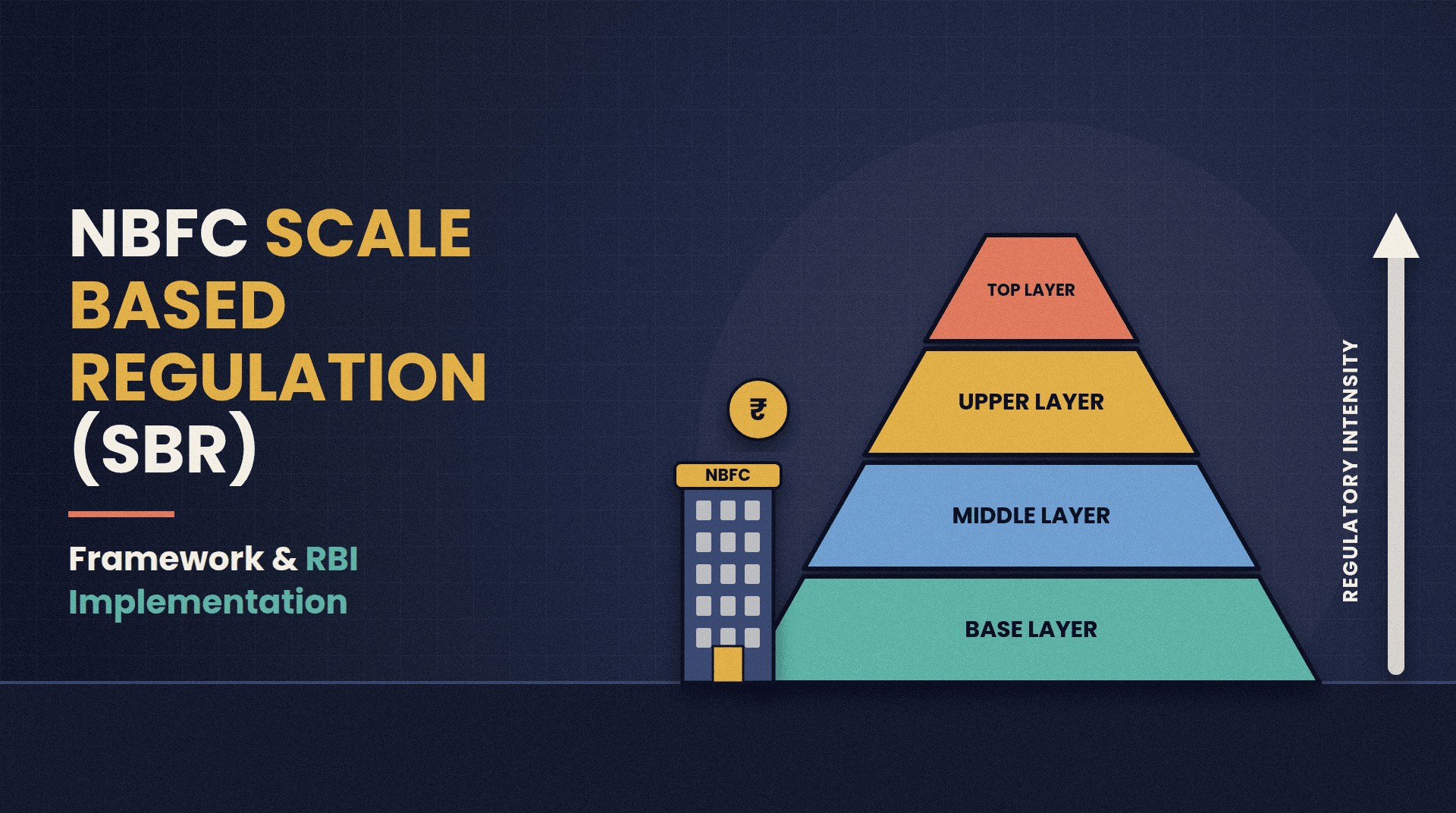
The objective was to make regulatory intensity broadly proportionate to the size, complexity and perceived risk of an NBFC.The framework became operational from 1 October 2022, while certain individual requirements had separate implementation timelines. The Upper Layer was designed for NBFCs considered to warrant enhanced regulatory requirements.