

GST Appellate Tribunal Rollout and rate rationalisation
Credit:-Yashasvi Maharshi
2 Oct 2026 19 min read
- Jurisdiction
- Supreme Court | High Court
- Introduced
- 2 Oct 2026
Very few reforms in Indian tax law have been as long in the making, or as quietly consequential, as the one this report tracks. When the Goods and Services Tax was rolled out in July 2017, it promised a single national market with a single dispute resolution ladder to match. The final rung of that ladder, a working GST Appellate Tribunal, took almost eight years to actually arrive. This report follows that entire arc: the original statutory design, the court battles over whether that design was even constitutionally sound, the long stretch of years when taxpayers had nowhere to appeal at all, and the tribunal's eventual launch in September 2025. Alongside it runs a second, faster-moving story: the GST Council's decision in 2025 to tear up the old four-slab rate structure and replace it with a simpler one, a reform that touched almost every household and business in the country within a matter of weeks. Both threads are part of the same larger picture, a tax system that is still actively being built, tested, and corrected in real time.
Table of Contents
1. Establishing the Baseline: GST, the Appellate Structure, and the Regulators Involved
2. The Legislative and Regulatory Timeline
3. Rules, Forms, and Subordinate Legislation
4. Implementation and Rollout Status (as of September 2026)
5. Enforcement and Compliance Actions
6. Judicial and Legislative Challenges
7. A Connected Angle: How GSTAT Compares with Other Tax Tribunals
8. Evolution of the Law: A Chronological Narrative
9. Outlook and Concluding Observations
1 Establishing the Baseline: GST, the Appellate Structure, and the Regulators Involved
The Goods and Services Tax was introduced through the Constitution (One Hundred and First Amendment) Act, 2016, which inserted Article 246A and gave both Parliament and State Legislatures concurrent power to make laws on GST. The Central Goods and Services Tax Act, 2017 (CGST Act) and the corresponding State GST Acts came into force on 1 July 2017, replacing a tangle of central excise duty, service tax, VAT, and a dozen other levies with one indirect tax administered jointly by the Centre and the States through the GST Council, a constitutional body chaired by the Union Finance Minister with every State Finance Minister as a member.
From the very beginning, the CGST Act envisaged a three-tier dispute resolution mechanism for GST disputes. A taxpayer aggrieved by an assessment order could first approach the First Appellate Authority under Section 107 of the Act. If still dissatisfied, the next forum was meant to be the Goods and Services Tax Appellate Tribunal (GSTAT), created under Sections 109 to 111 of the CGST Act. Beyond the Tribunal lay the High Courts and, ultimately, the Supreme Court. On paper this looked complete. In practice, the second rung of that ladder, the Tribunal itself, did not become operational for close to eight years, and that gap is the single biggest story in GST appellate history.
Two regulators sit at the centre of this report. The Central Board of Indirect Taxes and Customs (CBIC), under the Department of Revenue, Ministry of Finance, administers the CGST Act and issues the circulars, notifications, and clarifications that interpret it day to day. The GST Council itself functions as the policy making body, recommending rate changes, procedural rules, and structural reforms, which are then notified by the Centre and mirrored by the States. The Ministry of Law and Justice notifies constitutional amendments and Tribunal-related rules, and the Department of Financial Services within the Finance Ministry has played a role in specific reforms such as the insurance sector rate exemption discussed later in this report.
A The Two Strands
This report is built around two connected but distinct developments within GST law, both of which fall under the assigned topic.
Strand One: The GST Appellate Tribunal
This strand traces how a tribunal that existed in statute since 2017 remained non-functional for years, why courts repeatedly struck down or questioned its composition, how Parliament eventually amended the law to fix the defects, and how the Tribunal finally became operational in 2025 and 2026 with a Principal Bench in New Delhi and thirty-one State Benches spread across forty-five locations.
Strand Two: Rate Rationalisation
This strand tracks the GST Council's decision, taken at its 56th meeting in September 2025, to collapse the earlier four-rate structure (5, 12, 18, and 28 percent, plus cess on select goods) into what officials have called a Simple Tax structure built around two principal slabs of 5 percent and 18 percent, with a special 40 percent rate reserved for a short list of demerit goods such as tobacco and pan masala. This was among the most sweeping rate overhauls since GST's launch in 2017 and touched everything from daily groceries to health insurance premiums.
2 The Legislative and Regulatory Timeline
The table below lays out every dated event of consequence across both strands, in chronological order, so that the pace and sequence of reform is visible at a glance.
Date | Event |
|---|---|
1 July 2017 | CGST Act, 2017 comes into force. Sections 109 to 111 create the GST Appellate Tribunal, its Principal Bench, and State Benches on paper, though none are constituted yet. |
7 December 2017 | The Government issues the first notification under Section 109 attempting to constitute GSTAT benches; litigation over the Tribunal's composition begins soon after in various High Courts. |
20 September 2019 | The Madras High Court, in Revenue Bar Association v. Union of India, 2019 SCC OnLine Mad 8910, declares the composition of GSTAT under Sections 109(3), 109(9), and 110(1)(b)(iii) of the CGST Act unconstitutional, holding that a tribunal deciding disputes between the State and citizens cannot have technical (non-judicial) members outnumbering judicial members. |
2020 to 2022 | GSTAT remains constituted nationally. Multiple High Courts (Madhya Pradesh, Andhra Pradesh, and others) grant interim protection to taxpayers who have no appellate forum to approach, generally by staying recovery on the condition of a partial pre-deposit. |
7 August 2023 to 18 August 2023 | The Central Goods and Services Tax (Amendment) Act, 2023 is passed by Parliament, followed by the Central Goods and Services Tax (Second Amendment) Act, 2023, notified on 28 December 2023, both aimed at curing the constitutional defects identified in 2019. |
28 December 2023 | The Second Amendment Act is notified. Section 110 is rewritten: advocates with ten years of substantial litigation experience in indirect tax matters become eligible for appointment as Judicial Members. Minimum age for appointment is fixed at 50 years, the President's upper age limit is raised from 67 to 70, and Members' upper age limit is raised from 65 to 67. |
Early May 2024 | Justice (Retired) Sanjaya Kumar Mishra, former Chief Justice of the Jharkhand High Court, takes oath as the first President of GSTAT before Union Finance Minister Nirmala Sitharaman in New Delhi, formally activating the institution at the top even though benches are not yet functional for filing. |
11 July 2024 | CBIC issues Circular No. 224/18/2024-GST, giving taxpayers a mechanism to obtain a stay on recovery of dues, where the first appeal has already been decided, by furnishing an undertaking to appeal before GSTAT once it becomes operational and paying the equivalent of the Section 112 pre-deposit through the Electronic Liability Register. |
24 April 2025 | The Government notifies the Goods and Services Tax Appellate Tribunal (Procedure) Rules, 2025, laying down the procedure for filing appeals, e-filing requirements, hearing conduct, and the functioning of the Tribunal's registry. |
4 September 2025 | The GST Council press release following its 56th meeting (held 3 September 2025) confirms the rate rationalisation package: a two-slab Simple Tax structure of 5 percent and 18 percent, a special 40 percent rate for select demerit goods, and a target date of end-September 2025 for GSTAT to begin accepting appeals. |
22 September 2025 | The new GST rates take effect for goods and services (barring tobacco products, whose transition is deferred pending compensation cess loan obligations). Individual life and health insurance policies become fully exempt from GST from this date. |
24 September 2025 | GSTAT is formally launched by Finance Minister Nirmala Sitharaman in New Delhi, with a Principal Bench in the capital and thirty-one State Benches across forty-five locations, alongside a digital e-Courts portal for online filing, case tracking, and virtual hearings. |
13 December 2024 (parallel judicial track) | The Supreme Court, in Team Computers Private Limited v. Union of India, 2024 (12) TMI 875-SC, stays a first appellate order and directs the Union Government to explain the continuing delay in operationalising GSTAT, reinforcing pressure that fed into the 2025 rollout. |
30 June 2026 | Deadline under GSTAT's staggered filing schedule by which backlog appeals (cases where the limitation period had earlier run out because no Tribunal existed) must be filed, giving taxpayers a final window to bring years of pending disputes. |
3 Rules, Forms, and Subordinate Legislation
Two layers of subordinate legislation operationalised the parent Act for this topic, one aimed at the Tribunal and one aimed at the rate structure.
A Goods and Services Tax Appellate Tribunal (Procedure) Rules, 2025
Notified by the Ministry of Finance on 24 April 2025 under powers granted by the CGST Act, these Rules govern practically every procedural aspect of litigating before GSTAT. They prescribe the forms for filing an appeal (Form GSTAT-01), the manner of e-filing through the Tribunal's dedicated portal, timelines for filing replies and rejoinders, the conduct of hearings including provision for hybrid and virtual appearances, and the format in which orders are to be pronounced. A notable feature is the emphasis on plain-language, checklist-driven filing, intended to reduce dependence on specialised counsel for routine procedural steps and to cut down on defective filings that used to clog other tribunals.
B GST Rate Notifications Following the 56th Council Meeting
Following the Council's recommendations, the Central Government issued a fresh set of notifications under Section 9 and Section 11 of the CGST Act (and the corresponding provisions of the Integrated GST Act) revising rate schedules across virtually every chapter of the tariff. These notifications reclassified goods into the 5%, 18%, and 40% slabs, moved a wide category of daily-use items such as soap, toothpaste, hair oil, and packaged food to the merit rate, and shifted consumer durables such as air conditioners, televisions, and small cars from 28% down to 18%. Separate notifications, guided by the Department of Financial Services, exempted individual life and health insurance policies from GST altogether, addressing years of criticism that taxing insurance premiums discouraged financial protection for ordinary households.
C CGST (Second Amendment) Act, 2023 and Its Rule Consequences
Because the 2023 Amendment Act changed eligibility and age conditions for Tribunal Members under Section 110, it also required consequential changes to the qualification and selection process rules administered by the Search-cum-Selection Committee responsible for recommending GSTAT appointments. These procedural adjustments allowed the appointment process for the Principal Bench President and subsequent Members to proceed through 2024 without falling foul of the earlier constitutional objections.
4 Implementation and Rollout Status (as of September 2026)
As things stand today, GSTAT is functional, though still bedding in. The Principal Bench sits in New Delhi under President Justice (Retired) Sanjaya Kumar Mishra, and thirty-one State Benches are spread across forty-five locations, each intended to comprise two Judicial Members, one Technical Member (Centre), and one Technical Member (State), in line with the composition rules fixed after the 2023 amendment. The Tribunal's e-Courts portal allows appeals to be filed digitally, tracked online, and heard virtually where appropriate, a design choice explained by the Finance Minister as aimed at jargon-free orders, simplified formats, and defined time standards for listing, hearing, and pronouncement. The rollout has, however, been staggered rather than instantaneous. Filing for backlog appeals, disputes where the usual three-month limitation period under Section 112 had already expired years earlier because no Tribunal existed to file before, has been extended up to 30 June 2026, giving taxpayers a genuine window to finally litigate old disputes rather than losing them forever to limitation. Not every State Bench became active on the same day, and reports through late 2025 and into 2026 suggested a phased activation as Members were appointed bench by bench, with some benches still catching up on staffing even as others had begun hearing matters.
On the rate rationalisation side, the transition was faster and more uniform. The new rates for goods and services took effect on 22 September 2025 nationwide, with tobacco and related products deliberately excluded from the immediate change because outstanding compensation cess loan repayments, taken by the Centre to backstop States during the pandemic years, are still linked to cess collections on those items. That carve-out is expected to be resolved once the loan liability is discharged, at which point tobacco products are likely to move to the 40 percent special rate alongside an additional cess, rather than continue under the old 28 percent plus cess regime.
5 Enforcement and Compliance Actions
In the years before GSTAT existed, enforcement authorities faced an awkward problem: how to pursue recovery of confirmed tax demands when the taxpayer's only real avenue of appeal, the Tribunal, simply did not exist. CBIC's response evolved through a series of circulars and administrative guidelines, culminating in Circular No. 224/18/2024-GST dated 11 July 2024. That circular allowed a taxpayer whose first appeal had been rejected to avoid coercive recovery by giving a written undertaking to file an appeal before GSTAT as soon as it became operational, coupled with payment of an amount equal to the pre-deposit that Section 112 would otherwise require. Payments were to be routed through the Electronic Liability Register rather than ad hoc challans, and a new form, DRC-03A, was introduced to let taxpayers who had already made informal payments adjust them against the formal pre-deposit once the portal caught up.
Once GSTAT actually began accepting filings in September 2025, CBIC and the GST Council issued a further round of FAQs clarifying transitional issues arising from the rate rationalisation exercise, including how contracts entered into before 22 September 2025 but performed afterward should be invoiced, how input tax credit reversals would apply where a supply moved from a taxable rate to a nil rate, and how insurers were to handle premiums collected before the exemption date for policies renewing afterward. These clarifications matter because rate changes of this scale inevitably generate short-term compliance confusion, particularly for businesses holding inventory purchased at the old higher rate but sold after the cut, an issue the anti-profiteering framework under the GST law was specifically invoked to monitor, with the Council urging businesses to pass on the benefit of lower rates to consumers rather than pocketing the difference as extra margin.
6. Judicial and Legislative Challenges
The years without a functioning Tribunal produced a substantial body of case law, almost entirely about the consequences of that absence rather than about GST liability itself. Four decisions capture the arc particularly well.
A Revenue Bar Association v. Union of India, 2019 SCC Online Mad 8910 (Madras High Court)
A Division Bench of Justices S. Manikumar and Subramonium Prasad struck down Sections 109(3), 109(9), and 110(1)(b)(iii) of the CGST Act as unconstitutional. Relying on the Supreme Court's earlier Constitution Bench ruling in Union of India v. R. Gandhi, (2010) 11 SCC 1, which had held that a tribunal deciding disputes between citizens and the State must never have technical members outnumbering judicial members, the Madras High Court found that GSTAT's original design, with two technical members against a single judicial member at both National and Regional Bench level, and its exclusion of practising advocates from eligibility as judicial members, violated Articles 14 and 50 of the Constitution. The Court did not shut the Tribunal down outright but directed Parliament to reconsider the composition, a direction Parliament eventually acted on through the 2023 amendments.
B Rajkalp Mudranalya Private Limited v. Superintendent, 2023 Live Law (Guj) 176 (Gujarat High Court)
By late 2023, GSTAT existed on paper (having been formally constituted) but still had no sitting Members and therefore could not actually hear anything. In this Special Civil Application, a Division Bench of Justices Biren Vaishnav and Mauna M. Bhatt granted an unconditional stay on recovery proceedings, observing pointedly that although the Tribunal had been constituted, it was still not functioning, and that a taxpayer could not fairly be made to suffer coercive recovery while genuinely deprived of an appellate remedy that the statute promised. This case, and similar orders from the Calcutta and Patna High Courts around the same period, became the template that CBIC's own July 2024 circular later tried to formalise nationally.
C Team Computers Private Limited v. Union of India, 2024 (12) TMI 875-SC (Supreme Court of India)
By December 2024, the delay had reached the Supreme Court directly. The Court stayed a first appellate order that would have required the petitioner to refund an already sanctioned refund, and, more significantly, called for a detailed status report from the Union Government on why GSTAT still had not become functional years after being legislated into existence. The order signalled that the highest court was no longer content to leave the issue to case-by-case High Court relief and wanted an institutional answer, adding real pressure in the months leading up to the Tribunal's eventual launch in September 2025.
D Madras Tax Bar v. Union of India (Supreme Court, ongoing supervisory track)
Alongside individual taxpayer litigation, the Madras Tax Bar Association's writ petitions challenging aspects of the Tribunal framework kept the Supreme Court seized of the broader constitutional and procedural questions surrounding GSTAT well into the rollout period, with fresh notices issued as the factual position on the ground changed. This case functioned less as a single dramatic ruling and more as a running supervisory thread that kept the Government answerable on implementation timelines.
Taken together, these four matters show a fairly unusual pattern in Indian tax litigation: courts were not being asked to decide whether a tax was owed, but to manage the practical unfairness created by a promised forum that simply was not there. That pressure, sustained over nearly six years, is arguably as responsible for GSTAT's eventual functioning launch as the 2023 legislative amendment itself.
7 Connected Angle: How GSTAT Compares with Other Tax Tribunals
It is worth placing GSTAT briefly alongside India's older direct tax tribunal, the Income Tax Appellate Tribunal (ITAT), which has existed since 1941 and long allowed practising advocates and chartered accountants to represent parties before Benches composed of one Judicial Member and one Accountant Member, a far more balanced structure than GSTAT's original design. Much of the Madras High Court's 2019 reasoning in Revenue Bar Association drew implicit force from this contrast: if an eighty-year-old direct tax tribunal could function with balanced judicial representation, there was no administrative necessity forcing GST's tribunal to be built any differently. The 2023 amendments, in effect, moved GSTAT structurally closer to the ITAT model by opening the door to advocates as Judicial Members.
A second connected point concerns State-level GST Benches themselves. Because GST is a concurrent-list tax jointly administered by the Centre and every State, each State Bench of GSTAT effectively multiplies the coordination challenge that a Centre-only tribunal like the ITAT never faced. Getting thirty-one State Benches across forty-five locations staffed with State Technical Members required active cooperation from every State Government, a coordination exercise without real precedent in Indian tribunal history and one reason the rollout, once it began, still proceeded bench by bench rather than as a single national switch-on.
8 Evolution of the Law: A Chronological Narrative
Read end to end, the story of GSTAT and rate rationalisation is really the story of a young tax law being forced to grow up in public. GST launched in July 2017 with an appellate structure that looked complete on the page but was constitutionally unsound in practice, giving revenue officials a built-in majority on the very body meant to check them. The Madras High Court called this out within two years, in 2019, but Parliament took another four years to actually rewrite the qualification and composition rules, finally doing so through the CGST (Second Amendment) Act, 2023, notified in December of that year. Even after the law was fixed, standing up an actual functioning institution, appointing a President, filling thirty-plus Benches with State and Central nominees, writing procedural rules, and building an e-filing portal, took a further two years, arriving only in September 2025.
During that entire seven-to-eight-year gap, taxpayers were not without any recourse. High Courts across the country, from Gujarat to West Bengal to Bihar, stepped into the vacuum by granting interim stays on recovery, and CBIC eventually formalised that practice through its July 2024 circular so that taxpayers nationwide had a consistent, predictable route to protection rather than depending on which High Court happened to hear their case. The Supreme Court's intervention in the Team Computers matter in December 2024 added institutional pressure at exactly the moment the Government was finalising the Tribunal's procedural rules, and the two developments together, the 2023 legislative fix plus sustained judicial pressure, form the direct causal chain behind the September 2025 launch.
The rate rationalisation strand moved on an entirely separate and much faster timeline, but it converged with the Tribunal story in a telling way: the same 56th GST Council meeting on 3 September 2025 that finalised the new two-slab rate structure also set an end-September target for GSTAT to start accepting appeals, and both reforms were publicly launched within three weeks of each other in September 2025. That overlap was not a coincidence so much as a signal of intent, a government keen to show that GST, eight years after its introduction, was finally being simplified on the rate side and made genuinely enforceable on the dispute-resolution side in the same breath.
9 Outlook and Concluding Observations
Three questions will likely define how this story continues over the next year or two. First, whether all thirty-one State Benches reach full staffing and start clearing the substantial backlog of appeals within the extended filing window ending 30 June 2026, or whether some Benches remain thin and slow, effectively recreating a milder version of the old access problem in specific States even after the national launch. Second, whether the tobacco and pan masala carve-out from the new rate structure resolves cleanly once the compensation cess loan is repaid, or becomes its own fresh point of dispute, since a special 40 percent rate combined with a residual cess raises real questions about cascading tax burden that industry bodies are already flagging. Third, whether the anti-profiteering mechanism actually succeeds in ensuring that the benefit of lower GST rates on items such as soap, packaged food, and consumer durables reaches ordinary consumers, rather than being absorbed as extra margin by businesses along the supply chain, an outcome regulators are watching closely given how visible and politically salient this rate cut has been. What is clear already is that GST, nine years after its introduction, is no longer a settled or static law. Both the appellate architecture and the rate structure that seemed fixed in 2017 have now been substantially rebuilt, and both rebuilds were driven less by abstract policy preference than by real, documented pressure: court rulings pointing out constitutional flaws, taxpayers stuck without recourse for years on end, and a rate structure that had become too complicated for the ordinary consumer and business to navigate with confidence. That pattern, reform following pressure rather than preceding it, is likely to remain the defining feature of how GST law develops going forward.
Credit: -Yashasvi Maharshi
More tracked legislation
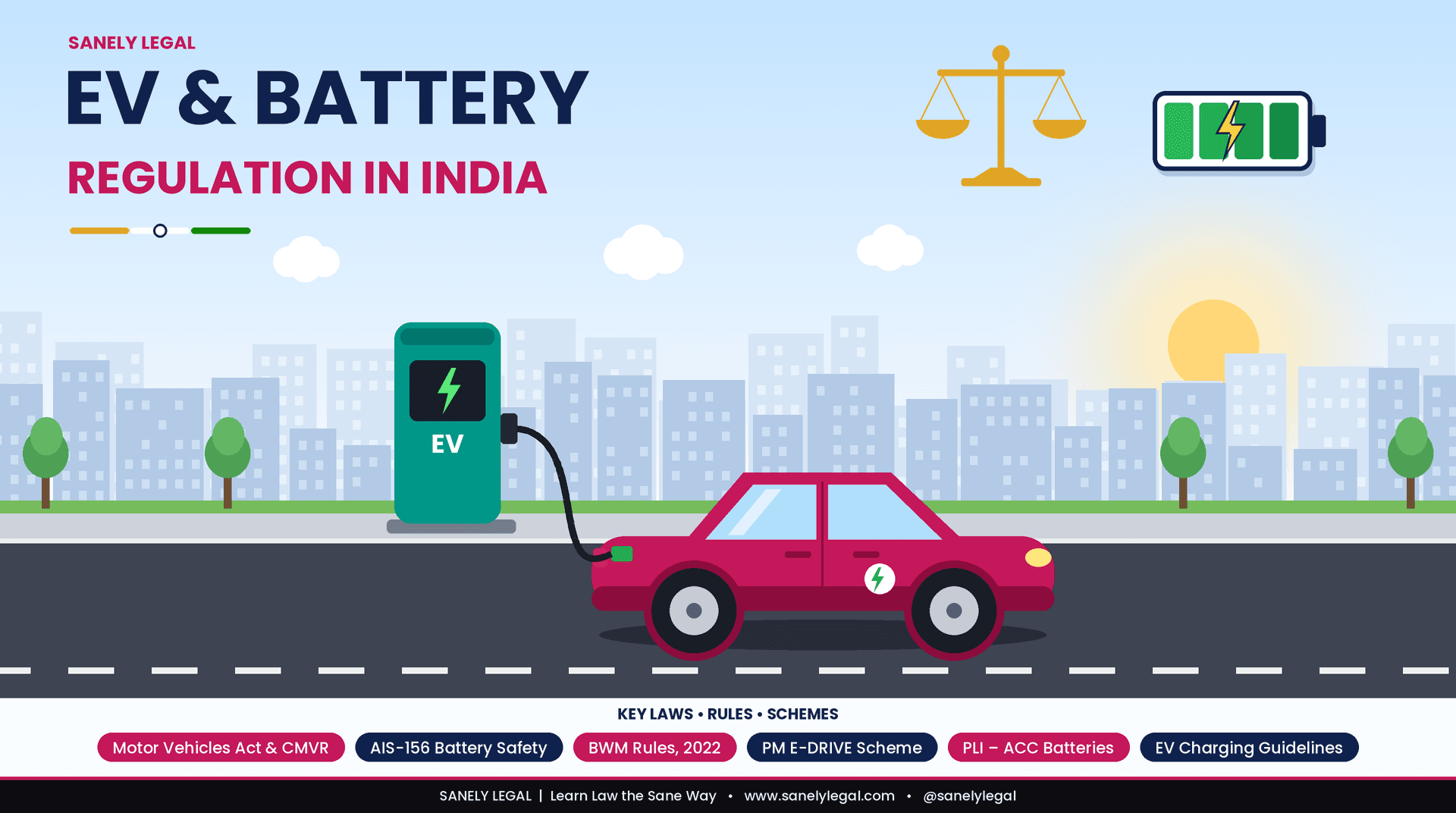
EV & BATTERY Regulation in India
India's EV policy began with an approach that treated electric and hybrid mobility as a national industrial and transport question. The National Mission for Electric Mobility was approved in 2011, followed by the National Electric Mobility Mission Plan 2020, launched in January 2013. The Plan was intended to create a long-term path for adoption, domestic capability, research and development, testing, charging and supply-side support.
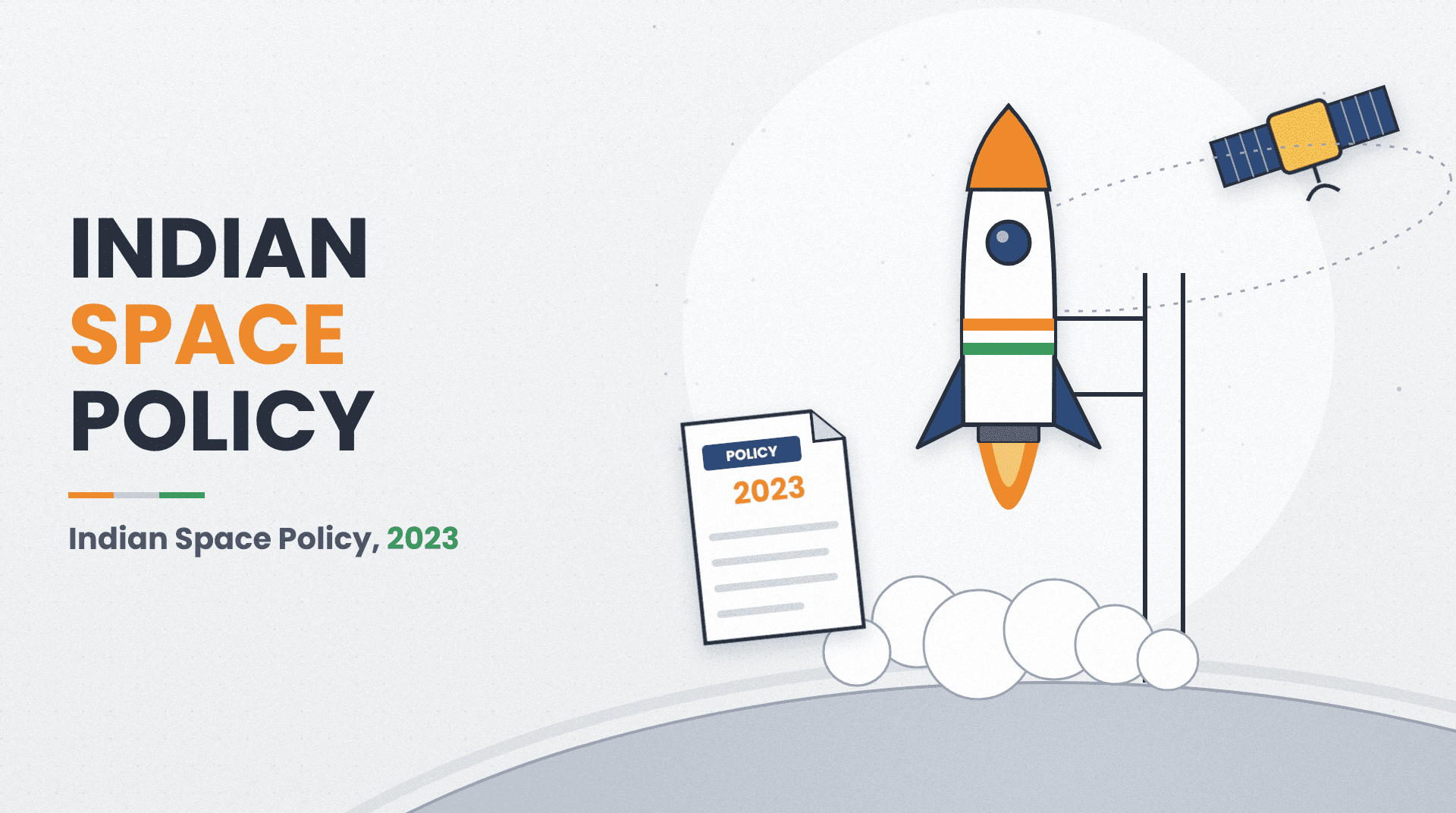
Indian Space Policy 2023
Indian model was transformed from a policy fragmented, state dominated model to a commercially open, institutionally separated and more procedural regime. The 2017 draft was an early attempt at enacting the entire sector at once. That effort stalled. The 2020 reforms, on the other hand, allowed for participation by the private sector, and ISP 2023 provided a detailed policy framework around IN-SPACe.
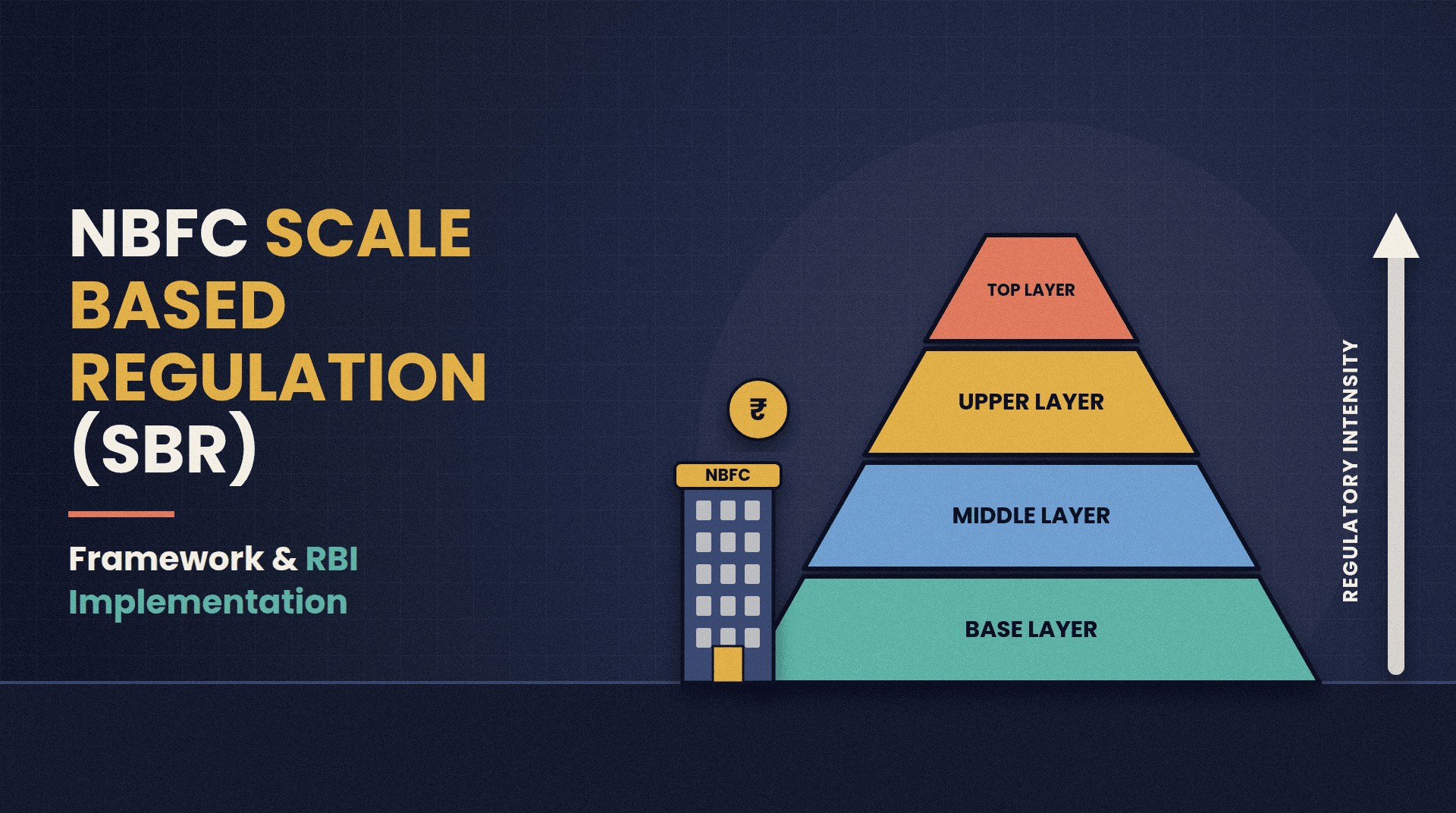
NBFC Scale Based Regulation (SBR) Framework RBI implementation
The objective was to make regulatory intensity broadly proportionate to the size, complexity and perceived risk of an NBFC.The framework became operational from 1 October 2022, while certain individual requirements had separate implementation timelines. The Upper Layer was designed for NBFCs considered to warrant enhanced regulatory requirements.