

RERA & Jan Vishwas Amendment, 2026
Credit: -Ayush Singh
4 Oct 2026 12 min read
- Introduced
- 4 Oct 2026
Introduction
The Real Estate (Regulation and Development) Act, 2016 (RERA) is the first central legislation to directly regulate the promoter-allottee relationship in Indian real estate. Previous to this the Indian states have made efforts to regulate the relationship between the land and its ownership between the people but never specifically about this promoter and allottee relationship.
Ancient and Medieval antecedents-
Looking at the ancient and medieval history of India, the very famous ancient document, Arthashashtra had parts of it dealing with land and dwellings. The majority of it dealt with land revenue, boundary disputes, sale of immovable property partition, inheritance and transfer of family dwellings. Also under the Mughal Administration, there was practise of land revenue, transfer of mortgage land and built structures.
Colonial Era
But after the colonisation of India, there were numerous statutes enacted for to deal with the arising problems requiring uniformity. Evidently, we see Transfer of Property Act, 1882, for the codified sale, mortgage, lease, exchange and gift of immovable property. The act of 1882, was drafted by the Third Law Commission under Thomas Strange. Another legislation was The Registrations Act, 1908 which made registration of documents affecting immovable property compulsory and created public registry system that Indian property transactions still rely upon. Also, we had the Indian Easements Act, 1182 and Indian Stamp Act, 1899 followed by Land Acquisition Act, 1894.
Post Independence but pre-RERA Era
After the economic liberalisation in 1991, it led to the massive construction of infrastructure but the building of flats and its sale was in the regulatory vacuum, however states implemented distinct statutes for example Maharashtra Ownership Flats Act, 1963 which required promoter to disclose title, execute a written agreement and imposed liability for delay, another examples include statutes for their apartment ownership regulation of various states. The only remedy which centre provided was through Consumer Protection Act, Indian Contract Act, 1872 and Transfer of Property Act, 1882. Then in 2013, we had Land Acquisition Act, 2013 which introduced social impact assessment, consent requirements and enhanced compensation which was parallel to RERA but was on a distinct track. By, early 2010s, project delays, diversion of buyer funds between projects, misleading advertisements and one sided builder-buyer agreements began rising and this particular area remain undocumented and witnessed a regulatory gap which favoured the builders.
Real Estate (Regulation and Development) Act, 2016
The bill was first introduced for the first time in the Rajya Sabha on 14th August 2013 by Dr. Girija Vyas, minister of Housing and Urban Poverty Alleviation (Bill No. XLVI-C of 2013), referred to a Department-Related Standing Committee and later a Select Committee, substantially reworked, and finally passed by the Rajya Sabha on 10 March 2016 and the Lok Sabha on 15 March 2016. It received Presidential assent on 25 March 2016 as Act No. 16 of 2016.
Objective
The preamble describes it as an Act to establish the Real Estate Authority for regulation and promotion of the real estate sector and to ensure sale of plot, apartment or building in an efficient and transparent manner and to protect the interest of consumers in the real estate sector. The Act pursues this through mandatory project and agent registration, escrow-based ring fencing of buyer funds, standardised disclosure, defined possession timelines and a three-tier adjudicatory structure.
Description of the Act
Under this RERA Act, 2016 a new dedicated body was created at state level for regulation rather than just handing over work to an existing financial body. Under section 20-23 of the Act there is established a Real Estate Regulatory Authority in every state which is made responsible for project and agent registration, disclosure enforcement and adjudicating complaints u/s 31. Also, u/s 43 of the Act a Real Estate Appellate Tribunal which hears appeals from Authority and Adjudicating Officer orders. Also there is provision for Central Advisory Council and the Ministry of Housing and Urban Affairs at the Centre for policy oversight, model rules and national RERA status tracker.
The table below sequences every dated event from the original RERA Bill through to the commencement of the Jan Vishwas 2026 amendment, including the withdrawn 2025 precursor bill and relevant judicial milestones that shaped the reform debate.
Date | Event |
|---|---|
14 Aug 2013 | RERA Bill introduced in Rajya Sabha by Dr Girija Vyas. |
2013–2015 | Standing Committee and Select Committee review the Bill and it was substantially amended. |
10 Mar 2016 | Bill passed by Rajya Sabha. |
15 Mar 2016 | Bill passed by Lok Sabha. |
25 Mar 2016 | Presidential assent to Real Estate (Regulation and Development) Act, 2016 enacted. |
26 Apr 2016 | MoHUA notification brings 61 of 92 Sections (including Ch. VIII penalty provisions) into force. |
1 May 2016 | First-phase commencement which makes registration and penalty framework operative & states gives 1 year to notify rules. |
22 Oct 2016 | Madhya Pradesh notifies its RERA Rules. |
1 May 2017 | Remaining 31 Sections got notified & RERA fully in force nationwide with deadline for States/UTs to notify their own rules and constitute State Authorities. |
4/6 Mar 2025 | Supreme Court (Surya Kant & N. Kotiswar Singh JJ) remarks that RERA's functioning is disappointing in a hearing involving the Mahira Homes Welfare Association & flags a domino effect of project failure. |
18 Aug 2025 | Jan Vishwas (Amendment of Provisions) Bill, 2025 introduced in Lok Sabha which proposed to amend 17 Central Acts. |
2025 | 2025 Bill referred to a Lok Sabha Select Committee chaired by Tejasvi Surya. |
12 Sep 2025 | Supreme Court decides Mansi Brar Fernandes v. Shubha Sharma & Anr. (2025 INSC 1110) on the RERA–IBC interface and homebuyer Article 21 right to shelter. |
13 Mar 2026 | Select Committee submits report; recommends revisions to the 17 Acts and extension to 65 further Acts (total 82). |
17 Mar 2026 | Jan Vishwas (Amendment of Provisions) Bill, 2025 withdrawn. |
25 Mar 2026 | 10th Amendment to the UP RERA General Regulations, 2019 comes into force (state-level subordinate legislation update, illustrative of parallel state rule-making). |
27 Mar 2026 | Jan Vishwas (Amendment of Provisions) Bill, 2026 was introduced in Lok Sabha 84/79–80 Central Acts, with 784 provisions |
1 Apr 2026 | Bill passed by Lok Sabha. |
2 Apr 2026 | Bill passed by Rajya Sabha. |
7 Apr 2026 | Presidential assent to Jan Vishwas (Amendment of Provisions) Act, 2026 (Act No. 8 of 2026). |
8 Apr 2026 | Gazette publication (CG-DL-E-08042026-271642), Ministry of Law and Justice (Legislative Department). |
7 May 2026 | MoHUA notifies commencement of the RERA-related provisions (Schedule Sl. No. 70) under Section 1(2) of the 2026 Act where Section 68 of RERA stands substituted which provides for imprisonment for allottee non-compliance with Tribunal orders removed. |
To talk about the subordinate legislations, RERA is central act which is to be administered within a federal structure where section 84 specifically empowers state governments to frame rules and regulations and as per this section every state and union territory was required to notify its own RERA rules within a year, last date being 1st May 2017. MP emerged as a active and early state to notify its RERA rules on 22nd October 2016 and established MP RERA with headquarter in Bhopal with effect from 1st of May 2017. Further in 2020 a subordinate, the Real Estate Project (Maintenance of Separate Bank Account) Directions, 2020, which operationalise the escrow account mandate after authorities found promoters fails to declare or improperly use project bank account. To talk about the implementation of the RERA act, it is in force in all states, including Jammu & Kashmir and Ladakh in 2019. However, there is no compliance deadlines near to present date nor any grace periods running.
Enforcement and Compliance Actions
Ministry of housing and urban development’s RERA Status tracker recorded a rough 1.21 lakh complaints disposed nationally as of 2025 which arose around to 1.47 lakh by the time Jan Vishwas amendment was being debated in the middle of 2026 which serves as a evidence adjudicatory overload of cases which shows effective compliance. MP RERA alone registered thousands of projects and disposed over 5000 complaints since inception where was the MH RERA has crossed over 50000 registered projects which forms a third of all registrations nationally. There’s no compliance gap which the amendment doesn’t cover, the most important provision for this is section 40 which allows unpaid penalties, interest or compensation to be recovered as arrears of land revenue through district collector’s revenue machinery. In November 2022, the Gurugram RERA Adjudicating Officer ordered 60 days' civil imprisonment of a developer's director (ILD Millennium project) for failing to comply with a refund order of roughly ₹27 lakh, after the directors declined to disclose assets for execution. This step proceeded under the Adjudicating Officer's execution powers, not under the Section 64 imprisonment on conviction route.
State level circulars and regulatory strengthening
Gujarat RERA (GujRERA): three-distinct-bank-account rule for every registered project effective January 2025, mandating that 70% of collected funds remain in a dedicated construction escrow account.
Uttar Pradesh RERA: 10th Amendment to the UP RERA General Regulations, 2019, in force from 25 March 2026, revising regulatory procedure (reported to tighten disclosure and grievance handling norms).
Maharashtra REAT: an August 2026 ruling clarified that a failed conciliation panel's report cannot itself be relied upon to decide a homebuyer's complaint and the panel's role is confined to attempting settlement, not fact-finding for adjudication.
Real Estate Project (Maintenance of Separate Bank Account) Directions, 2020 (Central/State authorities): issued after authorities found promoters failing to declare project-specific escrow accounts or permitting banks to place liens on them, in contravention of the Act's escrow mandate. None of these enforcement or compliance instruments were altered by the Jan Vishwas Act, 2026 as they continue to operate on the developer-facing side of RERA, which the 2026 amendment left untouched.
Judicial and Legislative Challenges
Beginning on 4th of June 2025 where a divisional bench of Justice Surya Kant and N. Kotiswar Singh, were hearing a matter between a private builder and Mahira homes Welfare Association which described RERA’s functioning as disappointing. Where also advocate K. Parmeshwar, appearing on behalf of the Association, argued that project failures produce a domino effect across the sector and he urged for a more robust oversight in such matters. In Mansi Brar Fernandes v. Shubha Sharma & Anr., 2025 a Supreme Court’s bench deciding appeals addressed a boundary between RERA and Insolvency and Bankruptcy Code, 2016. The Court held that RERA remains the primary forum for redressal of homebuyers' grievances and that the IBC is a forum of last resort meant to secure the revival of viable projects rather than to function as a debt-recovery mechanism; it distinguished genuine allottees from speculative investors whose arrangements (buy-back clauses, assured-return MoUs) show that possession of the property, rather than a financial return, was never truly intended. The Court separately observed that the right to secure and timely possession of one's home is a facet of the fundamental right to shelter under Article 21, cautioned against RERA authorities becoming toothless, and directed the Union to pursue a consultative exercise to bring uniformity to State RERA Rules and to ensure adequate staffing, including at least one legally qualified or consumer-expert member on every State Authority.
Comparative and Connected Angle
As Mansi Brar Fernandes illustrates, homebuyers sit at the intersection of RERA and the Insolvency and Bankruptcy Code, 2016 which treats allottees as financial creditors under Section 5(8)(f), inserted by the 2018 amendment following Pioneer Urban Land & Infrastructure Ltd. v. Union of India, which upheld that classification's constitutional validity. The Jan Vishwas amendment to RERA's Section 68 does not touch this interface, but the Supreme Court's 2025 ruling reinforcing RERA's primacy as the forum of first resort is the more consequential recent development for how these two statutes interact in practice.
Homebuyers retain a parallel remedy before consumer fora under the Consumer Protection Act, 2019, and courts including in decisions such as Imperia Structures v. Anil Patni, 2020 have held that RERA remedies operate concurrently with, rather than in exclusion of, consumer-forum remedies as a jurisdictional choice unaffected by the 2026 amendment.
Comprehensive Report & Conclusion
Property regulation in India moved through four broad phases before arriving at its present form as we see today. In the pre-colonial period, land and dwelling rights rested on custom, religious personal laws and revenue administration practices, with no codified law. Colonial codification between 1858 and 1908 gave us the general law of transfer termed as Transfer of Property Act, 1882 and the mechanism for registration with a body under the Registration Act, 1908 that till today regulates every Indian property transaction, but this general law was never designed for and nor did regulate, the specific risk of a promoter selling an apartment that did not yet exist. That gap persisted through the first four decades after Independence. Individual states legislated acts such as Maharashtra's 1963 Ownership Flats Act being the most developed example while the Land Acquisition Act, 1894 later replaced by the RFCRR 2013 Act addressed a related but distinct problem of compulsory state acquisition. In real estate the promoter-to-buyer transaction remained self-regulated, and which resulted in buyer harms fund diversion, misleading advertising, indefinite delay accumulated through the 2000s construction boom until they produced sustained political demand for a dedicated national regulator for this specific subject matter.
RERA, enacted in 2016 and fully operative from May 2017, supplied registration, escrow, disclosure, defined possession timelines and, most importantly, a criminal penalty backstop under Chapter VIII modelled symmetrically across promoters, agents and allottees. Nine years of implementation exposed an asymmetry the drafters had not anticipated which is that the criminal provisions aimed at promoters under Sections 59, 63, 64 which went almost entirely unenforced because authorities preferred civil execution under Section 40, while the single provision aimed at allottees (Section 68) was rarely triggered at all because the fact pattern it addressed which is that a promoter successfully enforcing a Tribunal order against a buyer is structurally uncommon in a buyer-initiated grievance regime.
The Jan Vishwas Act, 2026, arriving as the second and larger iteration of a decriminalisation programme begun in 2023 and first attempted in narrower form in 2025, resolved this asymmetry not by strengthening the unused promoter side provisions or the Section 40 recovery bottleneck that the Supreme Court and commentators had identified as the real problem, but by removing the one provision that could theoretically imprison a homebuyer. The result, as of the report date, is a RERA whose statutory text is marginally more consumer friendly on its face, while the structural enforcement questions raised by the Supreme Court in 2025 was Tribunal staffing, uniform state Rules, and effective execution of orders against defaulting promoter which remained open and are being pursued through separate judicial directions rather than through this legislative amendment.
Credit: -Ayush Singh
More tracked legislation
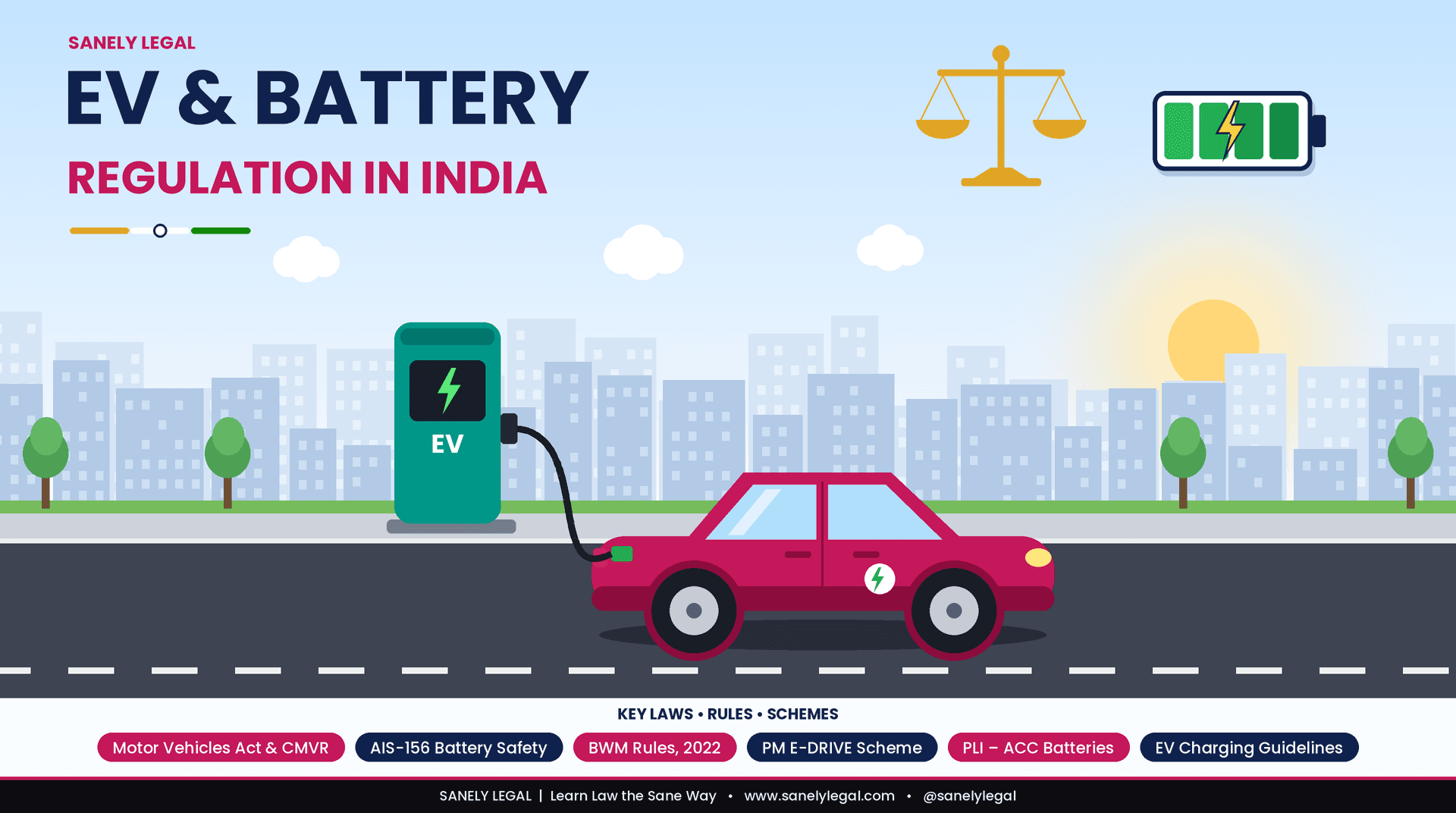
EV & BATTERY Regulation in India
India's EV policy began with an approach that treated electric and hybrid mobility as a national industrial and transport question. The National Mission for Electric Mobility was approved in 2011, followed by the National Electric Mobility Mission Plan 2020, launched in January 2013. The Plan was intended to create a long-term path for adoption, domestic capability, research and development, testing, charging and supply-side support.

Indian Space Policy 2023
Indian model was transformed from a policy fragmented, state dominated model to a commercially open, institutionally separated and more procedural regime. The 2017 draft was an early attempt at enacting the entire sector at once. That effort stalled. The 2020 reforms, on the other hand, allowed for participation by the private sector, and ISP 2023 provided a detailed policy framework around IN-SPACe.
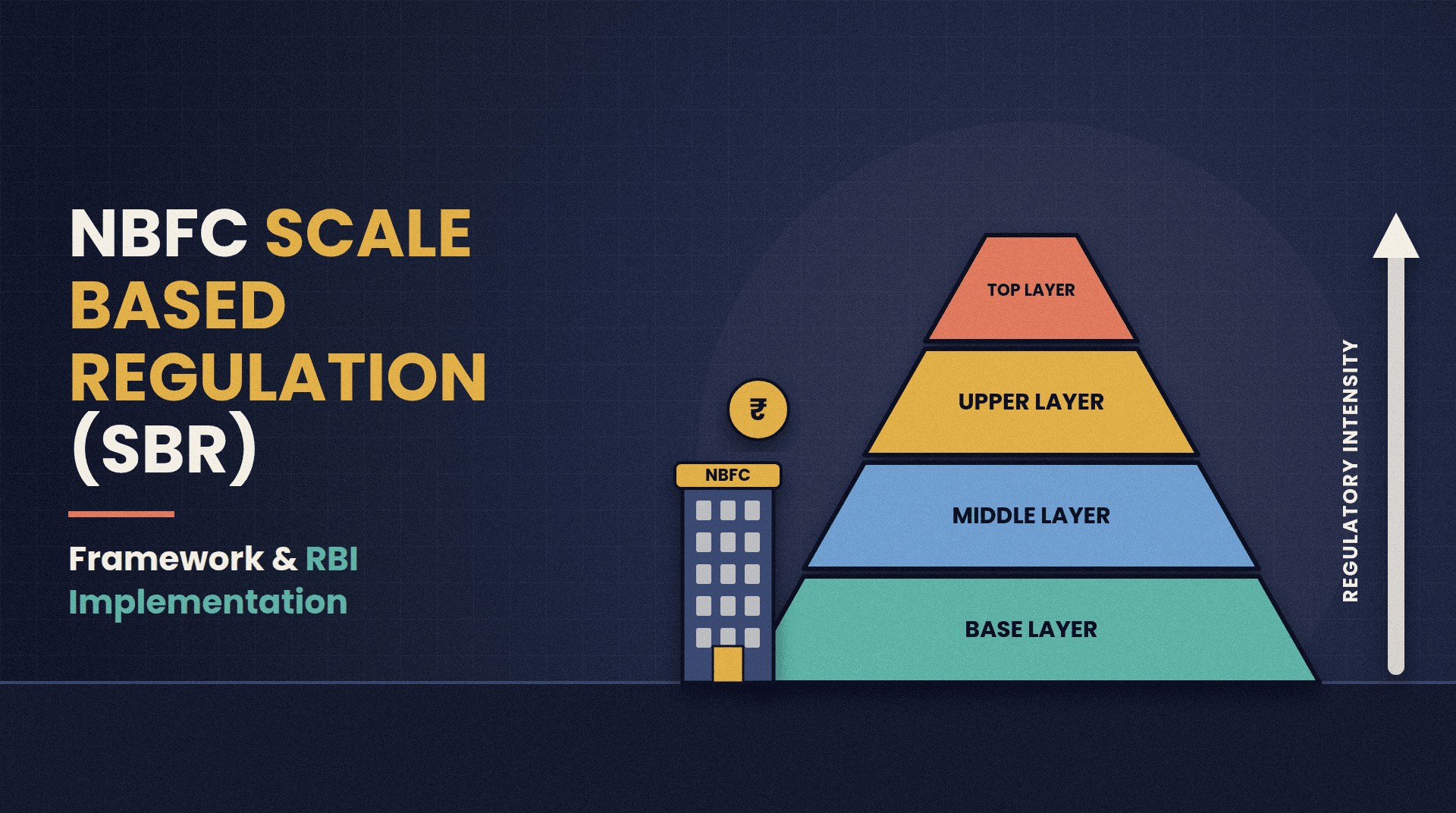
NBFC Scale Based Regulation (SBR) Framework RBI implementation
The objective was to make regulatory intensity broadly proportionate to the size, complexity and perceived risk of an NBFC.The framework became operational from 1 October 2022, while certain individual requirements had separate implementation timelines. The Upper Layer was designed for NBFCs considered to warrant enhanced regulatory requirements.