

SEBI (Listing Obligations and Disclosure Requirements) Regulations, 2015 - Corporate Governance & ESG (BRSR Core) Disclosures
Kavin D
12 Oct 2026 24 min read
- Introduced
- 12 Oct 2026
I. INTRODUCTION
India's Securities and Exchange Board (SEBI) regulates India’s securities market in accordance with the Securities and Exchange Board of India Act, 1992 ('SEBI Act'). The SEBI (Listing Obligations and Disclosure Requirements) Regulations, 2015 ('LODR Regulations') are the key regulations SEBI uses to govern ongoing obligations of listed entities, such as corporate governance norms (Chapter IV) and, since 2021, environmental, social and governance ('ESG') disclosure through the Business Responsibility and Sustainability Report ('BRSR'). The report charts two interlinked regulatory strands within the LODR regime which have been allocated together owing to their shared statutory basis and history of reforms: (i) Chapter IV on corporate governance, thoroughly rewritten after the 2017 Kotak Committee Report; and (ii) the journey of ESG disclosure from a voluntary reporting regime of 2012 circular to the present-day BRSR Core assured reporting regime under Regulation 34(2)(f). As of the date of this report, the glide path towards the full implementation of the BRSR Core reporting regime for the entire population of listed entities has recently concluded (1 April 2026), making this a good point to review the current state of the implementation of the regime. The report follows the nine steps format: baseline, timeline, subordinate rules, implementation status, enforcement actions, judicial/legal challenges, a comparative perspective, a chronology of developments and a dated sources list. Citations follow OSCOLA (4th edn); full particulars of each source also appear, in chronological order, in the Dated Source List at Part X.
II. ESTABLISHING THE BASELINE
A. Statutory authority
The power of SEBI to adopt the LODR Regulations is granted by section 11 (power to protect investors and regulate the securities market), sub-section (2) of section 11A, and section 30 of the SEBI Act, 1992, read with section 31 of the Securities Contracts (Regulation) Act, 1956. The LODR Regulations were notified on 2 September 2015 (Notification No. SEBI/LAD-NRO/GN/2015-16/013) and entered into force on 1 December 2015. The purpose of the LODR Regulations was consolidation of several listing agreements applicable separately to equity, debt, depository receipt and securitized debt securities into one instrument, and alignment of obligations of the listed entities with the Companies Act, 2013.
B. The corporate governance chapter, prior to the 2018 amendments
Chapter IV of the LODR Regulations ('Obligations of a Listed Entity which has Listed its Specified Securities'), Regulations 15 to 27, is the chapter carrying the corporate governance obligations which concern this report: board composition (Reg. 17), board committees (Regs. 18-22), related-party transactions (Reg. 23), and the corporate governance compliance report to be appended to the annual report under Schedule V (which cross-references Regulations 17 to 27). Prior to the amendment in 2018 described below, Chapter IV reflected a lighter corporate governance regime: for instance, related-party transaction approval did not require sign-off by independent directors at the audit committee level only, and the board composition norms for very large listed entities (number of directors minimum, appointment of an independent woman director for the top-1000 entities) had not been introduced yet.
C. The pre-BRSR ESG baseline: Business Responsibility Reporting
The immediate precursor of the BRSR was the Business Responsibility Report ('BRR'), introduced by SEBI Circular CIR/CFD/DIL/8/2012 dated 13 August 2012, which inserted Clause 55 into the then equity Listing Agreement. BRR put in practice the National Voluntary Guidelines on Social, Environmental and Economic Responsibilities of Business of the Ministry of Corporate Affairs, issued in July 2011, and was mandatory, in its original form, for the top 100 listed entities by market capitalization only. The scope of application of BRR was expanded - to the top 500 by 2015, and to the top 1000 listed entities from FY 2019-20. However, BRR remained a narrative unassured disclosure without a third-party verification requirement. This is the immediate baseline against which should be measured the introduction of BRSR in 2021 and the introduction of an assured 'BRSR Core' subset in 2023: the trajectory of regulation has followed (a) expanding the covered population, and (b) progressively strengthening the assurance rigour of a selected set of headline indicators, but not the whole report.
III. MAPPING THE LEGISLATIVE & REGULATORY TIMELINE
Below is the legislative and regulatory timeline concerning all dated instruments affecting both streams explored in the report - corporate governance chapter and BRSR/BRSR Core - from the LODR Regulations' notification up until now. Citations to each instrument according to OSCOLA style can be found at their first appearance in Parts II, IV, V and VI below, and gathered in the Dated Source Log at Part X.
Date | Instrument | What changed |
|---|---|---|
13 Aug 2012 | SEBI Circular CIR/CFD/DIL/8/2012 | Mandates Business Responsibility Report (BRR) for the top 100 listed entities via clause 55 of the Equity Listing Agreement, implementing MCA's July 2011 National Voluntary Guidelines (NVGs). |
2 Sept 2015 | SEBI (LODR) Regulations, 2015 notified (Notification No. SEBI/LAD-NRO/GN/2015-16/013) | Consolidates separate listing agreements of the Equity, Debt, IDR and SDI types into one Regulation under ss. 11, 11A and 30 of the SEBI Act, 1992, read with s. 31, SCRA, 1956. Effective from 1 Dec 2015 (90 days since publication in the Gazette). |
2019 | BRR mandate extended | Applies not only to the top 500, but to the top 1000 listed entities by market capitalisation as of fiscal year 2019-20. |
5 Oct 2017 | Kotak Committee on Corporate Governance submits Report | Chairman: Uday Kotak. Recommendations concerning 47 reforms of board composition, independent directors, board committees, group monitoring, related-party transactions and disclosures. |
28 Mar 2018 | SEBI Board considers the Kotak Report | The Board accepted the report's recommendations, with and without modifications; some of those (IFC, ICAI role, Ind-AS) referred to other bodies. |
9 May 2018 | SEBI (LODR) (Amendment) Regulations, 2018 | Operationalised the Kotak reforms: board composition (Reg. 17), independent director eligibility, related party transaction approvals (Reg. 23), group monitoring and increased disclosures. Gradual effect: from 1 Oct 2018 / 1 Apr 2019 / 1 Apr 2020. |
2019 | MCA issues National Guidelines on Responsible Business Conduct (NGRBC) | Replaces the 2011 NVGs and becomes the substance of 9 principle-based normative framework for the BRSR. |
10 May 2021 | SEBI Circular SEBI/HO/CFD/CMD-2/P/CIR/2021/562 | Introduces the new format of the Business Responsibility and Sustainability Report (BRSR) instead of the previous BRR, by amending LODR, Reg. 34(2)(f). Voluntary in FY 2021-22; mandatory for the top 1000 listed entities by market capitalisation as of FY 2022-23. |
Feb 2023 | SEBI Consultation Paper on ESG disclosures, ratings and investing | Promotes introduction of a limited but reliable subset of KPIs ('BRSR Core') and ESG disclosure across the value chain, and measures against greenwashing and mis-selling in ESG mutual fund schemes. |
3 Feb 2023 | SEBI Circular SEBI/HO/DDHS/DDHS-RACPOD1/P/CIR/2023/020 | 'Dos and Don'ts Relating to Green Debt Securities to Avoid Occurrences of Greenwashing' - a guard rail for green bonds. |
14 Jun 2023 | Gazette Notification SEBI/LAD-NRO/GN/2023/131 - SEBI (LODR) (Second Amendment) Regulations, 2023 | Formally adds the BRSR Core and value chain ESG disclosure into LODR, Reg. 34(2)(f). |
12 Jul 2023 | SEBI Circular SEBI/HO/CFD/CFD-SEC-2/P/CIR/2023/122 | BRSR Core -Framework for assurance and ESG disclosures for value chain. Establishes the market capitalisation-based glide path (from top 150 to top 1000) and 'reasonable assurance' for BRSR Core. |
22 May 2024 | SEBI Consultation Paper (Expert Committee on BRSR) | Proposal to amend the assurance requirement to 'assessment or assurance', and delay / weaken the value chain ESG disclosure requirements. |
18 Dec 2024 | SEBI Board approves the Expert Committee's recommendations | Acknowledges the need for easier business practice and clears the way for implementing the proposal by circular. |
28 Mar 2025 | SEBI Circular SEBI/HO/CFD/CFD-PoD-1/P/CIR/2025/42 | Amends the Board's decision: introduces the option of 'assessment or assurance'; makes value chain ESG disclosure voluntary for the top 250 as of FY 2025-26; introduces voluntary disclosure of green credits in BRSR. |
FY 2025-26 (from 1 Apr 2025) | Glide path - Tier 3 | BRSR Core assessment/assurance mandatory for the top 500 listed entities. |
1 Apr 2026 | Glide path - final tier reached (FY 2026-27) | Mandatory BRSR Core assessment/assurance extended to all the top 1000 listed entities by market capitalisation (end state of the framework). |
These are two points following from the timeline: First, the corporate governance chapter and ESG disclosure developed separately, but in parallel: the 2018 amendments introduced by the Kotak Report were mainly about board and related party governance, while the 2021-2025 amendments concerned ESG disclosures - however, both streams are united through Regulation 34, which contains both the corporate governance disclosures of the annual report (through Schedule V) and the BRSR/BRSR Core disclosures (Regulation 34(2)(f)). Second, the amendments to BRSR Core assessment/assurance requirements happened quite fast for subordinate legislation - three separate circulars in less than three years (2023, 2024 Consultation, 2025), and reflected SEBI's stated willingness to be responsive to industry costs during the initial stages of the glide path.
IV. RULES, FORMS & SUBORDINATE LEGISLATION
A. Formats of the BRSR and BRSR Core
The BRSR format established by the 10 May 2021 circular consists of three sections: General Disclosures, Management and Process Disclosures, and Principle-wise Performance, the last corresponding to the 9 principles of the NGRBC. A limited BRSR subset, 'BRSR Core', introduced by the 12 July 2023 circular and provided in Annexure I to the circular, consists of Key Performance Indicators related to the following 9 ESG attributes: Scope 1 & 2 greenhouse-gas emissions and GHG intensity, water and waste management, energy consumption, employee well-being and safety, and gender diversity.
B. The Master Circular
SEBI consolidates all listing-related circulars in the regularly updated Master Circular, in order to comply with the LODR Regulations; the BRSR and BRSR Core-related part of the Master Circular can be found at Chapter IV, Section IV-B. The 28 March 2025 circular amends Section IV-B directly, e.g., amends the text which was Paragraph 4 in the Master Circular and establishes that the 'assessment or assurance provider' must be qualified and must lack conflicts of interests (such as selling non-assurance/non-assessment services to the listed entity or its group).
C. Industry Standards Forum
When a listed entity chooses 'assessment' instead of formal assurance in respect of the BRSR Core disclosures, such an assessment must be done in accordance with standards adopted by the Industry Standards Forum (comprised of ASSOCHAM, CII and FICCI, under the guidance of SEBI) - a technical standard established by the industry and working beneath the circular.
D. Schedule V and the corporate governance report
Schedule V (Annual Report) of the LODR Regulations, read with Regulations 34(3) and 53(f) requires that the Annual Report must contain a Corporate Governance Report disclosing compliance with Regulations 17 to 27 and certain clauses of Regulation 46, along with a code of conduct compliance declaration, signed by the CEO and a compliance certificate of the auditors or the practicing company secretary. This is the statutory hook that places the corporate governance report and the BRSR/BRSR Core disclosure side by side within the same annual report.
V. TRACKING IMPLEMENTATION AND ROLLOUT STATUS
Assessment/Assurance mandate of BRSR Core has adopted the market capitalisation-based five-year glide path from its launch:
Financial Year | Tier covered | Status |
|---|---|---|
FY 2022-23 | Top 1000 | Full BRSR filing is mandatory, but no third-party assessment/assurance is needed. |
FY 2023-24 | Top 150 | Assessment/Assurance of BRSR Core becomes mandatory for this tier. |
FY 2024-25 | Top 250 | The Tier is widened; comply-or-explain disclosure for value chain ESG is required (relaxed later). |
FY 2025-26 | Top 500 | The Tier is widened further; value chain ESG disclosure of the top 250 made voluntary by the circular dated 28 March 2025. |
FY 2026-27 (from 1 Apr 2026) | Top 1000 | Entire population of the BRSR Core mandated universe becomes subject to mandatory BRSR Core assessment/assurance. |
As of the date of this report (September 2026), the glide path has completed its journey by reaching its final Tier: From 1 April 2026 (FY 2026-27), the entire population of the top 1000 entities by market capitalisation has become subject to mandatory BRSR Core assessment/assurance. This is the ultimate state of the framework. There are two important caveats for those interested in the topic further. First, value chain ESG disclosure - that is, disclosure of ESG aspects of a listed entity's principal upstream and downstream partners contributing 2% or more of purchases or sales - has been trailing behind the core glide path: the circular dated 28 March 2025 has made this voluntary for the top 250 entities from FY 2025-26 as an intentional move rather than a mistake. Second, the assurance standard itself has been watered down in the same circular from one 'reasonable assurance' standard into the choice between 'assessment' (in line with Industry Standards Forum norms) and 'assurance' (higher auditor-level standard). This cost-driven move has reduced comparability of BRSR Core disclosures among those taking different routes.
VI. ENFORCEMENT AND COMPLIANCE ACTIONS
There have been no cases of enforcement for the non-compliance with BRSR Core disclosure and assurance obligations - no surprise, given that the complete assurance mandate for the largest (and most closely monitored) Tier of companies has just come into effect on 1 April 2026. So far, all cases of enforcement have been concentrated on the provisions on corporate governance and related-party transactions included into the LODR and Regulation 34 along with BRSR/BRSR Core. Some of the cases, most of them within the last eighteen months, are provided below as an illustration of the enforcement approach for any future BRSR Core default.
1. Final Order against Ms. Chitra Ramakrishna & Ors. (WTM/AB/MRD/DSA/21/2021-22, 11 Feb 2022)
The order, related to the case of NSE co-location issue, has been mainly based on the SECC Regulations, 2012 and the SEBI Act, but not on the LODR corporate governance chapter. Still, it remains the clearest example in the compiled record of the SEBI's willingness to penalize not only an office-bearer, but also the listed market institution for governance failures. Under the factors listed in the section 15J of the SEBI Act, the SEBI has imposed penalties of Rs. 3 crores for Ms. Chitra Ramakrishna, Rs. 2 crores for the National Stock Exchange, and Rs. 2 crores for Mr. Ravi Narain, together with several years of prohibitions to associate with any market infrastructure institution or SEBI registered intermediary.
2. In re Gensol Engineering Ltd. (SEBI Interim Order WTM/AB/CFID/CFID-SEC1/31379/2025-26, 2025-26)
SEBI has concluded, on the prima facie basis, that Gensol's promoters - Mr. Anmol Singh Jaggi and Mr. Puneet Singh Jaggi - had diverted the company funds via related-party transactions and submitted the forged lender conduct letters to SEBI, credit rating agencies, lenders and investors, thus violating section 12A(a)-(c) of the SEBI Act and Regulations 3(b)-(d), 4(1) and 4(2)(f) and (k) and (r) of the SEBI (Prohibition of Fraudulent and Unfair Trade Practices Relating to Securities Market) Regulations, 2003. SEBI's order states that the promoter stake has been already diluted and describes the internal-control environment as representing 'culture of weak internal control'. The directions restricted the two promoters from occupying any director or KMP positions at Gensol and from dealing in securities until further order.
3. In re Linde India Ltd. (SEBI Order WTM/AB/CFID/CFID-SEC3/30578/2024-25)
This case concerns a related-party business-allocation arrangement between Linde India Ltd. and its related joint-venture partner, checked for compliance with the materiality and approval provisions of Regulation 23 LODR for the related-party transaction. SEBI's initial interim ex-parte order of 29 April 2024 was appealed to the Securities Appellate Tribunal (SAT), and the order dated 22 May 2024 set it aside on the grounds that maintaining the ex-parte order was no longer 'just and appropriate' after the company had been ordered to submit its reply within 21 days. According to SEBI's final order, the business allocation prima facie constitutes the transfer of resources to the related party without prior valuation, and SEBI has ordered Linde to test the materiality of any future related-party transactions against the materiality threshold prescribed in Regulation 23(1) and has obtained the independent valuation of the business transferred and foregone.
4. In re Premier Polyfilm Ltd. (Adjudication Order Order/AS/DP/2024-25/31031)
SEBI's adjudicating officer has found that Premier Polyfilm had failed to obtain the prior shareholder approval of related-party transactions with RMG Polyvinyl before crossing the relevant materiality threshold and had instead sought the retrospective shareholder ratification at its AGM, violating Regulation 23(9) read with Regulation 4(1)(e) LODR. The order states that the notice has tried to rely on the SAT precedent (Svam Software Ltd v SEBI) in its defence without success.
5. In re Binny Ltd. (SEBI Adjudication Order, 2025)
The reported enforcement action against Binny Limited involves the violations of Regulations 27(2), 31(1)(b) and 33(d) LODR by the company, and - importantly for the present report - the violations of Regulation 4(2)(f)(ii)(8) and 4(2)(f)(iii)(3), the governance-principles provision of Regulation 4 which also underlies the BRSR mandate, by several individual notices. This is the closest enforcement precedent identified involving Regulation 4(2)(f) governance-principles violations under the same statutory limb as BRSR disclosure obligations. It is worth watching the SEBI's approach to regulation 4(2)(f) going forward.
6. In re Yash Chemex Ltd. (Adjudication Order No. Order/SM/BK/2025-26/31966, 14 Jan 2026)
This recent order involves the violations of Regulation 30(2) read with Regulation 30(6) and Schedule III Part A LODR by Yash Chemex in connection with the disclosure of an acquisition in its subsidiary. A corrigendum has been issued to correct a clerical mistake in the notice's PAN. This order is presented here as the recent (January 2026) illustration of SEBI's continuing active enforcement rhythm on the material-event disclosure defaults - the same disclosure regime as BRSR/BRSR Core will use when enforcement of the latter starts.
7. SEBI Circular dated 3 February 2023 - anti-greenwashing guardrail
Although not related to the BRSR filers but to the issuers of green debt securities, SEBI's 'Dos and Don'ts' circular is the regulator's most detailed statement on the anti-greenwashing standards so far: the issuers must not use misleading labels, must not 'hide trade-offs or cherry pick data' and disclose their green practices while ignoring the unfavourable ones, and must quantify the negative externalities of fund utilization. This can be considered a potential model of SEBI's approach to greenwashing in BRSR Core disclosures once the BRSR enforcement starts.
VII. JUDICIAL AND LEGISLATIVE CHALLENGES
There was no writ petition or SAT appeal that challenged the legal validity of Regulation 34(2)(f), the 2018 Kotak-based governance amendments, or the BRSR Core circulars. This is hardly surprising, as none of the instruments are restrictions on a right vested or fundamental, but instead are rules relating to costs of compliance and processes for disclosure. Also, the mandate for disclosure of BRSR Core has only recently attained full population coverage, giving insufficient time for the growth of a corpus of jurisprudence. Nonetheless, there are five strands that are relevant for testing how the law is 'being tested in practice', as per the brief's own formulation.
A. SAT intervention in Linde matter (22 May 2024)
As highlighted in Part VI above, SAT set aside SEBI's ad-interim ex-parte order against Linde India Ltd. on procedural grounds, the clear example in this research of a tribunal challenging SEBI's related party transaction enforcement powers, though without touching upon the validity of Regulation 23.
B. IP Holding Asia Singapore Pte Ltd v. SEBI, (2015) 2 SCC 68
Although a decision made under the now-defunct SEBI (Substantial Acquisition of Shares and Takeovers) Regulations, 1997, rather than the LODR Regulations, the Supreme Court decision has nonetheless frequently been cited - including in the compiled case material - for its characterisation of SEBI as a regulator whose role is to protect investors and ensure transparency in dealings that involve public shareholders. Such a characterisation provides the basis for SEBI's powers to make disclosure and governance rules more broadly, including under the LODR Regulations.
C. Prakash Gupta v. Secretary, SEBI (Criminal Appeal No. 569 of 2021)
This Supreme Court decision does not deal with LODR governance provisions directly, but instead is concerned with compounding under section 24A of the SEBI Act. However, the decision's discussion of the structure of the SEBI Act and the role of SEBI as regulator provides useful context as to why all the LODR governance and related party transaction defaults described in Part VI above have been pursued as civil/administrative adjudications and not criminal prosecutions.
D. An anticipated, not yet tested, frontier: greenwashing as securities fraud
A scholarly work has argued that false or misleading statements in BRSR disclosures can be addressed under the SEBI (Prohibition of Fraudulent and Unfair Trade Practices Relating to Securities Market) Regulations, 2003, rather than LODR governance regulations or the residual penalty provision in section 15HB of the SEBI Act, because of the latter framework's suitability to address greenwashing. While enforcement and judicial action of this kind have not happened yet, this is an area to watch as BRSR Core assurance requirement has only just reached full population coverage.
E. M.K. Ranjitsinh & Ors. v. Union of India, 2024 INSC 280
Although not a securities law case, this Supreme Court decision held that the right to protection against the effects of climate change is derivable from Articles 14 and 21 of the Constitution. The case has been cited in ESG scholarship as providing support to the idea of making mandatory (rather than voluntary) climate-related disclosures of the kind provided for in BRSR Core greenhouse gas emission metric requirement, although the case did not directly concern SEBI and LODR Regulations.
VIII. COMPARATIVE AND CONNECTED ANGLE
A. Domestic Connection: the Kotak Committee Report as the normative source of today's RPT scrutiny
The fifth chapter of the Kotak Committee Report (Promoters/Controlling Shareholders and Related Party Transactions) is the direct normative precursor of the Regulation 23 framework in relation to which the decisions in the Linde, Gensol, and Premier Polyfilm cases discussed in Part VI were issued. Reading the Committee's recommendations in 2017 on RPT disclosure and approval next to the three recent orders shows the doctrinal continuity from the policy report to an amendment of 2018 to 2024-2025 enforcement.
B. International Comparator: the EU Corporate Sustainability Reporting Directive (CSRD)
The Indian shift from a uniform 'reasonable assurance' standard (2023) to the 'assessment' vs. 'assurance' election (2025) is a softer system design compared to the EU's CSRD which requires external assurance (going from limited to reasonable assurance over time) of the in-scope companies without a parallel non-assurance 'assessment' track. This comparative exercise highlights the trade-off between comparability (in favour of a uniform assurance standard) and compliance costs (supported by India's dual-track approach) in ESG reporting.
C. The GHG/Climate Law Connection
Alongside BRSR Core's mandatory Scope 1 and Scope 2 greenhouse gas emissions and GHG intensity indicators, India has a climate regulatory regime in the form of Carbon Credit Trading Scheme, 2023 and GHG Emission Intensity Target Rules notified under the Energy Conservation Act, 1998 (as amended) setting out sector-specific GHG intensity targets for designated obligated entities. In the case of a listed entity that is also a designated consumer under the carbon credit scheme, BRSR Core disclosure requirement and the Carbon Credit Trading Scheme compliance draw on the same GHG emissions data, though the two regimes are overseen by different regulators (SEBI and Bureau of Energy Efficiency respectively).
IX. EVOLUTION: A CHRONOLOGY
The chronology provided in Part III can be narratively condensed into three interlocking stages of evolution. In stage one (2012–2018) the essential character of what would become BRR was laid in a substantive voluntary ESG requirement imposed alongside lightly regulated corporate governance provisions. Stage two (2017–2021) saw the reform of the existing governance rules through the adoption of many of the Kotak Committee's recommendations in 2018, together with a shift on BRR into a more assured requirement, BRSR, in 2021. In stage three (2023-present) came the introduction of assurance and regulation on the BRSR requirement: BRSR Core was introduced in 2023 along with an ambitious five-year glide path toward its full enactment; SEBI eased the requirements on its assurance mandate in 2025 to ease industry compliance costs; and as of April 2026, the full population in terms of BRSR Core have been brought under assurance, albeit with enforcement action concentrating thus far on the older, more well-known governance and related-party-transaction provisions, rather than BRSR Core itself. The next stage in the chronology of developments appears to be enforcement action catching up to the disclosure obligation: with assurance regime completion, the greenwashing liability issue raised in Part VII(D) is clearly where to watch for the next development.
X. DATED SOURCE LOG
The table below contains every primary and secondary source relied upon for this report, ordered chronologically according to the underlying instrument or decision (not the date of access to the same). For each entry, all necessary identifying information is provided in OSCOLA citation form. 'Compiled PDF pg.' provides the relevant page numbers in the compiled document provided as a resource for this assignment, to aid in copying the correct pages into your own source-log file per Submission Guideline 3; sources marked '-' in the column have been independently sourced online, and are not included in the compiled PDF. Please note the official website from which to source them: for these documents the sites sebi.gov.in, mca.gov.in, and indiacorplaw.in are used.
Date | Type | OSCOLA Citation | Compiled PDF pg. | Notes |
|---|---|---|---|---|
13.08.2012 | Primary -Circular | SEBI, 'Business Responsibility Reports' (Circular No CIR/CFD/DIL/8/2012, 13 August 2012) | - | Verified via web search; not located in compiled PDF - recommend sourcing from sebi.gov.in for your own folder. |
02.09.2015 | Primary - Regulation | Securities and Exchange Board of India (Listing Obligations and Disclosure Requirements) Regulations 2015 (Notification No SEBI/LAD-NRO/GN/2015-16/013) | 2879–3070 (consolidated text) | Consolidated/amended text as compiled; Chapter II (Reg. 4), Chapter IV (Regs. 15–27), Reg. 34, Schedule V. |
05.10.2017 | Secondary -Committee Report | SEBI, Report of the Committee on Corporate Governance (5 October 2017) ('Kotak Committee Report') | 3172–3344 | Full report incl. Chapters I–XI and Annexures 1–6. |
09.05.2018 | Primary - Amendment Regulations | Securities and Exchange Board of India (Listing Obligations and Disclosure Requirements) (Amendment) Regulations 2018 | Amendment footnotes at 2896–2898 etc. | Reflected as footnotes within the consolidated Reg. text. |
2019 | Secondary - Guidelines | Ministry of Corporate Affairs, National Guidelines on Responsible Business Conduct (Government of India, 2019) | - | Verified via web search; recommend sourcing from mca.gov.in. |
10.05.2021 | Primary - Circular | SEBI, 'Business Responsibility and Sustainability Reporting by Listed Entities' (Circular No SEBI/HO/CFD/CMD-2/P/CIR/2021/562, 10 May 2021) | Referenced at 3139, 3468, 3494 | Full circular text not separately located; referenced within later circulars in the compiled PDF. |
03.02.2023 | Primary - Circular | SEBI, 'Dos and Don'ts Relating to Green Debt Securities to Avoid Occurrences of Greenwashing' (Circular No SEBI/HO/DDHS/DDHS-RACPOD1/P/CIR/2023/020, 3 February 2023) | 3814–3815 | Full text present. |
14.06.2023 | Primary - Gazette Notification | Securities and Exchange Board of India (Listing Obligations and Disclosure Requirements) (Second Amendment) Regulations 2023 (Notification No SEBI/LAD-NRO/GN/2023/131) | ~3171 (amendment list) | Reflected in the amendment-history preamble of the consolidated Regulations. |
12.07.2023 | Primary - Circular | SEBI, 'BRSR Core -Framework for Assurance and ESG Disclosures for Value Chain' (Circular No SEBI/HO/CFD/CFD-SEC-2/P/CIR/2023/122, 12 July 2023) | 3139–3170; Annexure 3419 onwards | Full circular and BRSR Core KPI Annexure present. |
22.05.2024 | Secondary - Consultation Paper | SEBI, Consultation Paper on the Report of the Expert Committee on BRSR (22 May 2024) | - | Verified via web search; recommend sourcing from sebi.gov.in for your folder. |
11.02.2022 | Primary - Case Law / Order | In the matter of Chitra Ramakrishna, Final Order No WTM/AB/MRD/DSA/21/2021-22 (SEBI, 11 February 2022) | 1237–1426 | Findings at paras 45–50; directions/penalties at paras 51 onward. |
29.04.2024 / 22.05.2024 | Primary - Case Law | In the matter of Linde India Ltd, Order No WTM/AB/CFID/CFID-SEC3/30578/2024-25 (SEBI); Linde India Ltd v SEBI (SAT, order dated 22 May 2024) | 1523–1545 | SAT set aside SEBI's ad-interim order; final order at paras 63–76. |
2025-26 (interim) | Primary - Case Law | In the matter of Gensol Engineering Ltd, Interim Order No WTM/AB/CFID/CFID-SEC1/31379/2025-26 (SEBI) | 1546–1574 | Findings at paras 83–92; directions at para 92 onward. |
2024-25 | Primary - Case Law | In the matter of Premier Polyfilm Ltd, Adjudication Order No Order/AS/DP/2024-25/31031 (SEBI) | 1575–1589 | Violation of Reg. 23(9) r/w Reg. 4(1)(e) LODR established at para 19. |
2025 | Primary - Case Law | In the matter of Binny Ltd, Adjudication Order (SEBI, 2025) | - | Verified via web search (sebi.gov.in); not located in compiled PDF - recommend sourcing separately. |
14.01.2026 | Primary - Case Law | In the matter of Yash Chemex Ltd, Adjudication Order No Order/SM/BK/2025-26/31966 (SEBI, 14 January 2026, corrigendum) | 3813 | Corrigendum on record for a PAN typo. |
20.08.2014 | Primary - Case Law | IP Holding Asia Singapore Pte Ltd v Securities and Exchange Board of India (2015) 2 SCC 68 | 1590–1601 | Civil Appeal No. 7390 of 2012, decided 20.08.2014. |
2021 (SC) | Primary - Case Law | Prakash Gupta v Secretary, Securities and Exchange Board of India, Criminal Appeal No 569 of 2021 (SC) | 1602–1671 | Analysis of SEBI Act structure and s. 24A compounding, paras A–G. |
21.03.2024 | Primary -Case Law | M K Ranjitsinh v Union of India 2024 INSC 280 | 2854 onward | Writ Petition (Civil) Nos. 838/2019 & 3570/2022. |
28.03.2025 | Primary -Circular | SEBI, Circular No SEBI/HO/CFD/CFD-PoD-1/P/CIR/2025/42 (28 March 2025) | 3348–3350 | 'Assessment or assurance' election; value-chain disclosure eased to voluntary. |
2011 | Secondary -Article | Afra Afsharipour, 'Directors as Trustees of the Nation? India's Corporate Governance and Corporate Social Responsibility Reform Efforts' (2011) 34 Seattle University Law Review 995 | 1159–1237 | UC Davis Legal Studies Research Paper No. 261. |
n.d. | Secondary -Book Chapter | KP Krishnan and Anirudh Burman, 'Statutory Regulatory Authorities: Evolution and Impact' in Devesh Kapur and Madhav Khosla (eds), Regulation in India: Design, Capacity, Performance (Hart Publishing) | 1732–1739 (chapter) | In Kapur & Khosla (eds.), Regulation in India: Design, Capacity, Performance. |
July 2026 | Secondary -Commentary | 'Greenwashing as Securities Fraud: Exploring Liability for Misstatements in Sustainability Reporting' (IndiaCorpLaw Blog, July 2026) | - | Sourced via web search (indiacorplaw.in); recommend for your folder as recent scholarship. |
Kavin D.
More tracked legislation
EV & BATTERY Regulation in India
India's EV policy began with an approach that treated electric and hybrid mobility as a national industrial and transport question. The National Mission for Electric Mobility was approved in 2011, followed by the National Electric Mobility Mission Plan 2020, launched in January 2013. The Plan was intended to create a long-term path for adoption, domestic capability, research and development, testing, charging and supply-side support.
Indian Space Policy 2023
Indian model was transformed from a policy fragmented, state dominated model to a commercially open, institutionally separated and more procedural regime. The 2017 draft was an early attempt at enacting the entire sector at once. That effort stalled. The 2020 reforms, on the other hand, allowed for participation by the private sector, and ISP 2023 provided a detailed policy framework around IN-SPACe.
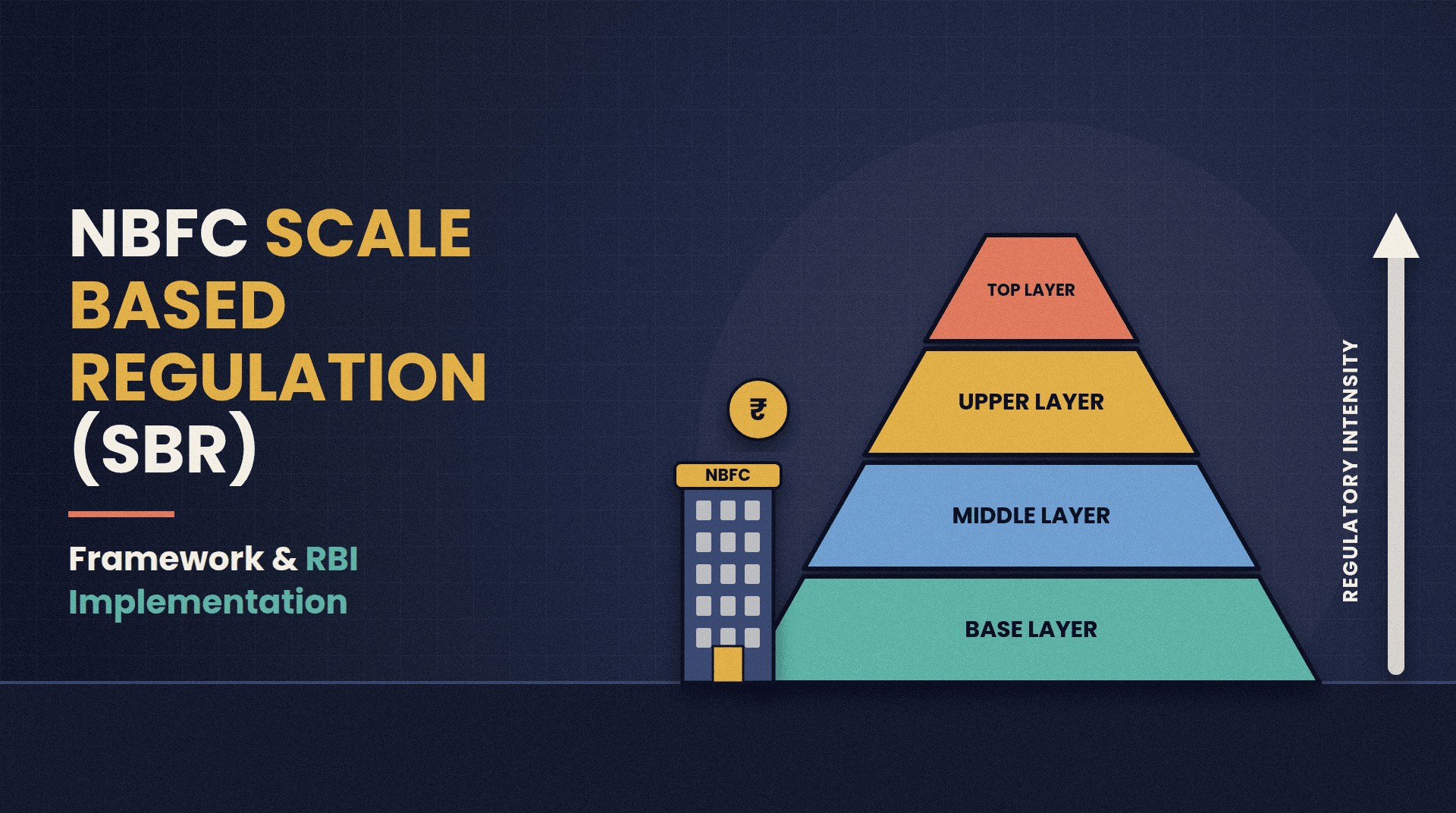
NBFC Scale Based Regulation (SBR) Framework RBI implementation
The objective was to make regulatory intensity broadly proportionate to the size, complexity and perceived risk of an NBFC.The framework became operational from 1 October 2022, while certain individual requirements had separate implementation timelines. The Upper Layer was designed for NBFCs considered to warrant enhanced regulatory requirements.