

Tracking Report: Insurance (Amendment) Bill / Act Composite Licensing & the FDI Cap in Indian Insurance Law
Credit: -Bhumi Khurana
8 Oct 2026 24 min read
- Introduced
- 8 Oct 2026
1. Executive Summary
The 2025 Act marked the most comprehensive changes to the foreign investment limit and licensing framework in the insurance industry in 20 years. The Act increased the FDI participation from 74% to 100% in insurance companies (inserting a new Section 3AA in the Insurance Act, 1938), reduced the capital requirement for foreign reinsurers' branches located in India, expanded the powers of IRDAI, explicitly allowed mergers of insurance companies with non-insurance companies, and abolished the cycle of 3 years for renewal of licence and replaced it with perpetual Registration.
This key objective, the "composite "license for a single insurer to promote a single entity under which it can sell life, general, and health insurance, which was in the heart of the government's proposals from 2022 and an explicit recommendation of a Parliamentary Standing Committee in 2024, was not explicitly included in the Bill that Parliament passed in December 2025. The twin-reform package was partially implemented, with only the FDI-cap component enacted into law. The Act does, however, introduce a more general enabling power for the Central Government to notify a "class of insurance business" in consultation with IRDAI, which could be implemented in the future by delegated legislation rather than a fresh Act of Parliament. There has been no such notification so far in September 2026, and composite licensing remains the main pending insurance reform in India. A related, but unaddressed implementation flashpoint is the new restriction on common directors/officers of insurers, banks and investment companies (Section 25 of the 2025 Act, inserting Section 32A into the Insurance Act, 1938) which was carved out and kept in abeyance at commencement due to industry concerns about a literal interpretation potentially forcing out common directors/officers from bancassurance-related companies like SBI Life and HDFC Life.
2. Setting up the Baseline (Position Before the Reform)
2.1 Origins of the regulatory framework
The insurance industry in India was nationalized in two phases: life insurance in 1956, with the establishment of Life Insurance Corporation of India under the LIC Act, 1956, and, in general insurance, in 1972, when 107 insurance companies were merged under the General Insurance Corporation of India under the General Insurance Business (Nationalization) Act, 1972. It was a state monopoly until the economic liberalization in the 1990s. In April, 1993, the Committee on Reforms in the Insurance Sector, headed by R.N. Malhotra, former Governor of the RBI, was set up, and its report was submitted in January 1994, which provided for the entry of private and foreign players in the insurance sector with the establishment of a statutory regulator. This recommendation took more than five years to become reality with the Insurance Regulatory and Development Authority Act, 1999 ("IRDAI Act"), assented on 29 December 1999, bringing an end to the monopoly of LIC and GIC and creating IRDAI to license, supervise, and develop the insurance sector, initially restricting foreign holding in a new insurance company to 26%. IRDAI started inviting applications for Registration in August 2000.
2.2 Position in front of the 2025 Act
Before Act, 2025, the sector was regulated by three interlinked statutes: the Insurance Act, 1938 (parent Act dealing with Registration, capital, licensing, and conduct of insurers), the IRDAI Act, 1999 (IRDAI Act, which provides for the setting up of the regulator), and the LIC Act, 1956 (LIC Act, which deals with the affairs of LIC). In 1938 and in the subsequent Act of 2025, the terms "insurance business" and "class of insurance business" were undefined, and were used in litigation (sec 6) only to be closed by the 2025 Act.
2.3 FDI cap - liberalization timeline before 2025
Private players were allowed in the sector in 2000 with a 26% FDI limit.
a Insurance Laws (Amendment) Act, 2015, introduces the provision of 49% FDI limit, with 51% held by Indian promoters, with management control remaining in the hands of Indian promoters.
b 2019-2020: FDI in insurance intermediaries (brokers, TPAs, web-aggregators) is separately allowed up to 100% under the automatic route.
c 2021: Insurance (Amendment) Act, 2021 increased FDI limit in insurance companies to 74%, which is the first time foreign investors have a majority control. As of January 2024, FDI inflows into the sector since 2000 were estimated to be around ₹54,000-82,000 crore, and the number of licensed insurance companies had increased from 53 to 70.
2.4 Licensing without any composites.
With the original Insurance Act, 1938, and the Insurance Registrations Regulations, 1984, an insurer was permitted to be registered in one category of business only life, general, or health and it was not possible to register the insurers as different corporate entities in the same category of business, for life insurance companies like LIC, selling health or general products was prohibited, while for general insurers, they were not allowed to venture into life insurance. It was fundamentally a constraint that industry (particularly HDFC Life and LIC) and regulators had flagged, even before any Bill was drafted, due to structural limitations on the efficiency of capital use, cross-selling, and Insurance-for-All penetration targets. The Insurance Regulatory and Development Authority of India (IRDAI), Ministry of Finance, Department of Financial Services (DFS), regulates FDI conditions (along with exchange-control aspects by the Department of Financial Services, DPIIT, and RBI) and the licensing regime.
2.5 sectors at baseline
India's insurance penetration, measured as premiums to GDP, was 3.7% in FY2024-25, unchanged from FY2023-24. Life insurance penetration decreased from 2.8% to 2.7%, while non-life insurance remained at 1%, and the global average was approximately 7%. Insurance density (per capita premium) increased slightly, from USD 95 to USD 97 during the same period. That under-penetration was the key policy argument put forward for FDI liberalization, and the composite-licensing proposal was the key policy argument put forward by the Government, both of which were based on the premise that the under-penetration problem is not a demand problem, but a capital and structural-access problem, as the official. Swiss Re Institute research suggested that India is expected to be the fastest-growing G20 insurance market, with real premium growth of ~7% a year to 2028.3.
3. Legislative and Regulatory Timeline
The reform went through 5 stages: (i) Consultation in 2022 that proposed liberalization of FDI and a composite license; (ii) a revised draft Bill in 2024; (iii) announcement in the Union Budget in February 2024; (iv) passing of the Bill in December 2024 without the composite license; and (v) commencement and operational rollout from February 2026. Key dates are listed in the Source Log (Section 8); the following events are:
a 01 December 2022 - DFS circulates a proposal ("erstwhile Bill") to amend the Insurance Act, featuring a composite license, distribution of other financial products by insurers, and a higher retirement age for Chairperson/whole-time members of the IRDAI.
b 06 Feb 2024 Parliamentary Standing Committee on Finance (Chair: Jayant Sinha) recommends that the Government introduce composite licensing "at the earliest" and calls out two issues which remain unresolved for composite insurers – capital adequacy and accounting.
c 26 Nov 2024 DFS released an updated version of the "Insurance Laws (Amendment) Bill, 2024" for stakeholder comments, incorporating feedback from the 2022 draft bill, and retaining the concepts of a composite license and a wider scope of insurers.
d 01 Feb 2025 The Government plans to increase the FDI limit to 100% for insurers investing 100% of their premiums in India, said Finance Minister Nirmala Sitharaman in the Union Budget 2025-26, calling it a 'new-generation financial sector reforms'.
e Throughout 2025: While the Indian Insurance Companies (Foreign Investment) Rules, 2015, are being amended by DFS for public comment as a precursor to the statutory change, several industry voices have pointed to the possibility of a composite licensing along with the FDI increase (both from LIC MD/CEO and HDFC Life's CFO), all in the public sphere.
1 12 Dec 2025 The Union Cabinet approved the introduction of the Sabka Bima Sabki Raksha (Amendment of Insurance Laws) Bill, 2025, in the Winter Session of Parliament.
2 16 December 2025: Bill introduced in and passed in the Lok Sabha on the same day.
3 17 December 2025, Bill was passed by the Rajya Sabha after being introduced in Parliament two days earlier.
4 21 December 2025, the Act is published in the Official Gazette as the Sabka Bima Sabki Raksha (Amendment of Insurance Laws) Act, 2025, following its receipt of Presidential assent
5 30 December 2025 - Ministry of Finance issues notification of the Indian Insurance Companies (Foreign Investment) Amendment Rules, 2025, implementing several changes in the governance of Indian insurance companies ahead of the Act's commencement.
6 03 Feb 2026 The Central Government issues a notification stating that the Act comes into effect
7 5 February 2026, but Section 25 (which prohibits common directors/officers among insurers, banks, and investment companies) remains in abeyance.
8 5 February 2026 – 100% FDI in the automatic route becomes effective.
9 The exchange-control alignment is completed by the Consequential notifications issued under the FDI Policy and the FEMA (Non-Debt Instruments) (Second Amendment) Rules, 2026, on 2 May 2026 by the DPIIT and FEMA, respectively. Two headline reforms are monitored in this report: restrictions on FDI investments and the FDI cap. Only the FDI cap change (74% to 100%) remained in the enacted 2025 Act. Regarding the deletion of the composite licensing, there was no evidence of a deliberate action by the legislators, only that it was dropped in the final passage of the Bill between the November 2024 draft Bill and the December 2025 enacted text; and industry response has been mixed - see Section 6.
4. A summary of the enacted Act, by provision.
The changes in the Insurance Act, 1938 (Insurance Act), the IRDAI Act, 1999 (IRDAI Act), and the LIC Act, 1956 (LIC Act), as a result of the substantive changes made in the 2025 Act on the notification of the Gazette, are as follows:
a New Section 3AA of the Insurance Act, 1938, allows up to 100% foreign investment in paid-up equity capital (from 74%) under the automatic route for companies that invest their entire premium in India. The separate ceiling for LIC remains 20%.
b Easier entry for foreign reinsurers, as reinsurance capital has been lowered from ₹5,000 crore to ₹1,000 crore for foreign reinsurance branches (FRBs); the net-owned-fund requirement was lowered, which put an end to GIC Re's de facto primacy.
c Share-transfer threshold increased Only transfers of IRDAI-approved shares above 1% of paid-up capital will require a routine regulatory filing, down from 5%.
d Insurance co-operative societies: Abolishes the minimum of paid-up capital of ₹100 crore for co-operative societies running life insurance, general insurance, or health insurance business, providing flexibility of entry to smaller/mutual models.
e The Central Government's power to exempt or modify provisions of the Insurance Act for insurance companies is extended to IFSCs in SEZs and to intermediaries in IFSCs (e.g., GIFT City).
f Broader definition of intermediaries: Managing general agents and insurance repositories are now specifically named as insurance intermediaries, along with brokers, consultants, and third-party administrators.
g New powers under IRDAI: power to approve schemes of arrangement between an insurer and a non-insurer; power to appoint an administrator to supersede the insurer's board, where business is prejudicial to the policyholders; power to cap/regulate agent/intermediary commissions by regulation (which was previously done only administratively); enhanced inspection and investigation powers of IRDAI over intermediaries; power to order disgorgement of wrongful gains to affected policyholders.
h IRDAI will apply the new statutory fund, called the Policyholders' Education and Protection Fund, which will be funded by government/IRDAI grants, penalties received, and other amounts prescribed by IRDAI for policyholder education and protection.
i Increase in maximum penalties on insurers/intermediaries for certain violations to ₹10 crore.
j In response to the Shriram litigation (Section 7.1), the Insurance Act explicitly permits mergers of insurance and non-insurance businesses by amending Section 35; this amendment permits the merger/tender of business between an insurer and a non-insurance company, subject to IRDAI approval.
k for the first time, the Insurance Act defines "insurance business" and "class of insurance business", and allows for the Central Government, in consultation with IRDAI, to determine what is a "class of insurance business" - a possible future path to composite licensing, but without having to enact a new Act (see Section 8).
Renewal cycle of Registration altered: One-time Registration (perpetual Certificate of Registration with an annual fee and IRDAI's right of suspension/cancellation) for both insurers and intermediaries, replacing the earlier three-year renewal cycle; IRDAI can suspend the license as an intermediate sanction between a warning and cancellation.
1 Amendments to the Insurance Act: Section 64VB is amended to include electronic/online means of premium payment specifically.
Common directorship restriction (Section 25 of the Amendment Act, which adds Section 32A to the Insurance Act): prevents the same individual from holding a dual seat on the boards of an insurer and a bank and on the board of an investment company - this is to promote separation of governance but is in abeyance at commencement until clarified (see Sections 6 and 7).
5. Rules, Forms and Subordinate Legislation
The 2025 Act is foundational, and, therefore, its operationalization has largely been dependent on its subordinate rules and regulations/circulars issued by the IRDA, not just the text of the Act: A Indian Insurance Companies (Foreign Investment) Rules, 2015 (notified 30 December 2025, MoF) - (Amended) Removal of residency requirement for the majority of insurance companies' directors/KMPs holding FDI and relaxation of certain conditions for dividend repatriation.
a Commencement Notification dated 3 February 2026 (Central Government) - brings the Act into force from 5 February 2026 (apart from Section 25).
b DPIIT Press Note 1 (2026 Series) - introduces the requisite amendment in Consolidated FDI Policy, 2020, regarding increased sectoral cap; will come into effect only after a formal notification under FEMA.
c Foreign Exchange Management (Non-Debt Instruments) (Second Amendment) Rules, 2026 (RBI/MoF, notified 2 May 2026) - Foreign Exchange Management side notification that completes the legal chain for 100% FDI under the exchange-control framework.
d IRDAI Circular dated 16 March 2026 – transitional arrangements for annual fee payment & issuance of Certificate of Registration (CoR) under the Act, which put an end to the three-year cycle of CoR renewal and introduced perpetual (indefinite) Registration under the Act with an annual fee.
e IRDAI Circular dated 12 February 2026 - Insurers' investments in Alternative Investment Funds under 2024 Master Circular on Actuarial, Finance and Investment Functions.
f IRDAI Circular dated 31 March 2026 – clarifications on Ind AS implementation for insurers from 1 April 2026. The absence of any composite-licensing regulations is because the enabling provision was never enacted; if a future composite-license framework were to be put in place, it would also need to be amended under the LIC Act, 1956, and the General Insurance Business (Nationalization) Act, 1972, before public-sector insurers could avail of it.
6. Implementation and Rollout Status
The Act has been largely enacted. As of September 2026:
FDI cap (100%): Fully operational since 5 February 2026 under the automatic procedure (no government approval is required) with the FEMA – side notification dated 2 May 2026. Foreign investment in LIC is subject to a 20% ceiling under a special condition.
1 The change from a 3-year renewal to a perpetual CoR (subject to an annual fee) will take effect from 5 February 2026, with IRDAI setting an interim fee schedule for registrations/renewals between 5 February and 30 June 2026 until the formal fee regulations are issued.
2 Explicitly held in abeyance at commencement - i.e., in phased/pending rollout, not yet in force – Section 25 / new Section 32A (common-directorship restriction across insurers, banks and investment companies) Bank-nominee directors of bancassurance-promoted insurers (SBI Life, SBI General, HDFC Life and India First Life) have come under a cloud as industry raised concern that a literal reading may force them to resign, which commentators believe may not have been the effect of the provision; the Government is expected to clarify or narrow its scope before it comes into effect.
a First movers may merge insurance and non-insurance entities with IRDAI approval and an NCLT-sanctioned scheme under the Companies Act, 2013.Mergers of insurance and non-insurance entities: Enabling provision (Section 35 amendment) is in force.
b the first private reinsurer was recognized by the IRDAI, ending the erstwhile monopoly of GIC Re for the past 54 years, and, post-reform, Certificates of Registration were issued to new market entrants such as Kiwi General and Allianz Jio Re in March 2026.
c Not in force and no longer in Parliament; industry commentaries remain that it is a future "2026 cycle" reform or is likely to be a delegated-legislation process through the new "class of insurance business" notification power rather than settled law.
6.1 Assessment of the situation
Upon the initial release in the Union Budget speech on 1 February 2025, the listed insurer stocks (LIC, HDFC Life, ICICI Prudential, and SBI Life) surged by as much as 3% on the day that the FDI was announced, which is likely to include investor optimism for new capital inflows and potential re-ratings of the existing joint venture partners. Removing the composite license, as it did, may have prompted insurers considering entering new markets to rethink their strategies, said the industry analyst in the Reuters report. In case a composite-license framework becomes law, LIC will consider entering the general/health insurance business, said its MD & CEO, R. Doraiswamy, but LIC's board and shareholders will decide whether to become a composite insurer, as LIC has an independent LIC Act, 1956. In a separate statement, HDFC Life's CFO said a composite regime, when introduced, will spur consolidation and M&A in the business. Foreign insurance companies already holding stakes in Indian joint ventures (JVs), such as Allianz in ICICI Lombard, the former 74% limit has been completely removed, and foreign companies are expected to consider acquiring more shares now that they can own 100% of the firm, though, as of September 2026, no large firm had formally sold out its entire stake.
7. Political and Legal Issues
7.1 Judicial: IRDAI v. Shriram General Insurance Co. Ltd.
The question of whether an insurer can be merged with a non-insurance company was tried before the introduction of the Act in the NCLT/NCLAT. IRDAI had moved the NCLAT in IRDAI v. Shriram General Insurance Company Ltd. (NCLAT, Chennai Bench, judgment dated 10-12 March 2025) to set aside the schemes sanctioned by the NCLT that resulted in the merger of Shriram's insurance-holding companies with the insurance operating companies under the Insurance Act, 1938, Section 35. Implicitly prohibited such mergers without special authorization. The NCLAT dismissed IRDAI's appeal, stating that Section 35 applies only to mergers between insurers, and that an insurer could merge with a non-insurer firm under the general provisions of the Companies Act, 2013, namely Sections 230-232. Significance: the 2025 Act now makes explicit the path (with prior IRDAI approval) of a merger between an insurer and a non-insurer Parliament had given the Tribunal the de facto right to do so. The 2025 Act also establishes statutory definitions of "insurance business" and "class of insurance business," thereby filling the definitional void created by the litigation. A Parliamentary Standing Committee on Finance has been established to monitor the budget expenditure and take legislative action.
7.2 Legislative scrutiny: Parliamentary Standing Committee on Finance:
The Standing Committee on Finance (38th Lok Sabha committee cycle, chaired by Jayant Sinha) reviewed the pre-Bill proposals and, in its report tabled on 6 February 2024, recommended that the Government should act fast to enact the composite licensing framework clearly identifying the outstanding issues such as difference in capital and solvency requirements between different risk pools (life, general and health), fund accounting and reporting standards for a composite insurer. It had also suggested lower GST rates on health and term insurance premiums a related affordability measure to be implemented through the GST Council, not this Bill. Most of the substantive scrutiny of the final text of the Bill was through floor debate, as opposed to a report from a Select Committee or Standing Committee a feature of the Bill that industry commentary noted was unusual given the scale of the reform with the Bill being introduced and passed within two days (16 March Dec 2025) of being introduced.
7.3 Absence of any court challenge against the FDI hike per se.
There has been no writ petition or representation from any industry challenging the increase in the FDI limit or the constitutionality of the Act till September 2026. The only industry reticence has been against the absence of a composite licensing, rather than the actual provisions adopted.
8. Comparative and Connected Angle
8.1 International comps.
The concept of composite licensing is not new in other countries. Both Singapore and Malaysia expressly allow composite (insurance and takaful) insurance companies, and there have been industry papers recommending that the plans for takaful reform in India could be developed along similar lines to those of these countries. Other jurisdictions, like Australia, have separate lines and allow group/holding company integration, which is more in line with the position of the 2025-Act. In contrast, in India, there are separate operating licenses, but an explicit statutory pathway for group/holding company integration exists under Section 35 (as amended).
8.2 Sequencing lesson: FDI vs banking-sector liberalization
The Indian approach of FDI liberalization in stages (26% to 49% to 74% to 100% over 2000-2025) is similar to the FDI liberalization in the banking sector, which is also foreign-investment liberalized in steps instead of the one-step at a time approach, thereby illustrating a consistent approach to FDI liberalization in the financial services sector as opposed to an insurance-specific approach.
8.3 FEMA-Insurance Act overlap: a three-track reform
The insurance FDI liberalization took three regulatory instruments to complete the process, one being the amendment to the Insurance Act (DFS/Parliament), the other an FDI Policy statement from DPIIT, and the third an exchange-control rules notification from RBI/Ministry of Finance, which all coordinated to enable the liberalization of FDI in insurance. However, the commencement notification for the Act was earlier, on 5 February 2026, in this case, that took more than four months, from 20 December 2025 (Presidential assent) to 2 May 2026 (FEMA Second Amendment Rules notified). All future reforms of a similar nature, including the rollout of composite licenses, should be assumed to be staggered, starting from multiple notification dates rather than a single notification date.
8.4 GST Council interplay
The 2024 Parliamentary Standing Committee report in favor of composite licensing also suggested lowering the GST on health and term insurance premiums (then 18 percent) to make them more affordable. That recommendation was taken up both through the GST Council and the Insurance Act amendment, and at the end of 2025, it was reported that the GST on individual life and health insurance premiums had been removed, which is a connected affordability measure on the same theme as the "Insurance for All by 2047" policy goal but is not part of this Act.
9. Outlook
One of the biggest outstanding questions in the original reform package is composite licensing. While the general insurance sector appears ready to rethink their corporate structure (including the possibility of LIC entering health/general insurance), this will also require a corresponding revision in LIC Act, 1956 and the General Insurance Business (Nationalisation) Act, 1972 for public-sector general insurers to be part of it as these legislations separately limit LIC and the four nationalised general insurers to a single class of business irrespective of what the Insurance Act, 1938 allows. Industry watchers say that a new "2026 cycle" Bill or the use of the new notification power under IRDAI's regulations represent the two possible ways forward, but neither has been tabled or issued as yet, in September 2026. Other things to watch for in the near future, before the common-directorship restriction (Section 25 / new Section 32A) comes into effect in late 2026, are: (i) If and how that restriction is narrowed or clarified before it comes into force; (ii) If foreign joint-venture partners start to increase their stake to 100% in the future, ahead of the new Section 32A coming into effect; (iii) If the first insurer / non-insurer merger scheme under the amended Section 32A is filed before it comes into force with NCLT – this will be the first test of the new path; and (iv) If IRDAI issues the formal annual-fee regulations that it had in its March 2026 transitional circular. This position is subject to ongoing regulation, and the information outlined here is based on information officially available up to late September 2026 and is subject to re-verification with primary sources before submission or reliance.
10. Dated Source Log
All primary and secondary sources used in this report, in chronological order. Hyperlinks are live in the Word file (CTRL Click to open).
Date | Source | Description | Link |
Jan 1994 | Committee on Reforms in the Insurance Sector (Malhotra Committee) / RBI | Report recommending private and foreign entry into the insurance sector, subject to a statutory regulator - the origin of the liberalisation this reform continues. | |
29 Dec 1999 | Parliament of India | Insurance Regulatory and Development Authority Act, 1999 receives assent, establishing IRDAI and ending the LIC/GIC monopoly; FDI initially capped at 26%. | |
01 Dec 2022 | Dept. of Financial Services / Business Standard | Finance Ministry circulates first proposal for insurance law amendments, including a composite licence and higher retirement age for IRDAI members. | |
13 Oct 2022 | IRDAI | Exposure draft on IRDAI (Registration of Indian Insurance Companies) Regulations, 2022. | |
06 Feb 2024 | Parliamentary Standing Committee on Finance (Chair: Jayant Sinha) | Report recommends the Government introduce composite licensing at the earliest and flags capital/solvency and accounting challenges. | |
26 Nov 2024 | Department of Financial Services | Draft "Insurance Laws (Amendment) Bill, 2024" released for stakeholder comments, revising the 2022 draft. | |
01 Feb 2025 | Ministry of Finance (Union Budget 2025-26) | FM Nirmala Sitharaman announces raising the FDI cap in insurance from 74% to 100%, for insurers investing the entire premium in India. | |
10-12 Mar 2025 | NCLAT, Chennai Bench | IRDAI v. Shriram General Insurance Co. Ltd. (2025 SCC OnLine NCLAT 506) - holds Section 35 of the Insurance Act, 1938 does not bar mergers between an insurer and a non-insurance company under the Companies Act, 2013. | |
Mid-2025 | Dept. of Financial Services | Draft Indian Insurance Companies (Foreign Investment) Rules amendments floated for comments as a precursor to the FDI hike. | |
12 Dec 2025 | Union Cabinet | Cabinet approves the Sabka Bima Sabki Raksha (Amendment of Insurance Laws) Bill, 2025 for introduction in the Winter Session. | |
16 Dec 2025 | Lok Sabha | Bill introduced and passed by the Lok Sabha. | |
17 Dec 2025 | Rajya Sabha | Bill passed by the Rajya Sabha. | |
20 Dec 2025 | President of India | Presidential assent granted; Act published in the Official Gazette on 21 Dec 2025. | |
30 Dec 2025 | Ministry of Finance | Indian Insurance Companies (Foreign Investment) Amendment Rules, 2025 notified - removes resident-director/KMP requirement, eases dividend repatriation. | |
03 Feb 2026 | Central Government | Notification appointing 5 February 2026 as the commencement date for the Act, other than Section 25 (kept in abeyance). | |
05 Feb 2026 | Government of India | Act comes into force; 100% FDI under the automatic route becomes operative alongside the amended FDI Rules. | |
09-12 Feb 2026 | DPIIT / IRDAI | DPIIT Press Note 1 (2026 Series) proposes amendment of the Consolidated FDI Policy, 2020; IRDAI issues AIF-investment clarification circular (12 Feb 2026). | |
09 Mar 2026 | IRDAI | First post-reform Certificates of Registration granted (Kiwi General, Allianz Jio Reinsurance). | |
16 Mar 2026 | IRDAI | Circular on transitional arrangements for annual-fee payment and Certificate-of-Registration issuance as triennial renewal is replaced by perpetual registration. | |
31 Mar 2026 | IRDAI | Circular clarifying Ind AS implementation for insurers, effective 1 April 2026. | |
02 May 2026 | Reserve Bank of India / Ministry of Finance | Foreign Exchange Management (Non-Debt Instruments) (Second Amendment) Rules, 2026 notified, aligning the FEMA/exchange-control framework with 100% FDI. | |
Ongoing (2026) | PRS Legislative Research | Bill Summary and Bill Track page for the Act (used throughout this report for the enacted text of provisions). | |
17 Dec 2025 | Reuters (via Market Screener) | Wire report confirming Parliament's approval and explicitly noting the composite-licence proposal was excluded from the enacted text; carries analyst reaction on industry impact. | |
Dec--2025 (reported) | Whales book / Business Standard | Industry concern over Section 25/32A's potential to force resignation of bank-nominee directors from bancassurance-linked insurer boards. | |
Jan 2026 | IRDAI Annual Report 2024-25 (via Business Standard Outlook Money) | India's insurance penetration (3.7%) and density (USD 97) figures for FY2024-25, used as the sector baseline this reform seeks to improve. |
Note: Two secondary sources (a February 2026 explainer and a March 2026 FDI-entry guide) inconsistently described composite licensing as either "excluded" or "newly introduced." This report relies on the primary sources - the PRS Legislative Research Bill Summary, the Reuters wire report of 17 December 2025, and multiple law-firm client alerts published after the Gazette notification - all of which confirm composite licensing was dropped from the Bill as passed.
Bhumi Khurana
More tracked legislation
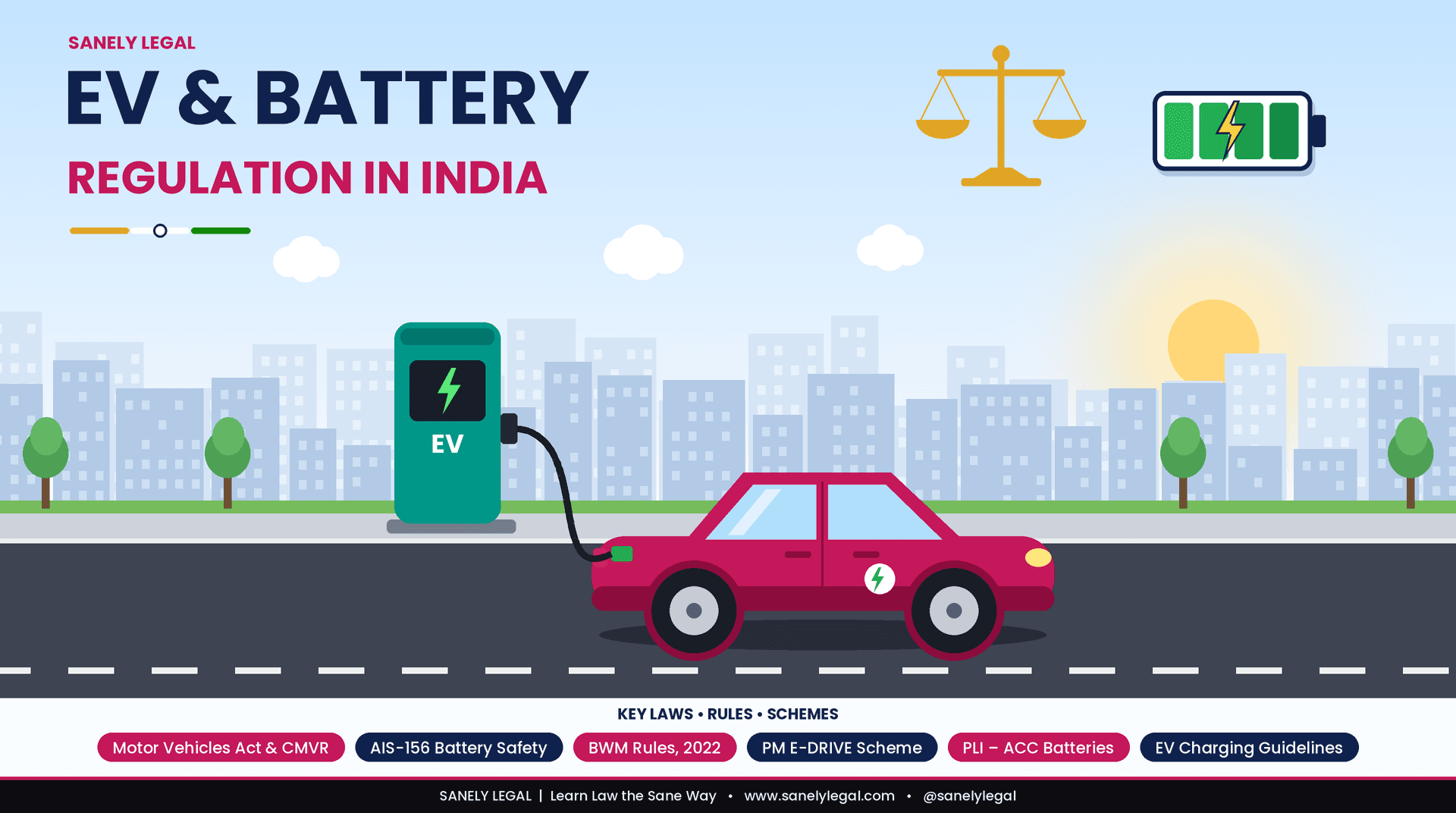
EV & BATTERY Regulation in India
India's EV policy began with an approach that treated electric and hybrid mobility as a national industrial and transport question. The National Mission for Electric Mobility was approved in 2011, followed by the National Electric Mobility Mission Plan 2020, launched in January 2013. The Plan was intended to create a long-term path for adoption, domestic capability, research and development, testing, charging and supply-side support.
Indian Space Policy 2023
Indian model was transformed from a policy fragmented, state dominated model to a commercially open, institutionally separated and more procedural regime. The 2017 draft was an early attempt at enacting the entire sector at once. That effort stalled. The 2020 reforms, on the other hand, allowed for participation by the private sector, and ISP 2023 provided a detailed policy framework around IN-SPACe.
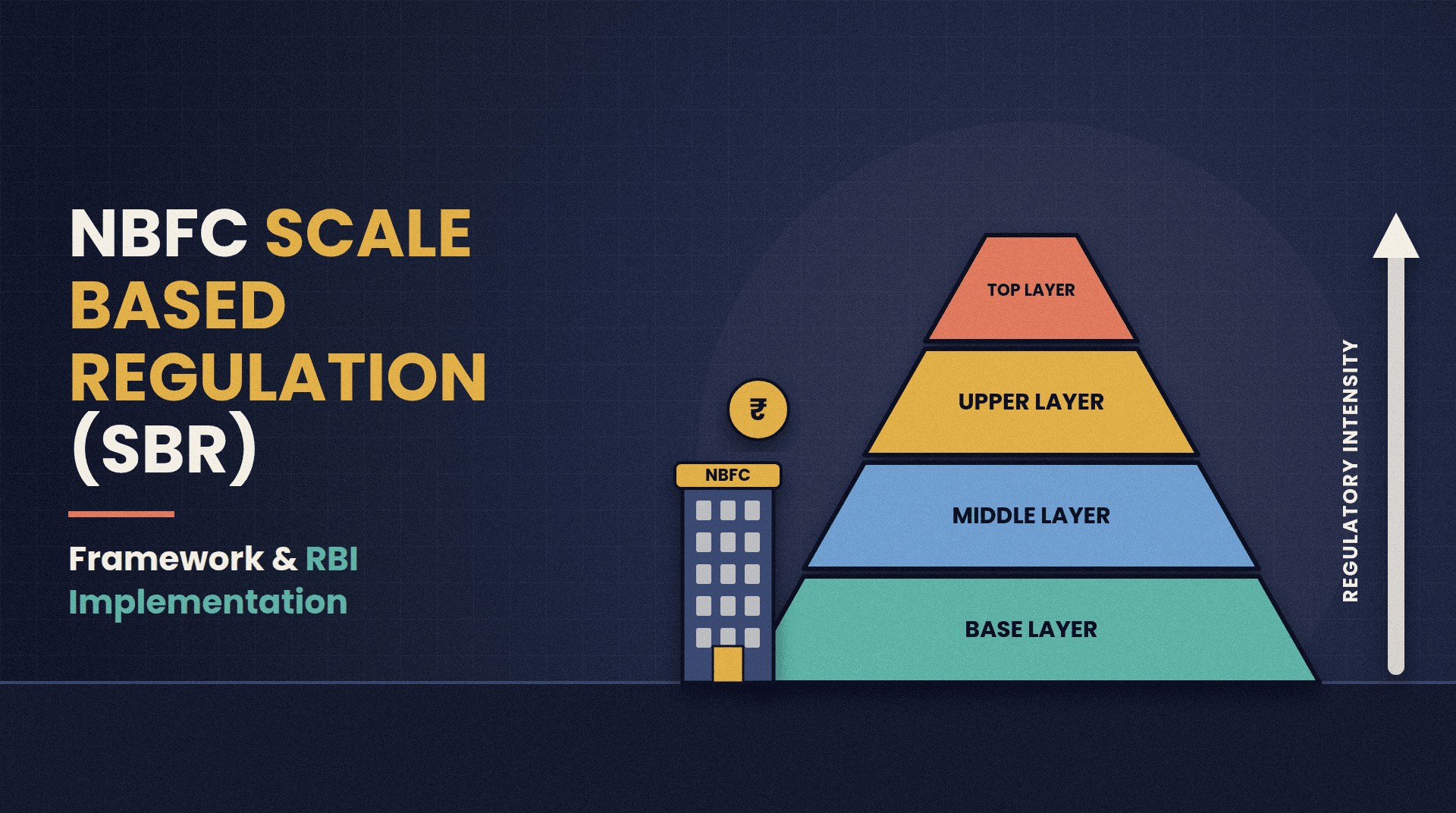
NBFC Scale Based Regulation (SBR) Framework RBI implementation
The objective was to make regulatory intensity broadly proportionate to the size, complexity and perceived risk of an NBFC.The framework became operational from 1 October 2022, while certain individual requirements had separate implementation timelines. The Upper Layer was designed for NBFCs considered to warrant enhanced regulatory requirements.